
Pests of camelina
Flea beetles and whiteflies are the two main insects likely to be observed on the crop.
General
Flea beetles and whiteflies are the two main insects likely to be observed on the crop.
However, in most situations, their presence is limited to minor damage, with no significant impact on camelina development. Also of note is the possible presence of slugs, which can cause damage at the start of the cycle.
Flea beetle
Camelina can be attacked by crucifer flea beetles, or small flea beetles(Phyllotreta spp.). This small, black or bicolored beetle (black with a longitudinal yellow stripe on each elytron) measures between 2 and 2.5 mm and is characterized by its swollen hind legs, which enable it to jump.
Damage takes the form of numerous circular bites about 1 mm in diameter, with or without holes, on the cotyledons and leaf blades.
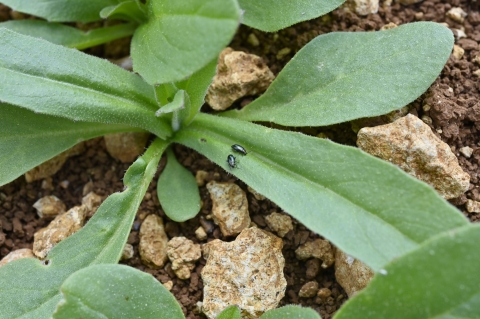
Although camelina belongs to the Brassicaceae family, it is much less attractive to flea beetles than rapeseed or mustard. So, barring exceptional situations, whether as a main crop or as a summer cover crop, no chemical intervention is generally necessary.
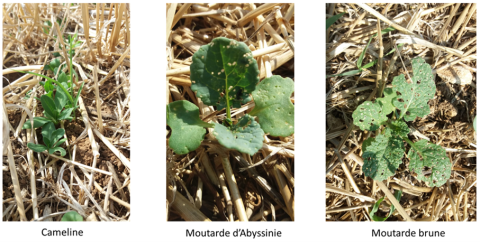
Leaf beetles
Adult crucifer beetles(Brassicogethes sp.) measure between 1.5 and 2.5 mm. They are flattened and shiny black with a metallic sheen, sometimes tinged with green. Their antennae are black, while their legs, which are short and often barely visible from the back, are black or reddish depending on the species.
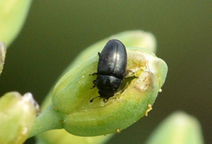
Meligethes can only be found on camelina grown as a main crop. Only adults are responsible for damage. They perforate flower buds in search of pollen, notably damaging the pistil.
These perforations can lead to floral deformation, or even flower abortion in the case of early and sustained attacks. However, as soon as the first flowers appear, the level of damage diminishes sharply.
Overall, damage remains limited and has no significant impact on yield, as camelina is not very attractive to this insect. Therefore, except in exceptional situations, no chemical intervention is required.
Slugs
Slugs can be a nuisance during crop emergence. Their activity depends more on surface moisture conditions than on the population density present in the plot.
Hollow or cloddy soils, as well as those containing undecomposed crop residues, provide a particularly favorable environment for their development.
In the absence of tillage, as is often the case when camelina is planted as a summer catch crop, slug activity can be significant in wet conditions.
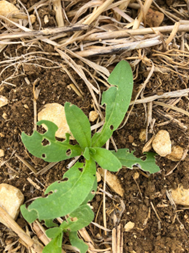
If slugs are present, and if the climate maintains a certain surface coolness at the time of sowing, it is advisable to apply a preventive slug-killer in the field, just after sowing.

Camelina editions
Cameline - Cultivation Guide 2024
Our other articles
Weeding camelina
Camelina nutrition
Diseases and plant pests of camelina
Generally speaking, camelina is not very susceptible to disease. However, some diseases can occasionally be observed, although to date their harmfulness remains relatively low and does not require any fungal intervention in vegetation.
Generally speaking, camelina is a crop with low susceptibility to disease. However, some diseases can occasionally be observed, although to date their harmfulness remains relatively low and does not require any fungal intervention in vegetation.
Whether grown as a main crop or as a summer catch crop, camelina shows the same behavior in the face of these diseases and parasites.
Cruciferous clubroot (Plasmodiophora brassicae)
Camelina can be affected by clubroot, a disease caused by the pathogen Plasmodiophora brassicae. This is a telluric disease with a host range extending to most species of the Brassicaceae family, including crops such as rape, turnip, cabbage and mustard.
Hernia can also infect certain weeds belonging to this family, such as ravenella, shepherd's purse or sanvia, all of which are potential reservoirs for its spread. Contamination occurs via mobile spores in the soil which, thanks to free water, penetrate the absorbent hairs of camelina roots and induce infection.
The main symptoms visible on the aerial parts are a temporary wilting of the foliage, particularly on hot days, and a slowdown in growth.
When affected plants are pulled up, the roots show characteristic deformations and swellings known as galls. These galls are responsible for the aerial symptoms, as they interfere with the absorption of water and nutrients from the soil. Initially firm and white on the inside, they gradually turn brown before cracking.
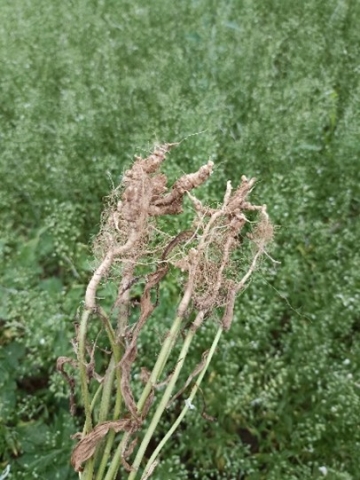
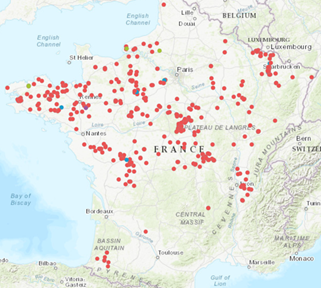
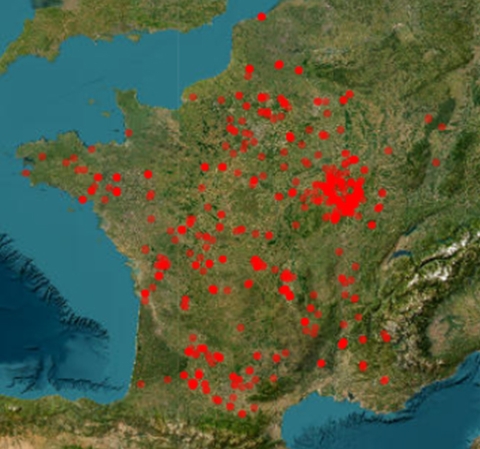
There are currently no effective chemical control methods. The development of the disease is favored by poor drainage of the plot, as well as by the absence of liming on acid soils. Once established, the disease persists in the soil, with spores remaining viable for up to 15 years. We therefore strongly advise against planting camelina on a plot known to be contaminated by this pathogen. Below is a map showing plots infected by clubroot, as reported online on the Terres Inovia website. https://www.terresinovia.fr/-/enquete-hernie-des-cruciferes
Downy mildew (Peronospora camelinae)
Mainly grown as a summer catch crop, camelina can be affected by mildew at the end of the cycle. This is the foliar disease most frequently observed on this crop, although its severity generally remains low and does not justify fungicide intervention.
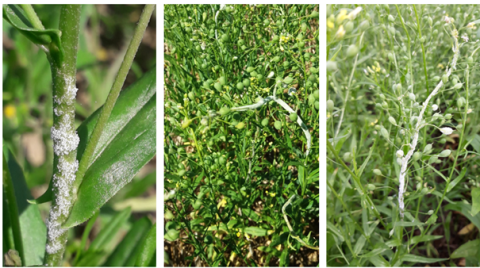
Infection can be either localized or systemic. Symptoms observed on camelina include grayish-white mycelial growth on the underside of leaves, stems and siliques. Heavily affected plants may show distorted, twisted or bent growth.
The development of mildew is favored by temperatures between 15 and 23°C, combined with rainy spells generating high humidity, an essential condition for the spread of the disease.
White or albugo rust (Albugo candida)
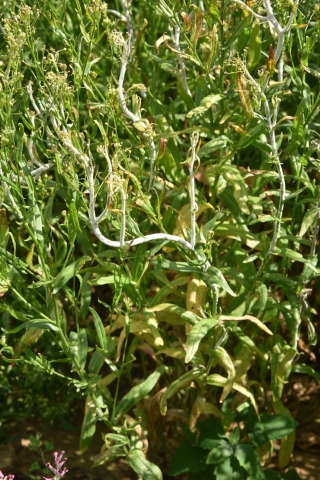
White rust symptoms on camelina are similar to those observed on other crucifers. They take the form of white, powdery pustules, containing sporangia (reproductive structures), on the underside of leaves. At a more advanced stage, hypertrophied siliques or deformed inflorescences can also be observed.
Optimum development of the disease occurs between 10 and 18°C, with relative humidity above 90%.
It can be confused with mildew. However, it is possible to differentiate the two diseases by their symptoms: in the case of white rust, pustules are larger, well-defined and clearly visible, while mildew manifests itself through more diffuse spots and a more "powdery" appearance, linked to the presence of mycelium.
On camelina, mildew is observed more frequently than white rust.
Other secondary diseases
Other diseases have been observed on camelina, but their harmfulness is so low as to warrant no intervention in the crop. These include sclerotinia(Sclerotinia sclerotiorum), botrytis(Botrytis cinerea) and alternaria(Alternaria brassicae).
Rough broomrape (Phelipanche ramosa)
Orchardgrass is a non-chlorophyllous parasitic plant, present as seeds in the soil. They can only germinate in the presence of molecules emitted by the roots of certain plants, before attaching themselves to the latter.
It is capable of parasitizing many plant species, both winter and spring crops (rapeseed, hemp, tobacco, melon, sunflower, tomato...as well as camelina) and weeds (ammi majus, bedstraw, geraniums, erodium, cauliflower...).
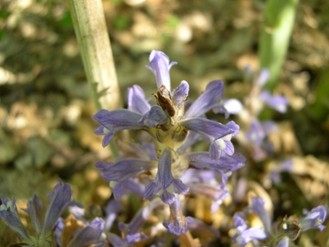
Orchardgrass is highly invasive.
- It is capable of producing thousands of tiny seeds (0.2-0.3 mm) per plant, easily spread by wind, animals, farm machinery and so on.
- Seeds can live up to 10 years in the soil, and are resistant to passage through the digestive tract of animals.
- It has a very broad host spectrum (crops, weeds) and can synchronize its cycle with that of its host.
- It thrives in a wide range of pedoclimatic conditions.
Chemical or biocontrol methods are not currently authorized in France, and/or are ineffective in providing protection against stunted broomrape.
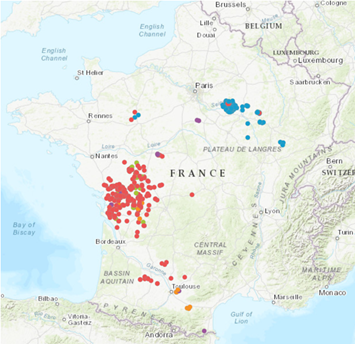
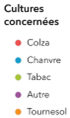
We therefore strongly advise against planting camelina on a plot known to be infested with stalked broomrape. Below, a map showing plots infected by stalked broomrape, identified following declarations made online on the Terres Inovia website. https://www.terresinovia.fr/web/guest/-/enquete-de-surveillance-orobanche-rameuse-participer-et-visualiser-les-zones-a-risque

Camelina editions
Cameline - Cultivation Guide 2024
Our other articles
Weeding camelina
Camelina has good covering power, enabling it to compete effectively with weeds, provided planting is successful and emergence is uniform and sufficient.
General
Camelina has good covering power, enabling it to compete effectively with weeds, provided planting is successful and emergence is uniform and sufficient.
However, given the limited number of approved chemical solutions for weed control, both against grasses and broadleaf weeds, it is advisable to plant it in a clean, weed-free plot at the time of sowing.
It is also advisable to avoid situations of high weed pressure, particularly in the presence of resistant grasses or particularly invasive species such as mugwort(Ambrosia artemisiifolia).
Weed management for camelina in summer intercropping
Weed pressure
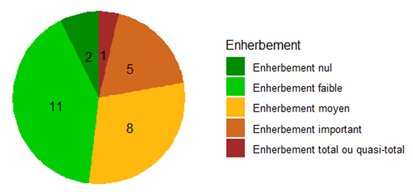
In 2024, agronomic monitoring was carried out on camelina plots planted as summer catch crops. The graph below shows significant to total weed cover on around a quarter of the areas observed. The main weed species observed were :
- Crop regrowth: barley and peas
- Annual broadleaf weeds: goosefoot, mercurial, bindweed, barnyard grass, ragwort, etc.
- Perennials: thistles
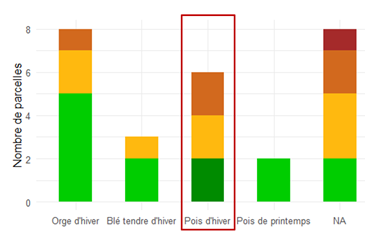
The graph below illustrates the level of weediness observed in camelina plots planted with summer cover crops, according to the type of previous crop. It shows that weed control is more complex after winter peas, notably due to the presence of pea regrowth and broadleaf weeds.
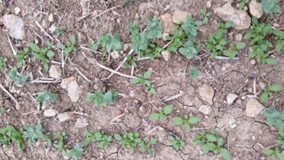
Weed pressure is one of the main limiting factors identified in the 2024 plot monitoring program, and weed management is therefore a key factor in ensuring crop success.
Weed management levers
First and foremost, it's important to choose a plot with a low risk of weed infestation, as control levers are limited during summer intercropping. To limit the risk of weed infestation, it's important to choose suitable crop successions, alternating spring and winter crops.
Beyond the choice of plot, it's important to sow camelina on clean soil. If weeds are present at harvest time, they can be managed by stubble ploughing, or with a total herbicide if camelina is direct-seeded.
Finally, there are a number of registered herbicides available for chemical weed control.
Below is a non-exhaustive list of authorized molecules (source: ephy-Anses and phytosanitary index):
| Active ingredients | Grammage | AMM dose | Product (*) | Positioning | Application stage |
| clethodim | 240 g/l | 0.5 l/ha | Centurion 240 EC | Post emergence | 2 f to 6-8 f |
| quizalofop-p-ethyl + clethodim | 70 g/l + 140 g/l | 0.8 l/ha | Vesuvius Max | Post emergence | 2 f to 6-8 f |
| clopyralid | 100 g/l | 1.25 l/ha | Lontrel 100 | Post emergence | 2 f to 6-8 f |
| metazachlore | 500 g/l | 1.5 l/ha | Rapsan 500 SC | Pre-emergence or early post-emergence | |
| quinmerac + metazachlor | 100 g/l + 400 g/l | 1.87 l/ha | Rapsan TDI | Pre-emergence | 00 à 08 |
Where winter cereals are grown before camelina, a herbicide treatment is essential in the event of heavy infestation of post-plant regrowth. To ensure optimum selectivity and maximum efficacy, the treatment should be carried out with a specific graminicide based on clethodim or quizalofop-P-ethyl, applied imperatively before the camelina resumes active growth (start of elongation).
Please note: the above table lists herbicides registered for use on camelina, and not herbicides whose selectivity towards camelina has been demonstrated. Suspicions of phytotoxicity exist for clopyralid- and metazachlor-based herbicides, and Terres Inovia is currently working on the selectivity of these herbicides to identify suitable herbicides.
If a herbicide is used in vegetation, whatever the product used, it must be applied before the start of stem elongation, in order to limit any risk of phytotoxicity.
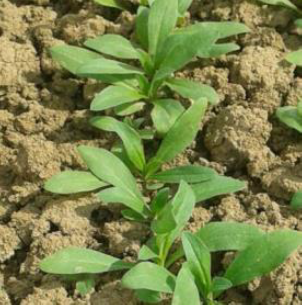
Mechanical weeding of summer catch crops is not relevant.
Weed management for camelina as a main crop
The choice of crop succession is an important lever in weed management: alternating winter and spring crops helps maintain low weed pressure on the plot.
As a main spring crop, camelina can be sown late due to its relatively short cycle length. This offers the opportunity to carry out several false sowings in spring, and reduce the weed population. Late sowing of camelina, which can be done as late as May, also makes it possible to avoid a large proportion of the spring weed flora, and create a real break in the rotation. The table below gives a non-exhaustive list of authorized control molecules (source: ephy-Anses and phytosanitary index).
| Active ingredients | Grammage | MA dose | Product (*) | Positioning | Application stage |
| clethodim | 240 g/l | 0.5 l/ha | Centurion 240 EC | Post emergence | 2 f to 6-8 f |
| quizalofop-p-ethyl + clethodim | 70 g/l + 140 g/l | 0.8 l/ha | Vesuvius Max | Post emergence | 2 f to 6-8 f |
| clopyralid | 100 g/l | 0.2 l/ha | Lontrel 100 | Post emergence | 2 f to 6-8 f |
| clomazone + dmta-p + metazachlore | 40g/l - 200 g/l- 200 g/l | 2.5 l | Polar | Pre-emergence | Stage 00 to 09 |
| dmta-p + quinmerac | 333 g/l = 167 g/l | 1.5 l/ha | Solanis | Post emergence | 2 f to 6-8 f |
| metazachlore | 500 g/l | 1.5 l/ha | Rapsan 500 SC | Pre-emergence or early post-emergence | |
| quinmerac + metazachlor | 100 g/l + 400 g/l | 1.87 l/ha | Rapsan TDI | Pre-emergence | 00 à 08 |
Please note: the table below lists herbicides registered for use on camelina, not herbicides with proven selectivity for camelina.
If a herbicide is used in vegetation, whatever the product used, it must be applied before the start of stem elongation, in order to limit any risk of phytotoxicity.
As far as mechanical weed control is concerned, only one blind pass of the currycomb harrow can be used on the main crop. In post-emergence, the use of this tool is not recommended due to the high risk of pulling out plants.

Training for camelina
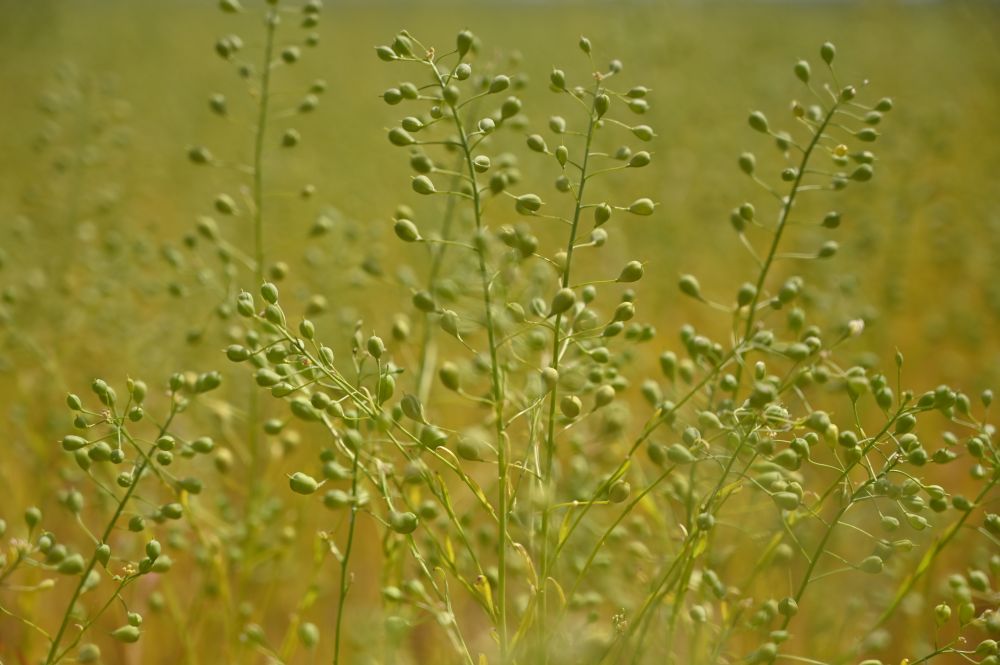
Mastering camelina cultivation
Sur devis
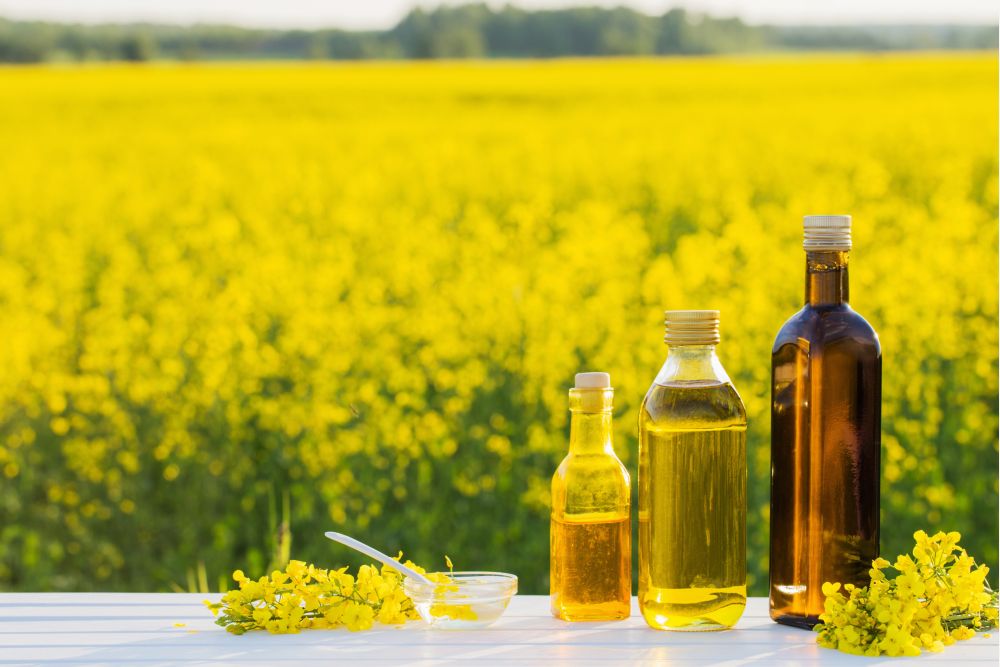
Short-circuit production of edible oil
Sur devis
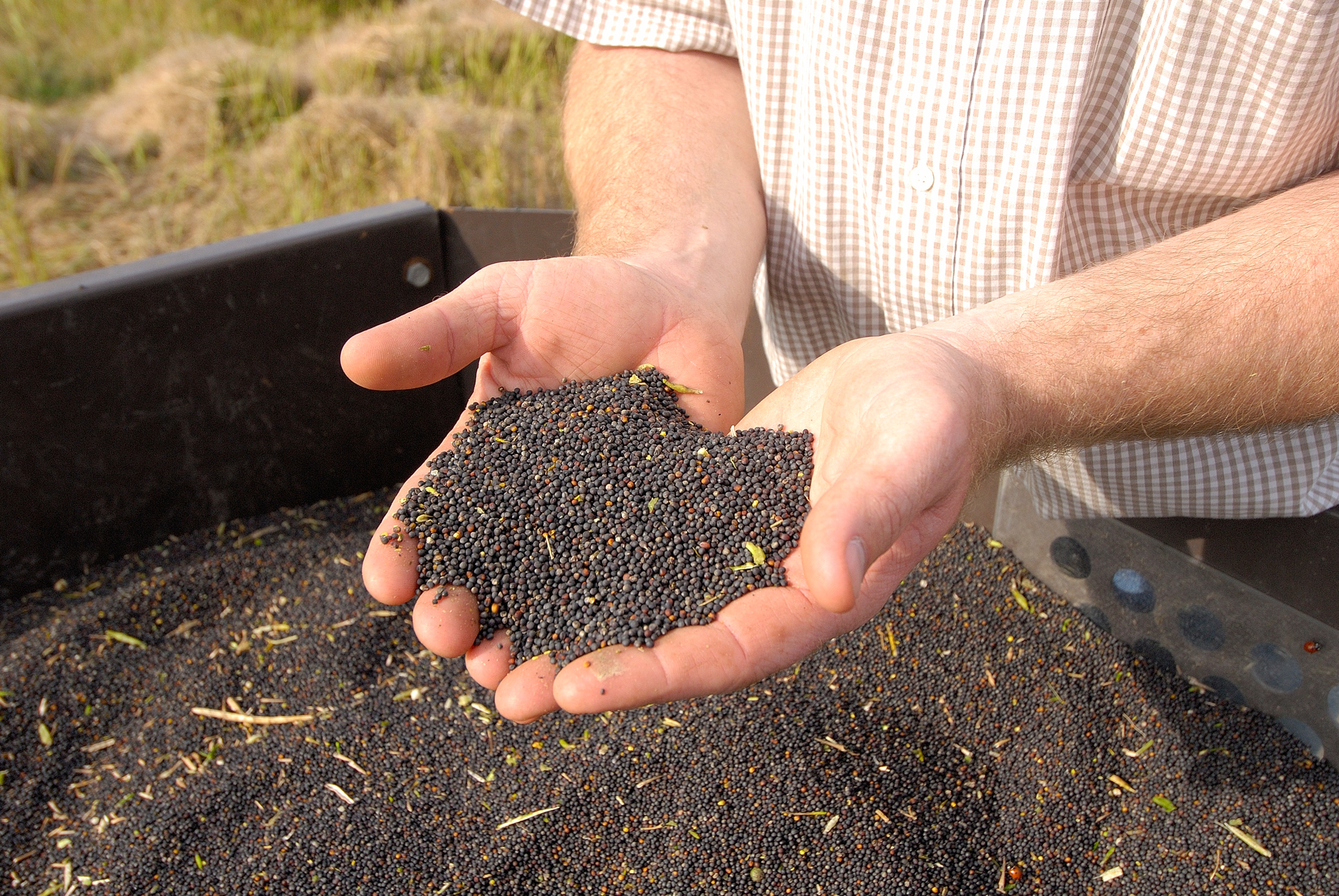
Optimization of crushing and mechanical extraction of oil-protein seeds
Sur devis
Camelina editions
Cameline - Cultivation Guide 2024
Our other articles
Camelina nutrition
Camelina requires very little fertilizer. Its powerful taproot system enables it to extract the nutrients it needs for growth from deep within the soil. Fertilization management differs according to how camelina is grown.
Camelina requires very little fertilizer. Its powerful taproot system enables it to extract the nutrients it needs for growth from deep within the soil. Fertilization management differs according to how camelina is grown
Fertilization management for camelina as a main crop
Nitrogen nutrition
Nitrogen dose trials have been carried out. Camelina yield increases with nitrogen fertilization, until it reaches a plateau (see graph below - source: Malhi et al., 2013, Canada). This yield increase is explained by improvements in several components: the number of plants per square meter, the number of branches, the number of siliques per plant, as well as the number of seeds per silique. On the other hand, thousand kernel weight (MGW) does not seem to be affected (source: Agegnehu et al.1996, USA).
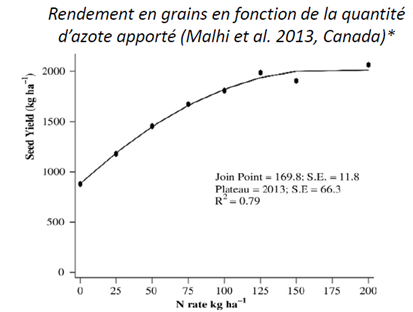
The optimum dose of nitrogen to be applied is between 80 and 100 units per hectare, depending on residues, corresponding to the economic optimum. For spring camelina, nitrogen can be applied in a single application just after sowing. However, it is possible to split the application according to the following recommendations: 30% of the dose at sowing, then the remainder at the rosette stage. For winter camelina, the application should be made when vegetation resumes before bolting.
In addition, the use of a sulfur fertilizer is recommended to ensure an application of 12 to 24 units of sulfur per hectare (source: Camelina Company).
Beware of excess nitrogen, which makes the crop more susceptible to disease, particularly albugo, and can accentuate the risk of lodging.
As nitrogen fertilization increases, so does the nitrogen content of the plant and the protein concentration of the seed. On the other hand, oil content and nitrogen use efficiency decrease (source: Malhi et al., 2013, Canada).
Concerning fatty acid composition, oleic and linoleic acid percentages increase with nitrogen dose, while linolenic acid percentage decreases. The concentration of iron (Fe) and zinc (Zn) in the seeds also decreases (source: Magdalena Czarnik et al., 2027, University of Rzeszów, Poland).
Phosphorus and potash
Camelina has moderate phosphorus and potassium requirements. Inputs should be rationed throughout the rotation, based on soil analysis results. In a well-supplied soil, we recommend applying 40 units per hectare of phosphorus and 40 units per hectare of potash. These fertilizations can be carried out at any time during the intercropping period preceding camelina planting, or directly at sowing time.
Fertilization management for camelina in summer intercropping
Camelina is a cruciferous plant. It needs nitrogen from the start of its cycle to express its full potential right up to harvest.
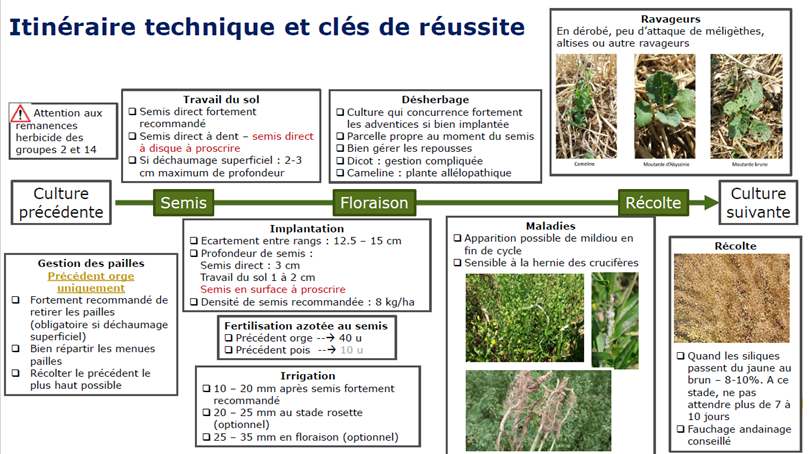
Managing nitrogen fertilization depends on the previous crop. In the case of cereals, 40 units of nitrogen per hectare must be applied at sowing. It is strongly recommended to apply this fertilizer locally. No additional nitrogen should be applied during vegetation. Excessive nitrogen applications could lengthen the vegetative phase of camelina, delaying maturity.
Where peas are grown before camelina, the nitrogen residue is generally sufficient to ensure good camelina development. Therefore, nitrogen is not essential. However, an optional fertilization of 10 units of nitrogen per hectare at sowing can be considered.
No background fertilization is required.
Camelina editions
Cameline - Cultivation Guide 2024
Our other articles
Camelina planting
Whether as a main crop or as a summer catch crop, successful sowing is the key to success.
Whether as a main crop or as a summer catch crop, successful sowing is the key to success.
General
The small size of the seed, with a GMP ranging from 0.7 to 1.8 g, represents a challenge for successful planting. Soil cultivation and sowing methods must provide a seedbed conducive to good contact between seed and soil, while limiting the impact of residues from the previous crop.
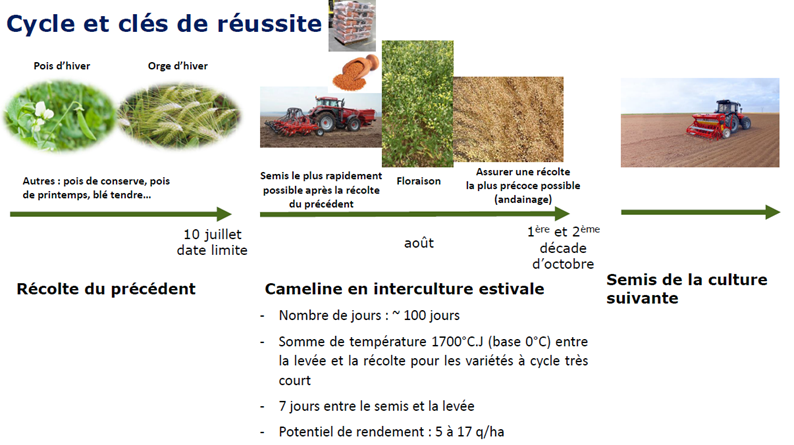
Summer intercropping with camelina
The success of camelina in summer intercropping depends largely on its rapid establishment. This crucial stage requires rapid, uniform and vigorous emergence. Everything must be done to ensure that the cycle is completed as quickly as possible, so that harvesting can take place at an acceptable date, maximizing the chances of harvesting camelina under favorable climatic conditions and having no impact on the following crop.
To maximize the chances of early emergence, it is crucial to choose a suitable crop precedent, enabling harvesting before July 10, the latest date for sowing camelina. The optimum sowing date is before the beginning of July. The most suitable crops are protein or canning peas and winter barley.
Previous pea crop
Sowing should be carried out as soon as possible after harvesting the previous crop, ideally within 24 to 48 hours, to take advantage of any remaining soil moisture.
Direct sowing with tines is strongly recommended. In the case of shallow stubble ploughing, do not go deeper than 3 cm to maintain soil moisture.
Seeding depth :
- Direct seeding: seed 3 cm deep
- Tilled seeding: seed 1-2 cm deep
- Surface seeding: not recommended
Regarding sowing density, we recommend sowing at 8 kg/ha with a row spacing of 12.5 - 15 cm, to aim for a stand of around 200 plants/m2.
If you have irrigation, we strongly recommend applying 10-20 mm just after sowing to boost emergence.
Previous winter barley
The only difference between winter barley and peas concerns harvesting, which should be carried out as high up as possible (between 25 and 30 cm).
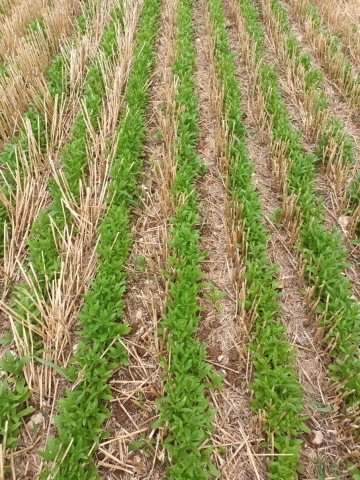
It is important to remove the straw, as it can consume nitrogen as it decomposes, and adversely affect sowing quality by disturbing contact between the seed and the soil.
Straw should also be evenly distributed over the entire surface.
All other recommendations for planting remain identical to those applied to previous peas.
Planting camelina as a main crop
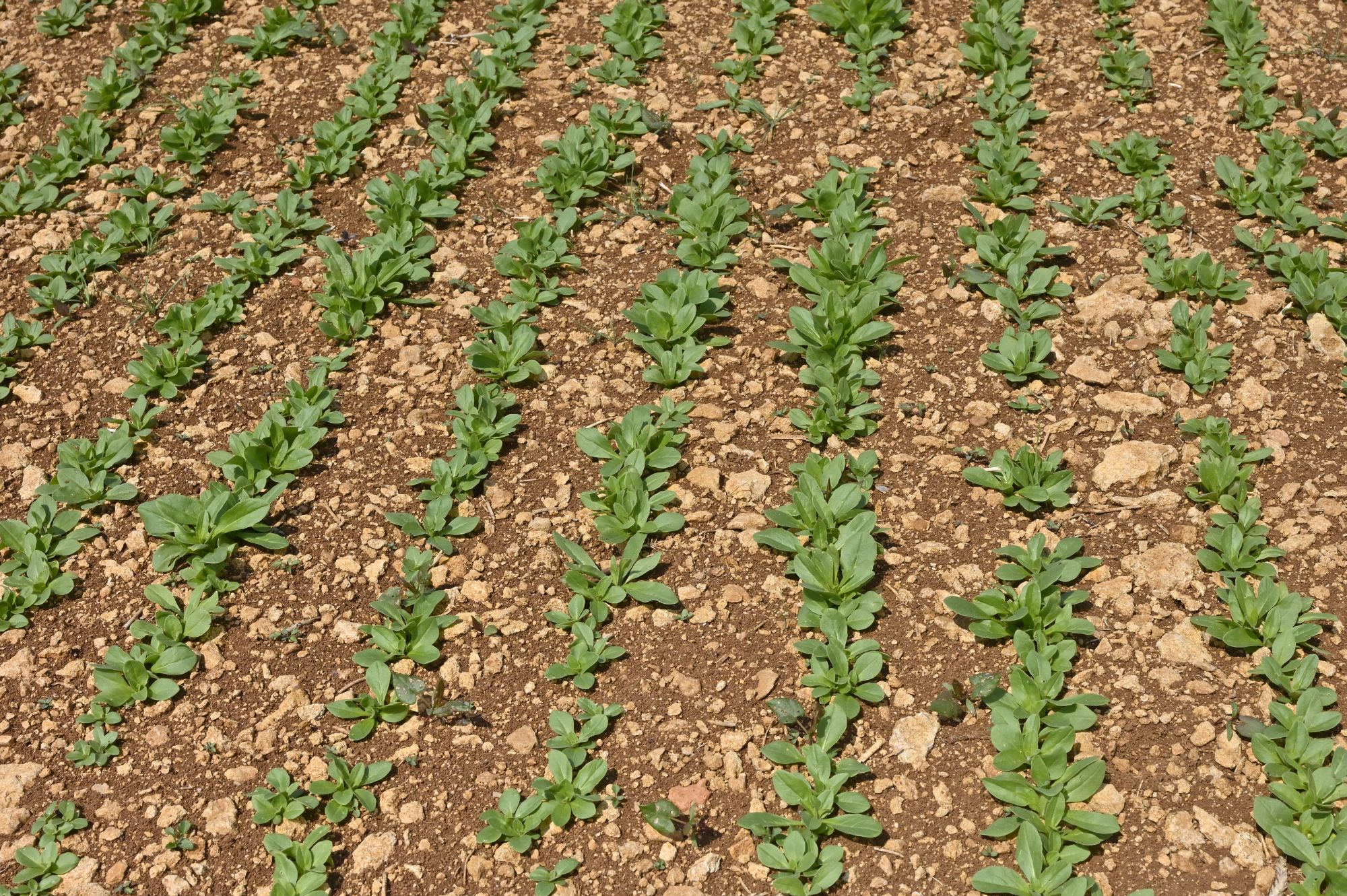
Sowing should be carried out in well-aerated, uncompacted soil. Due to the small size of its seeds, camelina requires particularly careful, fine and well-reconsolidated seedbed preparation. Tillage should aim for a homogeneous profile, with no marked areas of compaction, and a surface area comparable to that required for rapeseed sowing.
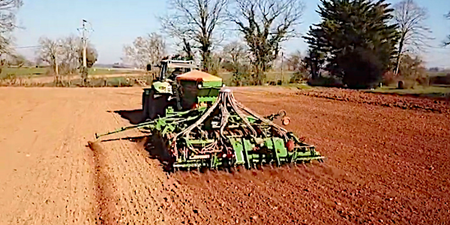
For spring camelina, the soil should be worked when it is well drained. To reduce the risk of soil compaction, we recommend reducing the number of tractor passes as much as possible, and favouring the use of combined implements. Rolling prior to sowing can be considered to even out the seedbed and ensure good contact between the seed and the soil, a condition favorable to successful germination.
Sowing takes place between late March and early April, using a cereal drill with a narrow row spacing (12.5 to 15 cm). The recommended sowing density is 5 kg/ha, aiming for a minimum population of 200 plants/m². Sowing depth should be between 1 and 1.5 cm. If required, seeds can be mixed with sand or semolina to facilitate even distribution.

Camelina editions
Cameline - Cultivation Guide 2024
Our other articles
Camelina: choice of plot for summer catch crop
To maximize the chances of success for camelina as a summer catch crop, it's essential to think in terms of crop succession. Camelina should therefore be planted as soon as the main crop is planted.
To maximize the chances of success for camelina as a summer catch crop, it's essential to think in terms of crop succession. Camelina should therefore be planted as soon as the main crop is planted.
Selection criteria
- Main crop harvested early (winter barley, winter peas, etc.)
- Choose legumes to avoid fertilization
- Avoid plots with a spring herbicide program at risk
- Choose plots free of weeds
After which main crop?
The first criterion is to choose an early-harvested preceding crop, enabling camelina to be planted between June 20 and July 10, to guarantee a harvest before the end of October. The main candidate crops are winter peas and winter barley, but other early-harvested crops may also be suitable: canning peas, garlic, onions, etc.
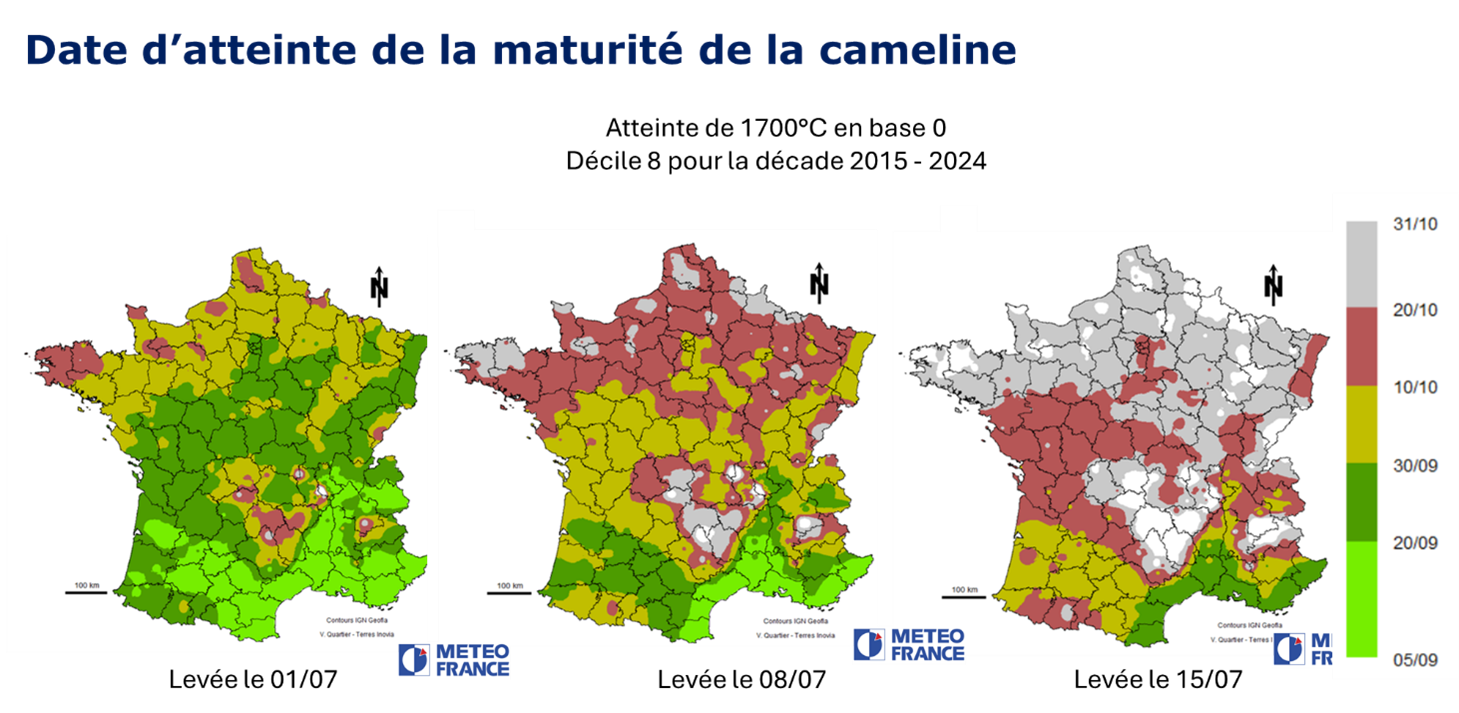
The map below illustrates the importance of sowing early, showing the date at which maturity is reached for very short-cycle varieties according to different emergence dates. For example, for an emergence on July 1, camelina reaches maturity before October 10 throughout France, whereas for an emergence on July 8, it reaches maturity after October 10 in the northern part of France, and for an emergence on July 15, it reaches maturity after October 20 in almost the northern half of France.
Planting camelina after a legume (e.g. winter peas) is particularly interesting, as it allows you to limit or even do without nitrogen fertilization, thus reducing the ITK's operating costs.
Focus on main crop herbicide program
Camelina grown as a summer catch crop is sensitive to the persistence of certain herbicides, mainly those in group 2(ALS1 inhibitors) with herbicides from the sulfonylurea family such as metsulfuron, mesosulfuron, etc., as well as imazamox (applied to winter peas). It also appears to be sensitive to group 14 herbicides (PPO2 inhibitors such as bifenox) and group 32 herbicides (solanesyl diphosphate synthase inhibitors, includingaclonifen, applied to winter peas).
There is therefore a risk of phytotoxicity (leaf discoloration, foot loss, etc.) for camelina when these herbicides are applied in spring to the main crop, a risk that is all the greater in dry conditions, when applied late and when there is little or no tillage between the harvest of the main crop and the planting of camelina. Despite this, the effects of these herbicides can vary according to a number of factors (rainfall, soil type, tillage, date and dose of application, etc.) and are still poorly understood and quantified.
Weed pressure on the plot
Camelina is a well-established crop that competes well with weeds. In spite of this, weed pressure remains one of the main limiting factors for camelina as a summer catch crop, so it's vital to use every possible means to manage weeds effectively.
We recommend choosing a weed-free plot at sowing time. If weeds are present when the main crop is harvested and you wish to direct seed, a glyphosate pass may be useful to manage weeds before seeding.
1ALS: acetolactate synthase
2PPO: protoporphyrinogen oxidase

Camelina editions
Cameline - Cultivation Guide 2024
Our other articles
Varieties available for camelina
The range of varieties on offer is not very well developed, and seeds are sometimes hard to come by, particularly in the organic sector. However, in view of the growing interest in camelina on the part of industrialists, particularly in catch crops for biofuel production, some seed companies are now taking an interest.
The range of varieties on offer is not very well developed, and seeds are sometimes hard to come by, particularly in the organic sector. However, in view of the growing interest in camelina on the part of industrialists, particularly in catch crops for biofuel production, some seed companies are now taking an interest.
For example, Bayer recently acquired camelina germplasm from the Canadian company Smart Earth Camelina, in order to diversify into the biofuels sector.
A major challenge in breeding varieties suitable for catch crops is to develop very short-cycle varieties.
There are winter varieties and spring varieties (but in areas where the climate is mild - winter temperatures do not exceed -10°C - spring varieties can also be planted in autumn). Recent breeding efforts have focused on spring-type varieties.
Here is a non-exhaustive list of existing varieties:
Variety | Seed company | Registration year | Type | Comments |
VERA | Camelina Company* | 2019 | Spring | Suitable for catch crop |
ALBA | Camelina Company* | 2019 | Spring |
|
CAMARES | Panam |
| Spring |
|
MELINA | Panam |
| Spring |
|
ARCADIA | Panam |
| Spring |
|
CELINE | A2P | 1998 | Spring |
|
EPONA | A2P | 1998 | Winter |
|
CALENA | Saatbau | 1996 | Spring |
|
OM | Sanctum Mediterranean | 2014 | Spring |
|
LUC | DANISCO SEEDS SA | 1995 | Spring |
|
CAMELATE | Lidea |
| Spring | Suitable for intercropping (late flowering) |
CAMELIA | Lidea |
| Spring | Suitable for intercropping |

Camelina editions
Cameline - Cultivation Guide 2024
Our other articles
Keys to success with camelina in catch crops
Louis-Marie Allard, Terres Inovia development engineer for the North and East zone, explains the basics of successful summer cover crops with camelina.
Louis-Marie Allard, Terres Inovia development engineer for the North and East zone, explains the basics of successful summer cover crops with camelina.

Camelina editions
Cameline - Cultivation Guide 2024
Our other articles
Outlets for camelina
Camelina is an oilseed crop whose seeds are characterized by an original fatty acid profile and high protein content. These properties make it ideal for a wide range of uses.
Camelina is an oilseed crop whose seeds are characterized by an original fatty acid profile and high protein content. These properties make it ideal for a wide range of uses.
To date, its main uses have been in the production of oil for human consumption and the recovery of oilcake for animal feed. However, there is growing interest in applications in cosmetics, green chemistry and the formulation of technical specialties. What's more, a French industry is currently developing around camelina grown in intercropping, specifically geared towards the production of sustainable aviation fuels.
| Oil content (%MS) | 28-49% |
| Of which a-linolenic (ω-3 precursor) | 28-50% |
| Of which linoleic (ω-6 precursor) | 15-23% |
| Ratio ω-3/ω-6 | 1.3-2.6 |
| Protein (% DM) | 24.1-35.7% |
A new chain for the production of sustainable aviation fuels
A particularity of camelina is its short cycle - the camelina cycle can be completed in around 3 months - which makes it ideal for intercropping.
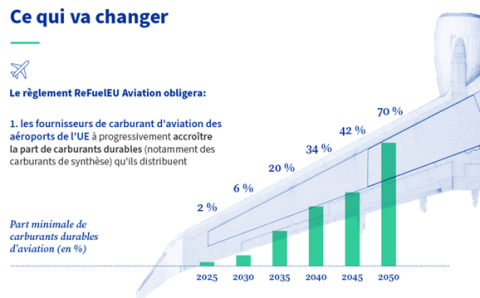
Furthermore, to decarbonize the aviation sector as part of the implementation of the European climate law, the European Union adopted the RefuelEU Aviation regulation in 2024. This regulation sets significant targets for the incorporation of biofuels by 2050.
Moreover, recent developments in the Renewable Energy Directive II (RED II) have classified intercrop feedstocks as "advanced biofuels"(Annex 9A of RED II), making them eligible for the production ofaviation biofuel.
Thus, intercrop crops such as camelina represent one of the ways of achieving the objectives of integrating biofuels into aviation, which suggests that there will be considerable demand for them in the years to come.
What's more, camelina's low input requirements make it possible to adopt a technical itinerary with low greenhouse gas emissions, a necessity for its conversion into biofuel. Saipol, a subsidiary of the Avril Group, is working on the development of a camelina production chain based on intercropping.
Human food
Camelina oil belongs to the family of oils rich in omega-3 fatty acids, behind flax but ahead of hemp, walnut and rapeseed. Thanks to its high omega-3 content and optimal ω-3/ω-6 ratio, it offers interesting nutritional qualities for rebalancing our diets, which are currently too rich in omega-6 compared to omega-3.
What's more, its richness in antioxidants such as vitamin E ensures good stability and limits oxidation, compared with other omega-3-rich oils. It is mainly consumed for seasoning, but can also be used in the formulation of dietary supplements (authorized in 2019 by the Direction Générale de la Concurrence, de la Consommation et de la Répression des Fraudes - DGCCRF).
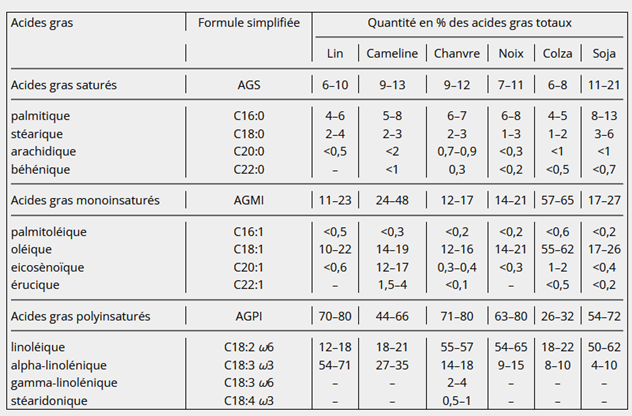
Figure 2. fatty acid compositions of flax and hemp oils compared with those of other vegetable oils in the alpha-linolenic family (camelina, walnut, rapeseed and soybean). Morin et al. 2015, OCL
The human food market currently mainly concerns organically produced camelina, and remains a relatively undeveloped market.
Cosmetics
Camelina oil is also used in the formulation of cosmetic products, notably for its high antioxidant content.
Other outlets
Research and industry are exploring a variety of applications for camelina oil and meal, such as the formulation of bioplastics, adhesive agents, biopesticides, bioherbicides, biostimulants, etc. The Carina project, for example, is exploring the valorization of camelina and Abyssinian mustard (brassicata carinata) for the formulation of biopesticides and biostimulants.
Animal feed
Camelina meal has a high protein content of around 45%, making it an interesting ingredient to include in animal feed rations.

Camelina editions
Peas - Growing guide 2025 - Ref 680/25
Chickpea - Growing guide 2023 - Ref 652/23
Lentil - Growing guide 2023
Our other articles
How camelina fits into cropping systems
Adapted to a wide range of soil and climate conditions, camelina is grown throughout France. It can be easily integrated into a variety of cropping systems, in both conventional and organic farming.
Adapted to a wide range of soil and climate conditions, camelina is grown throughout France. It can be easily integrated into a variety of cropping systems, in both conventional and organic farming.
A particularity of camelina is its very short cycle length, which also makes it suitable for intercropping.
Camelina as the main crop
Pure cultivation
Camelina can be grown pure as a main crop, with winter and spring varieties. In areas with mild climates (winter temperatures not exceeding -10°C), spring varieties can also be planted in autumn.
As a main crop, the proportion of organically-produced camelina is particularly high, thanks to its hardiness and resistance to pests and diseases, and to the opportunities for using the oil for human consumption.
In some countries of the southern Mediterranean basin, camelina is grown on so-called "marginal" land with low potential, which it valorizes well.
In combination
Camelina lends itself well to crop combinations, particularly in organic farming. The lentil-camel association is widely practiced, with camelina acting as a staking plant, thus limiting the risk of lentil lodging.
What's more, if planting conditions are favorable, camelina develops rapidly and is highly competitive with weeds at the rosette stage, in contrast to the generally slow initial development of legumes, which contributes to better weed control. Other camelina-legume combinations mentioned in the literature are camelina combined with pea, lupin or chickpea.
There are also references to camelina combined with barley or wheat, but these refer to competition between the two species and associated yield losses (M. Leclère's thesis on camelina insertion in Picardie).
Intercropping
The length of camelina's cycle, around 3 months for short-cycle varieties, means that it can be grown as a catch crop. Recent changes in the regulatory framework open up major market opportunities for intercropped camelina, such as sustainable fuel for aviation.
Summer intercropping
While camelina adapts well to a wide range of soil and climate conditions, a number of conditions must be met to maximize its chances of success in summer intercropping: sufficient rainfall during the planting period (late June - early July), few days of high temperature (35°C - 40°C) during flowering, and a sufficient temperature sum (1700°J base 0) to reach maturity before mid-October. These criteria exclude areas very far north and south of France.
To maximize the chances of success, camelina in summer intercropping should be planted after an early-harvested preceding crop, such as barley or winter peas.
Winter intercropping
Camelina can also be intercropped in winter, before a late-sown spring crop such as sunflower or sorghum. The challenge for this type of succession is to harvest the camelina early enough, so as not to delay the sowing of the following crop too much and impact its yield potential.

