

test
The benefits

Short cycle
Camelina has a short growing cycle (about 150 days)

Highly adaptable
This crop can be grown as a catch crop or as a main crop
Key Figures
as a summer catch crop (assuming direct seeding after peas, with a yield of 8 q/ha for a SAF market), in addition to the profit margin from the main crop
Our technical tips
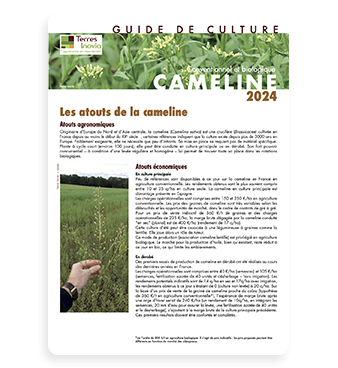
Download the guide
This guide to growing camelina outlines its potential economic returns when grown as a main crop or a cover crop, in both conventional and organic farming systems, as well as in no-till farming. It also provides indicative profit margins for crop rotations with or without camelina as a cover crop.
Projects
Each year, Terres Inovia participates in or coordinates several national, European, and international calls for proposals on a variety of topics.
-
Rapeseed
Tournesol
Pois d'hiver
Pois de printemps
Soja
Féverole d'hiver
Féverole de printemps
Lentille
Pois chiche
Lin d'hiver
Lin de printemps
Lupin d'hiver
Lupin de printemps
Cameline
Interculture
Couverts végétaux
RECOVERY
Successfully growing and deploying cover crops to control weeds between crops
-
Rapeseed
Tournesol
Pois d'hiver
Pois de printemps
Soja
Féverole d'hiver
Féverole de printemps
Lentille
Pois chiche
Lin d'hiver
Lin de printemps
Lupin d'hiver
Lupin de printemps
Cameline
Chanvre
Gérer son système de culture
Data-SpExGP
Collection of spatial data from large-plot experiments
-
Rapeseed
Pois d'hiver
Tournesol
Pois de printemps
Soja
Féverole d'hiver
Féverole de printemps
Lentille
Pois chiche
Lin d'hiver
Lin de printemps
Lupin d'hiver
Lupin de printemps
Cameline
Chanvre
Ravageurs
Fertilité et gestion durable des sols
CONCERTO
Concerted agro-ecological management of insect pests in field crops
-
Rapeseed
Tournesol
Pois d'hiver
Pois de printemps
Soja
Féverole d'hiver
Féverole de printemps
Lentille
Pois chiche
Lin d'hiver
Lin de printemps
Lupin d'hiver
Lupin de printemps
Cameline
Chanvre
Job opportunities
M2ProLIV
Towards multi-functional protein ingredients obtained by moderate processing of lipid-rich plant co-products with health benefits
Events
Upcoming Cameline events we are organizing
-
Rapeseed
Tournesol
Soja
Féverole d'hiver
Féverole de printemps
Lupin d'hiver
Lupin de printemps
Cameline
Pois chiche
Lentille
Synergies Bio Non Bio Conference: The Role of Preventive Measures in the Integrated Management of Production Systems
Camel Day: Addressing Technical Challenges from Start to Finish
-
Rapeseed
Tournesol
Pois d'hiver
Pois de printemps
Féverole d'hiver
Féverole de printemps
Lupin d'hiver
Lupin de printemps
Lentille
Soja
Pois chiche
Lin d'hiver
Lin de printemps
Cameline
Chanvre
Economic optimization
Gérer son système de culture
Fertilisation
Crop rotation and nitrogen management for the upcoming growing season: the keys to adapting to current conditions
Training
Build your skills with Cameline training courses designed and led by Terres Inovia experts
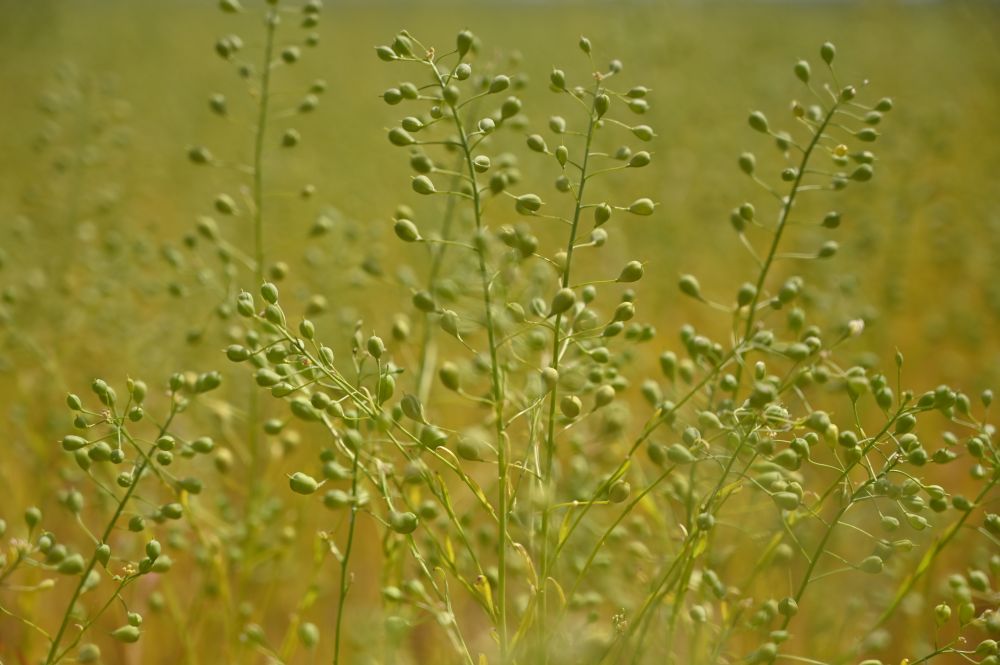
Mastering the cultivation of camelina
Sur devis

Production of edible oil through a short supply chain
Sur devis
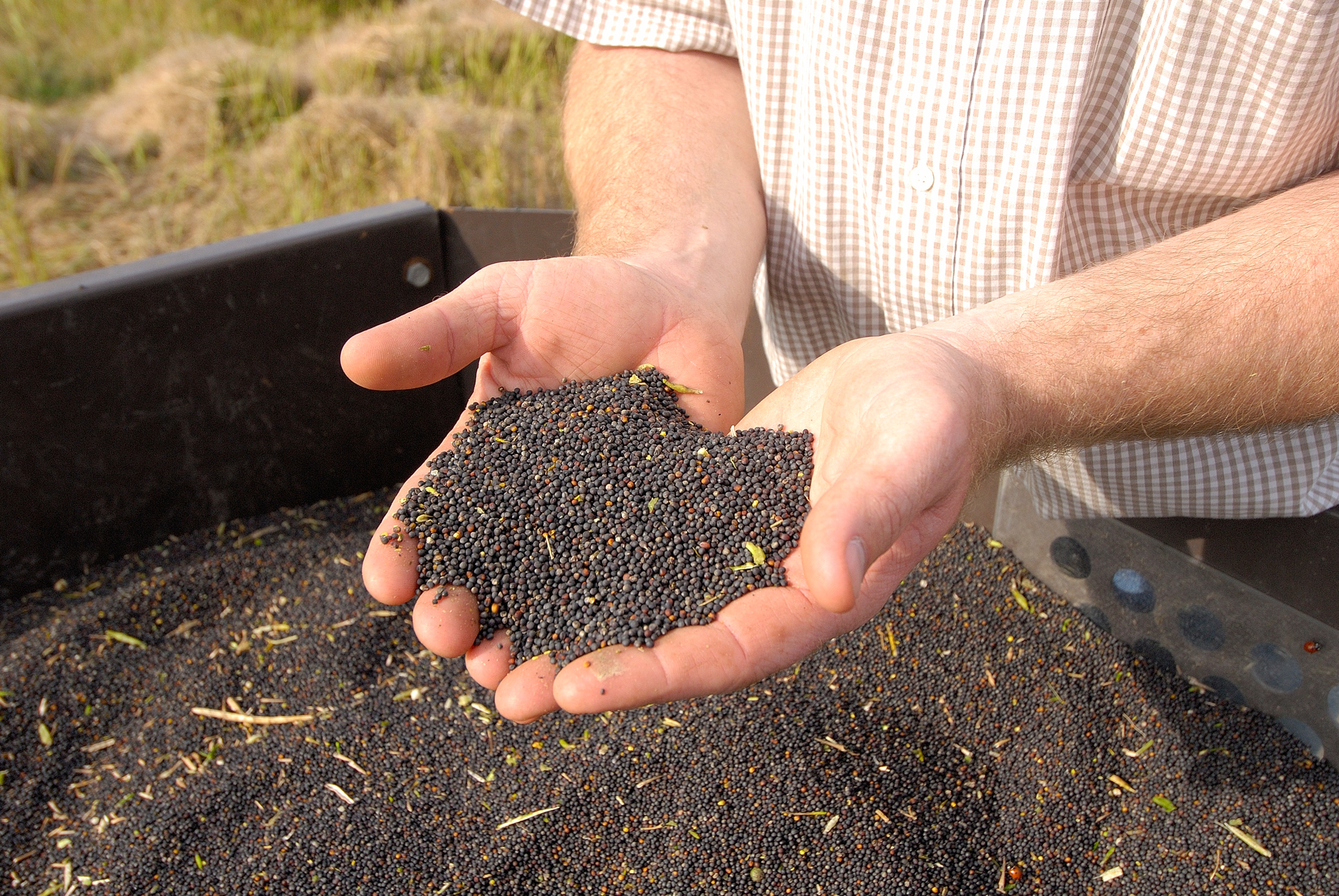
Optimization of the crushing and mechanical extraction of oil- and protein-rich seeds
Sur devis
Publications
To assist you, Terres Inovia offers several technical publications on camelina
Weed control in cereal and oilseed systems
Products and Services
Fatty acids in ISO seeds
Method used: NF EN ISO 17059 - NF EN ISO 12966-4Fungal strain on culture medium
Supply of mycelium grown on culture medium for the fungal species described below.Price: starting…Pathological diagnosis of plant material
Conducting a diagnostic assessment through macroscopic and microscopic examination, supplemented…Weeds: characterization of sensitivity to ALS inhibitors
Research by molecular analysis (sequencing) of mutations in the acetolactate synthase gene…
Have a question? Please contact us!
If you have any questions or thoughts about our research, initiatives or projects, please don't hesitate to write to us.
Log in to contact your regional contact
If you do not wish to create an account, please use the contact form.
