
SUN'Live: The essentials of sunflower management in 7 sequences
Our other training courses
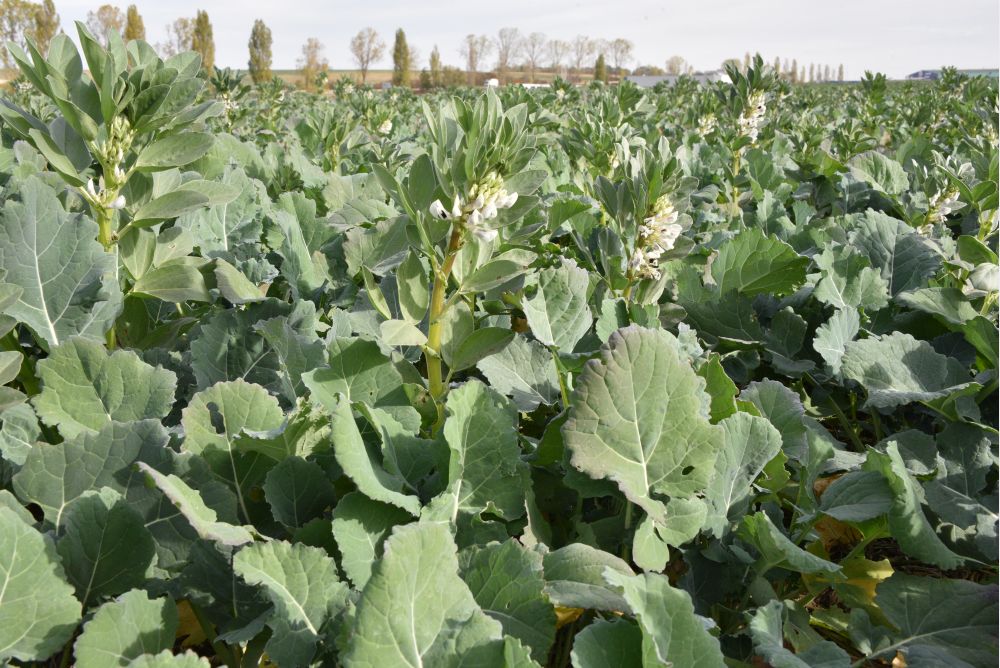
Dare to use cover crops in your cropping systems
Sur devis
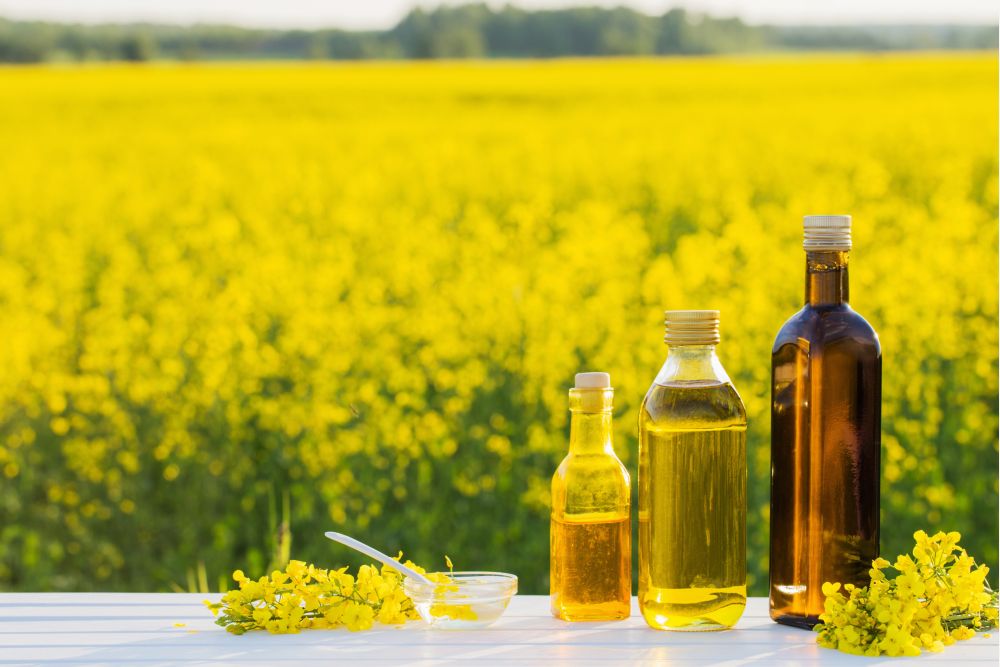
Short-circuit production of edible oil
Sur devis
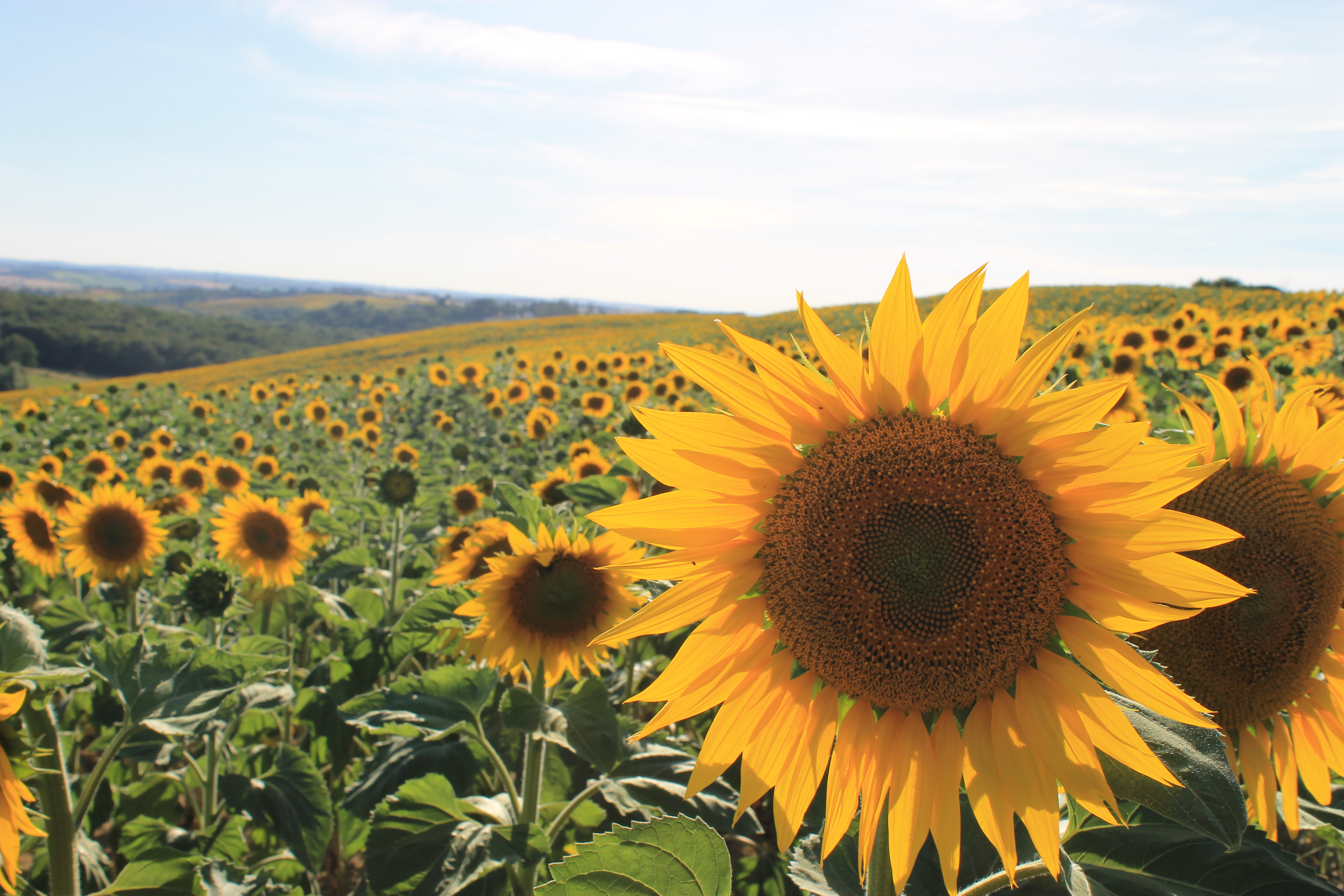
Mastering sunflower cultivation
Sur devis
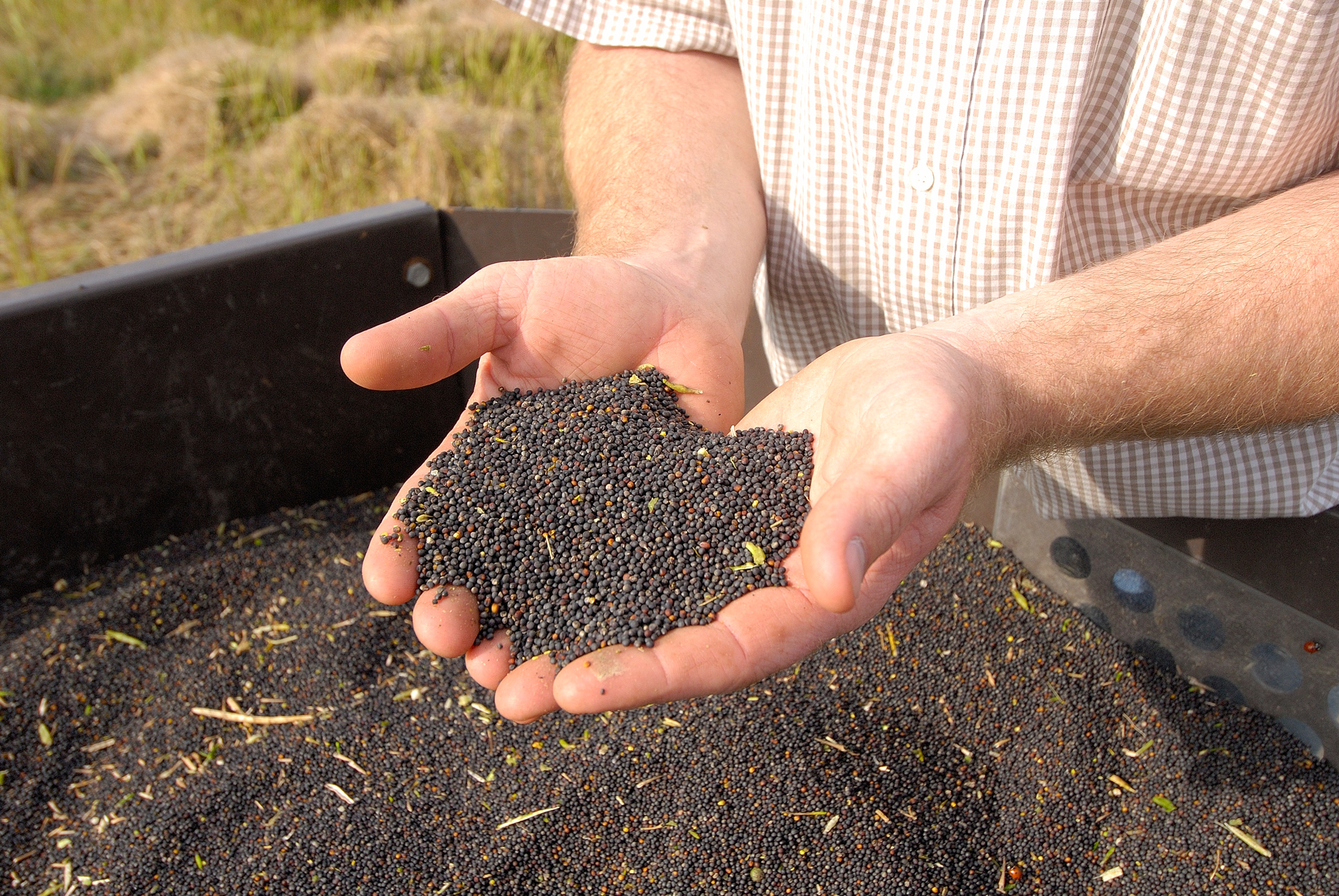
Optimization of crushing and mechanical extraction of oil-protein seeds
Sur devis
Would you like to learn more about sunflower cultivation? SUN live is a distance learning course featuring 7 sequences led by Terres Inovia experts, covering the key practices and moments essential to sunflower success. It is designed to enable you to master the fundamental aspects of the crop, whether this is your first discovery or a refresher course.
The program includes
Sequence 1: Planting and pests
- Management of intercropping (including cover crops) prior to sunflower cultivation.
- Techniques for successfully establishing a robust sunflower crop in the face of summer constraints.
- Encourage uniform planting and deep rooting.
- Identification of early-cycle pests, assessment of their harmfulness, and presentation of possible control methods.
Sequence 2: Positioning in crop rotation and economic assessment
- Agro-economic characteristics of the sunflower species: a robustness conditioned by careful and optimized cultivation.
- Optimizing sunflower's place in rotations
- What economic impact does sunflower have on cropping systems?
Sequence 3: Weed control
- Complementarity between agronomic, chemical and mechanical solutions
- Presentation of herbicide solutions and programs
- Targets, spectrum, efficacy, selectivity and conditions of use of the main herbicides for sunflower.
Sequence 4: Fertilization
- Specificities of sunflower with regard to nitrogen supply and calculating the dose to be applied
- Rationale for phospho-potassium fertilization
- Sunflower needs in trace elements; focus on boron and molybdenum
Sequence 5: Harvesting and production quality
- Choosing the right time to harvest.
- Presentation of suitable harvesting equipment.
- Good conservation and storage practices.
Sequence 6: Ecophysiology and water efficiency
- Distribution of water requirements throughout the cycle.
- Importance of early-flowering leaf area index and leaf area duration.
- Irrigating sunflowers: an opportunity to be seized.
- Identification of key periods in the cycle and climatic requirements for each growth stage.
- Factors influencing yield and oil content.
Sequence 7: Diseases and cumana broomrape
- Recognition of the main diseases, biological cycle, harmfulness, protection methods, warning and decision-making tools.
- Orobanche cumana: recognition, harmfulness, monitoring and management of affected areas in France
At the end of the course, participants will be able to :
- Identify the key stages of the crop, from planting to harvest, and evaluate their success.
- Diagnose the main problems affecting sunflower cultivation.
- Understand and use decision-making tools to help the crop reach its full potential and maximize profitability.
100% digital format: Remote training, accessible from any connected computer.
Active pedagogy: Technical presentations, case studies, feedback, analysis of real-life situations.
Evaluation: Quiz at each session, Q&A, individual satisfaction survey, self-assessment.
Online sessions: 7 sequences of 2 hours on Teams, led by Terres Inovia expert engineers.
Theoretical support: Technical presentations, summary documents, decision-making tools (e.g. fertilization calculations, pest and disease identification grids).
Interactivity: Quizzes, live questions and answers, exchanges with trainers and participants.
Digital support: Presentations and resources handed over after each session.
Technicians from development, economic and agri-supply organizations. Farmers. Teachers Quiz at each session, Q&A, individual satisfaction survey, self-positioningIf you have any requests for adaptations to help you succeed in your course, please contact the disability referent:
Christel CARO
Tel: 01 30 79 95 09
Mail: formation@terresinovia.fr
Aucun 960€ TTC 5 15 https://public.dendreo.com/4rsx27tf4npws6tp4zAwc/media/4vjvAl6wk8mhs76Am85vm6kqgvct15dt3rAhgnl3kj7A7wk2krvfgrrAjbdvqwclg8kAspj5hjhxkztppbsdc7lzjnmwc56pjbhfkz6qmz3Acpj8 7 Jours 29 Inter-company and intra-companyCOLZA'Live: Understanding rapeseed crop management in 7 sequences
Our other training courses
Managing insect pests in oilseed rape: towards new collective and regional approaches
Sur devis
Dare to use cover crops in your cropping systems
Sur devis
Short-circuit production of edible oil
Sur devis
The basics of rapeseed cultivation
Sur devis
Whether you're a beginner or want to update your knowledge, COLZA Live training offers you a complete understanding of rapeseed growing. Thanks to 7 short, interactive sequences, led by experts, you can acquire the essential skills to optimize your farming practices, all in digital format.
Program:
Sequence 1: Introduction to the crop and planting (April 7, 2026, 9 to 11 a.m.)
- Global context of rapeseed cultivation and associated agricultural issues
- Identification of stages in the rapeseed crop cycle and phenological stages.
- The challenges of rapeseed establishment, the benefits of a robust rapeseed and the key conditions to be achieved, the keys to choosing the optimum establishment techniques depending on the context.
Sequence 2: Fertilization (April 8, 2026, 9 a.m. to 11 a.m.)
- Rapeseed specificities with regard to nitrogen supply
- Calculation of spring nitrogen dose (Réglette azote colza®) and choice of fractioning strategy
- Rationalization of phosphate, potassium and sulfur fertilization
- Rapeseed needs in trace elements; focus on boron and molybdenum
Sequence 3: Weed control (April 10, 2026, 9 a.m. to 11 a.m.)
- Description of the main agronomic control levers
- Development of herbicide control strategies adapted to weed flora.
- Grass control: Ray-Grass & Vulpin
- Presentation of mechanical control methods and mixed weed control strategies.
Sequence 4: Spring diseases (April 14, 2026, 9am to 11am)
- Reminder of the main spring diseases Sclerotinia, Oidium, Alternaria, Mycosphaerella, Phoma ...
- Study of the biological cycle and harmfulness of these diseases.
- Control methods available as part of integrated crop protection.
Sequence 5: Spring pests (April 29, 2026, 9 to 11 a.m.)
- Presentation of the different spring pests: description and development cycle.
- Presentation of the main management strategies
- Presentation of preventive measures (agronomic levers) to limit the impact of pests.
- Nuisibility, risk assessment during the season (presentation of Decision Support Tools and decision rules) and decision-making.
- Choice of insecticides
- Prospects for biocontrol solutions
- Presentation of the main natural enemies.
Sequence 6: Harvesting and yield components and ecophysiological aspects (May 19, 2026, 9 to 11 a.m.)
- Strategies to limit harvest losses.
- Presentation of the swathing technique to optimize rapeseed harvesting.
- Explanation of the year's yields: rapeseed yield components and favorable factors.
Sequence 7: Autumn pests (June 23, 2026, 9 a.m. to 11 a.m.)
- Presentation of the different autumn pests: description and development cycle.
- Presentation of the main management strategies.
- Preventive measures: levers to mobilize upstream to limit risk during the season.
- Nuisibility and risk assessment during the season (presentation of decision-support tools and decision rules).
- Choice of insecticides and slug pellets.
At the end of the course, participants will be able to :
- Understand and master rapeseed cultivation techniques
- Make informed decisions to optimize the crop
- Evaluate the success of rapeseed cultivation
- Optimize rapeseed planting
- Apply effective weed control strategies
- Managing fall and spring pests
- Optimize rapeseed fertilization
- Controlling spring diseases
- Minimize harvest losses
100% digital format: Remote training, accessible from any connected computer.
Active pedagogy: Technical presentations, case studies, feedback.
Evaluation: End-of-session quiz, questions and answers, individual satisfaction survey, self-assessment.
Online sessions: 7 sequences of 2 hours on Teams, led by Terres Inovia expert engineers.
Theoretical support: Presentations, technical documents, ADO proposals.
Interactivity: Quizzes, questions and answers, live exchanges with trainers.
Digital support: Presentations and resources handed over after each session.
Technicians from development, economic and agri-supply organizations. Farmers. Teachers Quiz during each session, Q&A, individual satisfaction survey, self-positioning.If you have any requests for adaptations to help you succeed in your course, please contact the disability referent:
Christel CARO
Tel: 01 30 79 95 09
Mail: formation@terresinovia.fr
Aucun 960€ TTC 5 15 https://public.dendreo.com/4rsx27tf4npws6tp4zAwc/media/g8yt16bAkfctmrlrkbmdmsd4gvAw45c4gzzg7vzz3ncw49smljrxmszz47vA956hmzrvcpj5hj62c85cmjsf48jpgnAA3wkjf8md2rdzhb32cpj8 7 Jours 28 Inter-company and intra-companyRicin
Plant2Pro
Not communicated
36 months Non NationalThe challenges
Intermediate crops, grown between two cash crops and not harvested, can provide many ecosystem services, provided they establish quickly to compete with weeds and produce a good quantity of biomass. The main hypothesis of the RICIN project is that some species establish better than others when sown in summer under non-optimal conditions (water stress, coarse seedbed with or without mulch).
To test this hypothesis, a dozen species belonging to four major families (Poaceae, Fabaceae, Hydrophyllaceae and Brassicaceae), little or not studied to date, will be identified and compared on the basis of their seed and seedling characteristics, as well as their tolerance to water stress and mechanical constraints.
Low- and high-throughput phenotyping of the intermediate crops studied will provide knowledge for performance optimization. In addition to producing scientific and technical resources, the project will enable the development of a decision-making tool, as well as increasing the possibility of collaborations with (in particular) seed companies on this front of research represented by the characterization of the heterotropic growth of intermediate crops.
The objectives
The project aims to gain a better understanding of the factors affecting the successful establishment of intermediate crops. Ricin's main hypothesis is that some species of these crops establish better than others when sown in summer under non-optimal conditions (water stress, coarse seedbed with or without mulch).
Thus, the project aims to acquire ecophysiological knowledge on a dozen species linked to heterotrophic growth (seed germination and seedling emergence) through a comparative ecophysiology study in order to better understand their ability to establish, particularly under limiting water conditions.
It also aims to determine the potential link between establishment quality and biomass production potential under contrasting management conditions (different sowing methods, irrigation regimes, sowing depth, etc.).
It will also enable us to propose the development of an OAD to trigger sowing by taking into account the cumulative rainfall required for emergence, depending on the species and soil condition (structural and hydric).
Expected results
- Production of ecophysiological data on the heterotrophic growth (seed germination and seedling emergence) of 9 canopy species, under contrasting environmental conditions (hydric and mechanical stress).
- Identification and prioritization of factors influencing planting quality at 3 experimental sites.
- Creation of a prototype decision-support tool.
The role of Terres Inovia

Partner
Terres Inovia brings its scientific and technical expertise to bear on the agrophysiology of intermediate crops and on optimizing their establishment.
Do you have a question?
Contact our specialist who will respond promptly to your request.
Our partners
These projects may be of interest to you
Here are some other projects dealing with the same themes.
-
Colza
Pois d'hiver
Tournesol
Pois de printemps
Soja
Féverole d'hiver
Féverole de printemps
Lentille
Pois chiche
Lin d'hiver
Lin de printemps
Lupin d'hiver
Lupin de printemps
Cameline
Chanvre
Ravageurs
Fertilité et gestion durable des sols
CONCERTO
Concerted agro-ecological management of insect pests in field crops
-
Colza
Tournesol
Pois d'hiver
Pois de printemps
Soja
Féverole d'hiver
Féverole de printemps
Lentille
Pois chiche
Lin d'hiver
Lin de printemps
Lupin d'hiver
Lupin de printemps
Cameline
Chanvre
Job opportunities
M2ProLIV
Towards multi-functional protein ingredients obtained by moderate processing of lipid-rich plant co-products with health benefits
-
Colza
Pois d'hiver
Tournesol
Pois de printemps
Féverole d'hiver
Soja
Féverole de printemps
Lentille
Pois chiche
Lin de printemps
Lin d'hiver
Lupin d'hiver
Lupin de printemps
Cameline
Chanvre
Produire avec l’agroécologie
TwinFarms
Deploying digital twins at farm level to foster agro-ecological innovation
Domitille Jamet - d.jamet@terresinovia.fr
01 janvier 2025 Agir pour la transition agroécologique INRAE UMR AGIR En cours NonCamelina planting
Whether as a main crop or as a summer catch crop, successful sowing is the key to success.
Whether as a main crop or as a summer catch crop, successful sowing is the key to success.
General
The small size of the seed, with a GMP ranging from 0.7 to 1.8 g, represents a challenge for successful planting. Soil cultivation and sowing methods must provide a seedbed conducive to good contact between seed and soil, while limiting the impact of residues from the previous crop.
Summer intercropping with camelina
The success of camelina in summer intercropping depends largely on its rapid establishment. This crucial stage requires rapid, uniform and vigorous emergence. Everything must be done to ensure that the cycle is completed as quickly as possible, so that harvesting can take place at an acceptable date, maximizing the chances of harvesting camelina under favorable climatic conditions and having no impact on the following crop.
To maximize the chances of early emergence, it is crucial to choose a suitable crop precedent, enabling harvesting before July 10, the latest date for sowing camelina. The optimum sowing date is before the beginning of July. The most suitable crops are protein or canning peas and winter barley.
Previous pea crop
Sowing should be carried out as soon as possible after harvesting the previous crop, ideally within 24 to 48 hours, to take advantage of any remaining soil moisture.
Direct sowing with tines is strongly recommended. In the case of shallow stubble ploughing, do not go deeper than 3 cm to maintain soil moisture.
Seeding depth :
- Direct seeding: seed 3 cm deep
- Tilled seeding: seed 1-2 cm deep
- Surface seeding: not recommended
Regarding sowing density, we recommend sowing at 8 kg/ha with a row spacing of 12.5 - 15 cm, to aim for a stand of around 200 plants/m2.
If you have irrigation, we strongly recommend applying 10-20 mm just after sowing to boost emergence.
Previous winter barley
The only difference between winter barley and peas concerns harvesting, which should be carried out as high up as possible (between 25 and 30 cm).
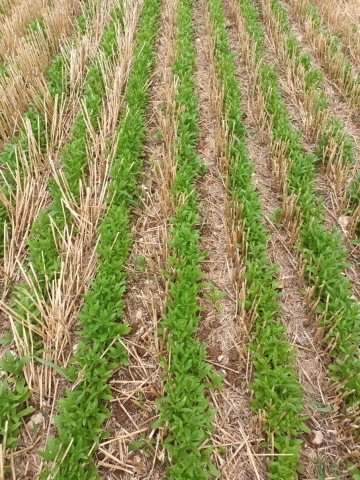
It is important to remove the straw, as it can consume nitrogen as it decomposes, and adversely affect sowing quality by disturbing contact between the seed and the soil.
Straw should also be evenly distributed over the entire surface.
All other recommendations for planting remain identical to those applied to previous peas.
Planting camelina as a main crop
Sowing should be carried out in well-aerated, uncompacted soil. Due to the small size of its seeds, camelina requires particularly careful, fine and well-reconsolidated seedbed preparation. Tillage should aim for a homogeneous profile, with no marked areas of compaction, and a surface area comparable to that required for rapeseed sowing.
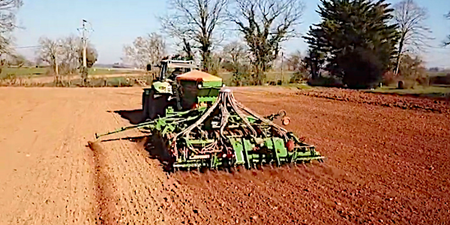
For spring camelina, the soil should be worked when it is well drained. To reduce the risk of soil compaction, we recommend reducing the number of tractor passes as much as possible, and favouring the use of combined implements. Rolling prior to sowing can be considered to even out the seedbed and ensure good contact between the seed and the soil, a condition favorable to successful germination.
Sowing takes place between late March and early April, using a cereal drill with a narrow row spacing (12.5 to 15 cm). The recommended sowing density is 5 kg/ha, aiming for a minimum population of 200 plants/m². Sowing depth should be between 1 and 1.5 cm. If required, seeds can be mixed with sand or semolina to facilitate even distribution.

Camelina editions
Cameline - Cultivation Guide 2024
Our other articles
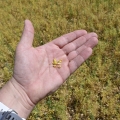
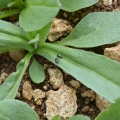
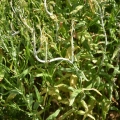
Camelina: choice of plot for summer catch crop
To maximize the chances of success for camelina as a summer catch crop, it's essential to think in terms of crop succession. Camelina should therefore be planted as soon as the main crop is planted.
To maximize the chances of success for camelina as a summer catch crop, it's essential to think in terms of crop succession. Camelina should therefore be planted as soon as the main crop is planted.
Selection criteria
- Main crop harvested early (winter barley, winter peas, etc.)
- Choose legumes to avoid fertilization
- Avoid plots with a spring herbicide program at risk
- Choose plots free of weeds
After which main crop?
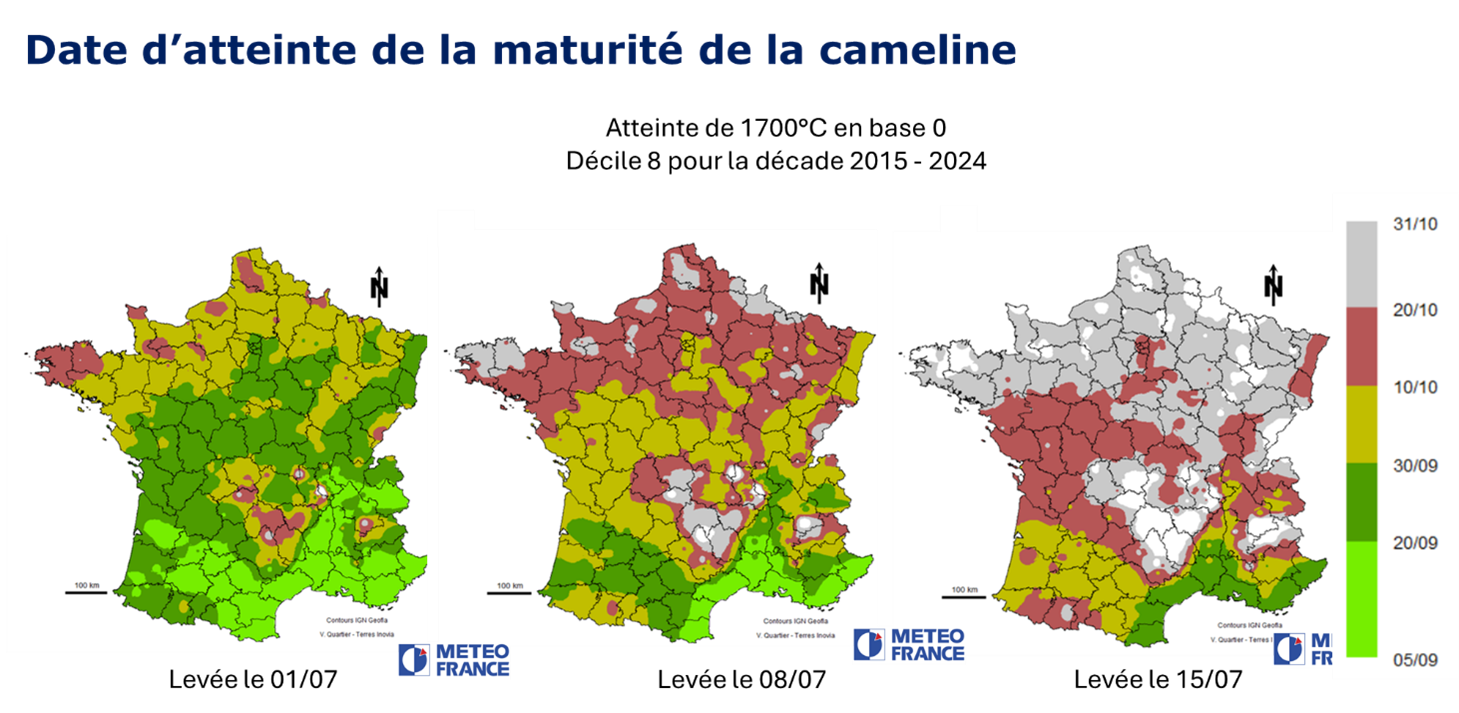
The first criterion is to choose an early-harvested preceding crop, enabling camelina to be planted between June 20 and July 10, to guarantee a harvest before the end of October. The main candidate crops are winter peas and winter barley, but other early-harvested crops may also be suitable: canning peas, garlic, onions, etc.
The map below illustrates the importance of sowing early, showing the date at which maturity is reached for very short-cycle varieties according to different emergence dates. For example, for an emergence on July 1, camelina reaches maturity before October 10 throughout France, whereas for an emergence on July 8, it reaches maturity after October 10 in the northern part of France, and for an emergence on July 15, it reaches maturity after October 20 in almost the northern half of France.
Planting camelina after a legume (e.g. winter peas) is particularly interesting, as it allows you to limit or even do without nitrogen fertilization, thus reducing the ITK's operating costs.
Focus on main crop herbicide program
Camelina grown as a summer catch crop is sensitive to the persistence of certain herbicides, mainly those in group 2(ALS1 inhibitors) with herbicides from the sulfonylurea family such as metsulfuron, mesosulfuron, etc., as well as imazamox (applied to winter peas). It also appears to be sensitive to group 14 herbicides (PPO2 inhibitors such as bifenox) and group 32 herbicides (solanesyl diphosphate synthase inhibitors, includingaclonifen, applied to winter peas).
There is therefore a risk of phytotoxicity (leaf discoloration, foot loss, etc.) for camelina when these herbicides are applied in spring to the main crop, a risk that is all the greater in dry conditions, when applied late and when there is little or no tillage between the harvest of the main crop and the planting of camelina. Despite this, the effects of these herbicides can vary according to a number of factors (rainfall, soil type, tillage, date and dose of application, etc.) and are still poorly understood and quantified.
Weed pressure on the plot
Camelina is a well-established crop that competes well with weeds. In spite of this, weed pressure remains one of the main limiting factors for camelina as a summer catch crop, so it's vital to use every possible means to manage weeds effectively.
We recommend choosing a weed-free plot at sowing time. If weeds are present when the main crop is harvested and you wish to direct seed, a glyphosate pass may be useful to manage weeds before seeding.
1ALS: acetolactate synthase
2PPO: protoporphyrinogen oxidase

Camelina editions
Cameline - Cultivation Guide 2024
Our other articles
[COMING SOON] When to sow to harvest sunflowers
Estimate the sunflower harvesting period, according to your location, based on your choice of variety and your planned sowing date.
This tool will tell you how much risk you are taking at harvest, depending on your sowing date and criteria.
This tool is designed for sunflower as a main crop, not as a catch crop. It is based on frequent climatic data and does not incorporate weather data for the current season.

How camelina fits into cropping systems
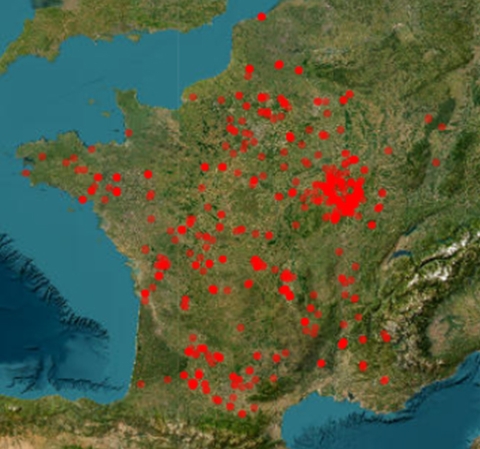
Adapted to a wide range of soil and climate conditions, camelina is grown throughout France. It can be easily integrated into a variety of cropping systems, in both conventional and organic farming.
Adapted to a wide range of soil and climate conditions, camelina is grown throughout France. It can be easily integrated into a variety of cropping systems, in both conventional and organic farming.
A particularity of camelina is its very short cycle length, which also makes it suitable for intercropping.
Camelina as the main crop
Pure cultivation
Camelina can be grown pure as a main crop, with winter and spring varieties. In areas with mild climates (winter temperatures not exceeding -10°C), spring varieties can also be planted in autumn.
As a main crop, the proportion of organically-produced camelina is particularly high, thanks to its hardiness and resistance to pests and diseases, and to the opportunities for using the oil for human consumption.
In some countries of the southern Mediterranean basin, camelina is grown on so-called "marginal" land with low potential, which it valorizes well.
In combination
Camelina lends itself well to crop combinations, particularly in organic farming. The lentil-camel association is widely practiced, with camelina acting as a staking plant, thus limiting the risk of lentil lodging.
What's more, if planting conditions are favorable, camelina develops rapidly and is highly competitive with weeds at the rosette stage, in contrast to the generally slow initial development of legumes, which contributes to better weed control. Other camelina-legume combinations mentioned in the literature are camelina combined with pea, lupin or chickpea.
There are also references to camelina combined with barley or wheat, but these refer to competition between the two species and associated yield losses (M. Leclère's thesis on camelina insertion in Picardie).
Intercropping
The length of camelina's cycle, around 3 months for short-cycle varieties, means that it can be grown as a catch crop. Recent changes in the regulatory framework open up major market opportunities for intercropped camelina, such as sustainable fuel for aviation.
Summer intercropping
While camelina adapts well to a wide range of soil and climate conditions, a number of conditions must be met to maximize its chances of success in summer intercropping: sufficient rainfall during the planting period (late June - early July), few days of high temperature (35°C - 40°C) during flowering, and a sufficient temperature sum (1700°J base 0) to reach maturity before mid-October. These criteria exclude areas very far north and south of France.
To maximize the chances of success, camelina in summer intercropping should be planted after an early-harvested preceding crop, such as barley or winter peas.
Winter intercropping
Camelina can also be intercropped in winter, before a late-sown spring crop such as sunflower or sorghum. The challenge for this type of succession is to harvest the camelina early enough, so as not to delay the sowing of the following crop too much and impact its yield potential.

