
 Se connecter avec Facebook
 Se connecter avec Google
Camelina nutrition
Camelina requires very little fertilizer. Its powerful taproot system enables it to extract the nutrients it needs for growth from deep within the soil. Fertilization management differs according to how camelina is grown.
Camelina requires very little fertilizer. Its powerful taproot system enables it to extract the nutrients it needs for growth from deep within the soil. Fertilization management differs according to how camelina is grown
Fertilization management for camelina as a main crop
Nitrogen nutrition
Nitrogen dose trials have been carried out. Camelina yield increases with nitrogen fertilization, until it reaches a plateau (see graph below - source: Malhi et al., 2013, Canada). This yield increase is explained by improvements in several components: the number of plants per square meter, the number of branches, the number of siliques per plant, as well as the number of seeds per silique. On the other hand, thousand kernel weight (MGW) does not seem to be affected (source: Agegnehu et al.1996, USA).
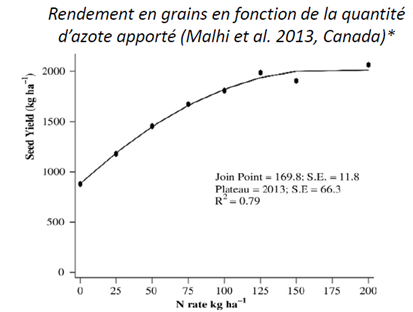
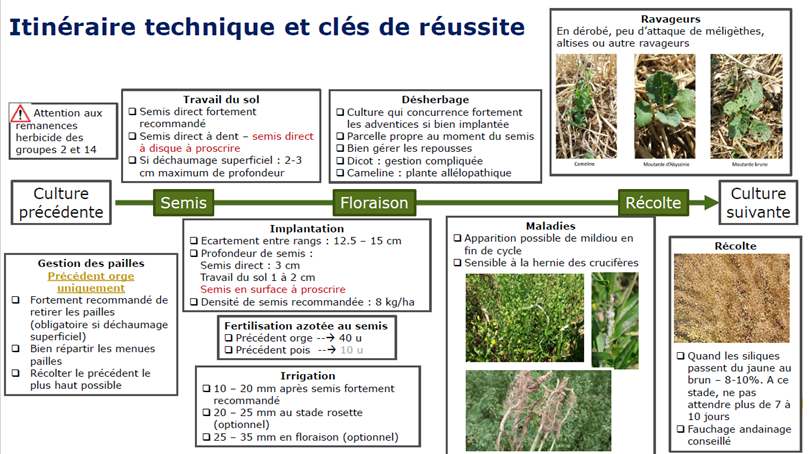
The optimum dose of nitrogen to be applied is between 80 and 100 units per hectare, depending on residues, corresponding to the economic optimum. For spring camelina, nitrogen can be applied in a single application just after sowing. However, it is possible to split the application according to the following recommendations: 30% of the dose at sowing, then the remainder at the rosette stage. For winter camelina, the application should be made when vegetation resumes before bolting.
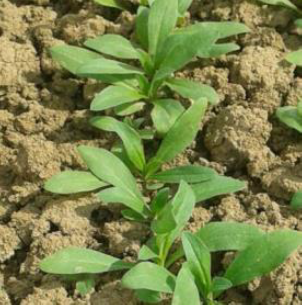
In addition, the use of a sulfur fertilizer is recommended to ensure an application of 12 to 24 units of sulfur per hectare (source: Camelina Company).
Beware of excess nitrogen, which makes the crop more susceptible to disease, particularly albugo, and can accentuate the risk of lodging.
As nitrogen fertilization increases, so does the nitrogen content of the plant and the protein concentration of the seed. On the other hand, oil content and nitrogen use efficiency decrease (source: Malhi et al., 2013, Canada).
Concerning fatty acid composition, oleic and linoleic acid percentages increase with nitrogen dose, while linolenic acid percentage decreases. The concentration of iron (Fe) and zinc (Zn) in the seeds also decreases (source: Magdalena Czarnik et al., 2027, University of Rzeszów, Poland).
Phosphorus and potash
Camelina has moderate phosphorus and potassium requirements. Inputs should be rationed throughout the rotation, based on soil analysis results. In a well-supplied soil, we recommend applying 40 units per hectare of phosphorus and 40 units per hectare of potash. These fertilizations can be carried out at any time during the intercropping period preceding camelina planting, or directly at sowing time.
Fertilization management for camelina in summer intercropping
Camelina is a cruciferous plant. It needs nitrogen from the start of its cycle to express its full potential right up to harvest.
Managing nitrogen fertilization depends on the previous crop. In the case of cereals, 40 units of nitrogen per hectare must be applied at sowing. It is strongly recommended to apply this fertilizer locally. No additional nitrogen should be applied during vegetation. Excessive nitrogen applications could lengthen the vegetative phase of camelina, delaying maturity.
Where peas are grown before camelina, the nitrogen residue is generally sufficient to ensure good camelina development. Therefore, nitrogen is not essential. However, an optional fertilization of 10 units of nitrogen per hectare at sowing can be considered.
No background fertilization is required.

Camelina editions
Cameline - Cultivation Guide 2024
Our other articles
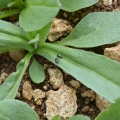
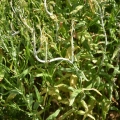
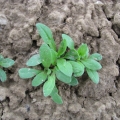
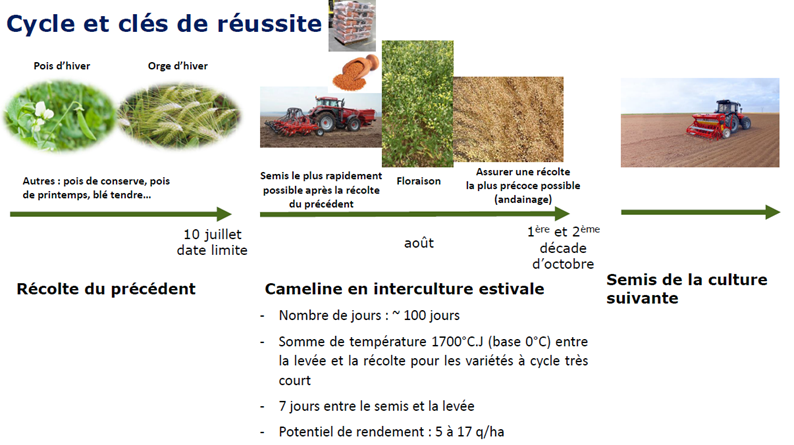
Keys to success for camelina in catch crops
Louis-Marie Allard, Terres Inovia development engineer for the North and East zone, explains the basics of successful summer cover crops with camelina.
Louis-Marie Allard, Terres Inovia development engineer for the North and East zone, explains the basics of successful summer cover crops with camelina.

Camelina editions
Cameline - Cultivation Guide 2024
Our other articles
[COMING SOON] Predicting pest flights
Provide information on the statistical probability of catching a fish in a cuvette
The tool displays :
- In graphic form: the evolution of the daily probability of capture up to D+7, for a given commune
- In map form: probability levels over the whole territory, for a given date (up to D+7).
The alert threshold is defined by the model's algorithms. Above this threshold, the probability of capturing the pest increases significantly.
The rapeseed stem weevil flight prediction tool was developed thanks to the Produire project of the Cap Protéines program, and received support from the French Ministry of Agriculture and Food Sovereignty as part of the recovery plan.
The terminal bud weevil flight prediction tool was developed thanks to the Adaptacol² project and received support from the Casdar.

The agronomic benefits of camelina
Camelina (Camelina sativa) is a cruciferous plant (Brassicaceae) native to Europe and Southwest Asia. It has historically been cultivated in Europe, notably in France, where the first traces date back to the Bronze Age, for the production of vegetable oil and fodder.
Camelina (Camelina sativa) is a cruciferous plant (Brassicaceae) native to Europe and Southwest Asia. It has historically been cultivated in Europe, notably in France, where the first traces date back to the Bronze Age, for the production of vegetable oil and fodder.
It was widely cultivated until the early 20th century, producing an oil used in soaps and paints, before gradually disappearing in the face of competition from more productive oilseed crops such as rapeseed. At the time, the solid residues obtained after oil extraction were used as a feed supplement for livestock or as fertilizer; the stalks were used to make brooms.
Today, it is making a comeback on the European agricultural scene, and is attracting interest from a wide range of players, both farmers and manufacturers, thanks to its agronomic advantages and the new outlets it opens up.
Good adaptation to soil and climate conditions
Camelina has one major advantage: it adapts to a wide range of soil and climate conditions, and is particularly well suited to low-potential soils. It is often presented as a hardy crop, thanks to its low input requirements and resistance to drought and high temperatures. It is also fairly tolerant of pests and resistant to lodging. Camelina requires little fertilizer or pesticide, so its introduction into cropping systems has both economic and environmental benefits.
No special equipment required, but some adjustments are necessary
What's more, it doesn't require any special equipment, making it easy to introduce to farms. Nevertheless, due to its small seed size (PMG ≈ 1-1.5g), the planting and harvesting phases require adjustments and special attention.
A short-cycle crop
An interesting feature of camelina is the length of its cycle, which varies according to variety and sowing period, from 90 to 250 days (1700 to 1900 degrees day at base 0°C, depending on variety). Camelina can therefore be grown as a main crop, in association with lentils, for example, or as a catch crop for short-cycle varieties (link to page on how to insert camelina into the SoC).
An asset for organic farming
Its low input requirements, combined with its strong competitive power - provided it emerges regularly and evenly - mean that it has a place in organic farming rotations (link to organic farming page). Some farmers even report that it has an "allelopathic" effect, i.e. that it can naturally inhibit the growth of other undesirable plants around it. To our knowledge, this has not yet been demonstrated in the field.
Conclusion
All these advantages make it a crop that can be easily integrated into a variety of cropping systems in France and around the world, in both organic and conventional farming, as a main crop or as a catch crop.

Camelina editions