
 Se connecter avec Facebook
 Se connecter avec Google

Fatty acids ISO s/seeds
Method used: NF EN ISO 17059 - NF EN ISO 12966-4

These services may be of interest to you
Building a localized supply chain
Terres Inovia can help you build a new, regionalized industry.From strategy to field…Oilseed impurities
Method used: in-house methodOilseed impurities ISO
Method used: NF EN ISO 658Water content ISO oilseeds
Method used: NF EN ISO 665Would you like a quote?
Would you like to know more about this service or receive a quote? Send us your request!
Managing insect pests in oilseed rape: towards new collective and regional approaches
Our other training courses
Dare to introduce cover crops into your cropping systems
Sur devis

Short-circuit production of edible oil
Sur devis
The basics of rapeseed cultivation
Sur devis
Optimization of crushing and mechanical extraction of oil-protein seeds
Sur devis
Faced with insecticide resistance and increased pressure from rapeseed pests, new strategies are emerging: agronomic levers (trap intercropping, favorable habitats), biological regulation and collective action. This training course presents concrete feedback on how to design effective territorial approaches, integrating auxiliaries and mobilizing farmers aroundagroecological objectives.
Program:
Foundations and interests of collective approaches:
- Introduction to the ecological requirements of several functional groups of beneficials (insect pollinators, flying predators, parasitoid Hymenoptera).
- Opportunities offered by collective and territorial approaches to agro-ecological insect management (pests and auxiliaries)
- Concrete example of the implementation of a concerted management strategy in a 1300 ha area where insect management is an issue, involving 10 farmers wishing to move towards a gradual elimination of insecticide applications.
Support and assessment of collective dynamics
- Keys to success and points to watch out for in order to successfully support farmers in territorial agro-ecological crop pest management projects.
- How to evaluate a territorial project?
The examples presented will be drawn from our experience in pilot territories and as part of multi-year observatories. They will be based on our knowledge of interactions between rapeseed pests and their main natural enemies, parasitoid Hymenoptera, and also on our knowledge of interactions between pollinating insects and plant species.
At the end of the course, participants will be able to :
- Explain the value of collective and territorial approaches to the management of insect pests and crop protection agents.
- Mobilize lessons learned from Terres Inovia's experience with territorial agro-ecological pest management projects
- Use tools, methods and keys to successfully support farmers in this type of approach
- Identify technical levers for limiting insect damage without insecticides, applicable on a territorial scale according to their advantages and limitations (controlled trap intercropping, biological control through habitat conservation).
100% digital format : Remote training, accessible from any connected computer.
Active pedagogy: Technical presentations, case studies, feedback.
Evaluation : End-of-session quiz, questions and answers, individual satisfaction survey, self-assessment.
Online session: 3 hours of training on Teams, led by an expert engineer from Terres Inovia.
Theoretical support: Presentations, technical documents
Interactivity: Quizzes, questions and answers, live exchanges with the trainer.
Digital support: Presentation and resources provided.
Agricultural technicians and advisors, network coordinators, agricultural teachers and trainers, and more generally anyone wishing to support a group of farmers on issues relating to the transition of their systems. End-of-session quiz, Q&A, individual satisfaction survey, self-assessment.If you have any requests for adaptations to help you succeed in your course, please contact the disability referent:
Christel CARO
Tel: 01 30 79 95 09
Mail: c.caro@terresinovia.fr
Aucun 240€ TTC 5 15 1 Jour Nicolas CERRUTTI 96 Inter-company and intra-companyDare to introduce cover crops into your cropping systems
Direct seeding under plant cover (DMCS) combines the cessation of tillage with the establishment of permanent soil cover. Today, this is the most advanced form ofconservation agriculture.
The agronomic advantages of these techniques are major, but only become real and lasting once farmers have mastered the system. Providing participants with the keys to the success of this system is the major challenge of this course.
Theoretical part (distance learning):
- Typology of plant cover crops (annual and permanent): species, associations, agronomic benefits
- Use and presentation of the ACACIA tool
- Construction of a coherent SDCV technical itinerary
- Rationalization of rotations
- Establishing, maintaining and regulating cover crops
- Nutrition, weed, pest and disease management
- Crop associations and agronomic performance
- Economic and environmental analysis of SDCV practices
Field part ( either in Baziège (31) or in Nièvre (58)):
- Visit to SDCV plots
- Soil profile and interpretation
- Exchange of practices
At the end of the course, participants will be able to :
- Explain the agronomic functioning of a direct seeding system under permanent cover
- Identify the plant species that can be used according to their objective and the local soil and climate context
- Develop a permanent soil cover strategy adapted to their cropping system;
- Master the key factors for a successful transition to direct seeding under permanent cover (rotation, fertility, cover crop management, pest management, etc.).
- Evaluate the economic and environmental impact of their DMCS management.
Hybrid format:
- Distance learning theory (2 half-days): Technical inputs, case studies, interactive quizzes.
- Field practice (1 day): Analysis of plots, interpretation of soil profiles, exchanges with practicing farmers.
Active methods: Presentations, debates, questions and answers, practical work.
Evaluation: Quiz, Q&A, individual satisfaction survey, self-assessment.
Theoretical support: Lectures, presentations, written material given to participants.
Management tool: Use and presentation for choosing and managing plant cover crops.
Plot visits: Observation and analysis of soil profiles in real-life situations.
Exchange of practices: Feedback and discussion between participants and trainers.
Farmers in a transition phase or wishing to optimize their practices; Agricultural technicians and advisors (cooperatives, chambers of agriculture, agri-supply companies); Agricultural high school teachers and agro-ecology trainers. Quiz, Q&A, individual satisfaction survey, self-positioning
If you have any requests for adaptations to help you succeed in your course, please contact the disability referent:
Christel CARO
Tel: 01 30 79 95 09
Mail: c.caro@terresinovia.fr
Aucun 960€ TTC 5 4 Jours Michael GELOEN 90 Inter-company and intra-companyFungal strain on culture medium
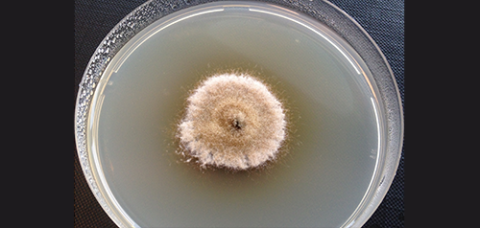
Supply of mycelial growth on culture medium for the fungal species described below.
Price: from 107€ excl. tax per strain
Alternaria brassicae, Alternaria brassicicola, Alternaria tenuissima, Aphanomyces euteiches, Aphanomyces cochlioides, Ascochyta pisi, Ascochyta fabae, Ascochyta rabiei, Botrytis cinerea, Botrytis fabae, Cladosporium sp, Cylindrosporium concentricum, Colletotrichum lini, Colletotrichum lupini, Epicoccum sp., Fusarium oxysporum, Fusarium solani, Leptosphaeria maculans, Leptosphaeria biglobosa, Leptosphaeria lindquistii, Macrophomina phaseolina, Penicillium sp., Phomopsis helianthi, Phoma medicaginis, Phomopsis phaseolorum, Rhizoctonia sp., Pythium sp., Pseudomonas syringae pv. pisi, Rhizopus sp., Sclerotinia sclerotiorum, Sclerotinia trifoliorum, Septoria linicola, Septoria glycines, Stemphyllium sp., Trichoderma sp., Verticillium dahliae, Verticillium longisporum.
These services may be of interest to you
Building a localized supply chain
Terres Inovia can help you build a new, regionalized industry.From strategy to field…Oilseed impurities
Method used: in-house methodOilseed impurities ISO
Method used: NF EN ISO 658Water content ISO oilseeds
Method used: NF EN ISO 665Would you like a quote?
Would you like to know more about this service or receive a quote? Send us your request!
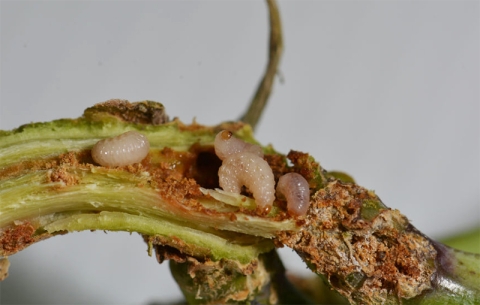
Weevils: species identification at larval stage
Analysis of a specific DNA fragment to identify different species of rapeseed weevil pests.
For each population (1 population = 1 sampling site on a given date), 20 insects are analyzed to determine the percentage of individuals of each species. The results are transmitted in the form of a report.
These services may be of interest to you
Building a localized supply chain
Terres Inovia can help you build a new, regionalized industry.From strategy to field…Oilseed impurities
Method used: in-house methodOilseed impurities ISO
Method used: NF EN ISO 658Water content ISO oilseeds
Method used: NF EN ISO 665Would you like a quote?
Would you like to know more about this service or receive a quote? Send us your request!
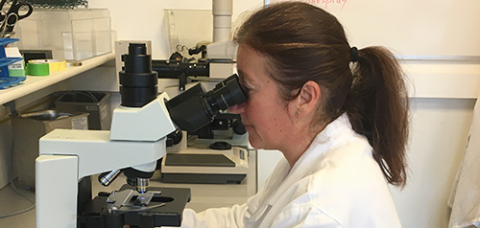
Pathological diagnosis on plant material
Diagnosis by macroscopic and microscopic observation, supplemented if necessary by molecular analysis and/or isolation of the pathogenic micro-organism on culture medium. The results are transmitted in the form of a report.
Price: from €268 excluding VAT
These services may be of interest to you
Building a localized supply chain
Terres Inovia can help you build a new, regionalized industry.From strategy to field…Oilseed impurities
Method used: in-house methodOilseed impurities ISO
Method used: NF EN ISO 658Water content ISO oilseeds
Method used: NF EN ISO 665Would you like a quote?
Would you like to know more about this service or receive a quote? Send us your request!
Insect pests: characterizing sensitivity to pyrethroids
Determination of susceptibility to lambda-cyhalothrin of populations of flea beetles, flea beetles, meligethes, different species of rapeseed weevils, and different species of bruchid beetles (faba bean, pea or lentil).
Price: From €305 excl. tax per range
For each population (1 population = 1 sampling site on a given date), insects are exposed to the insecticide to determine their sensitivity to different reference doses. A percentage mortality rate is determined for each dose tested, and an LD50 calculation is performed if results allow. The results are transmitted in the form of a report.

These services may be of interest to you
Building a localized supply chain
Terres Inovia can help you build a new, regionalized industry.From strategy to field…Oilseed impurities
Method used: in-house methodOilseed impurities ISO
Method used: NF EN ISO 658Water content ISO oilseeds
Method used: NF EN ISO 665Would you like a quote?
Would you like to know more about this service or receive a quote? Send us your request!
Price: From €305 excl. tax per range
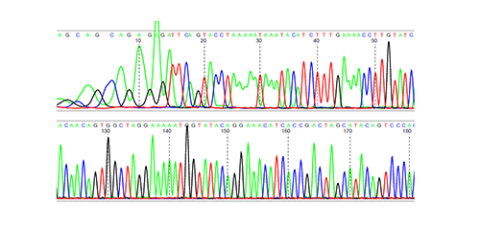
Insect pests: characterization of pyrethroid resistance by kdr mutation
Molecular analysis of mutations in the sodium channel gene responsible for reduced efficacy of pyrethroids in populations of flea beetles, codling moths, various species of rapeseed weevils and faba bean bruchids.
Price: from €147 excl. tax per population
For each population (1 population = 1 sampling site on a given date), 20 insects are analyzed to determine the percentage of individuals with a mutation. The results are transmitted in the form of a report.
These services may be of interest to you
Building a localized supply chain
Terres Inovia can help you build a new, regionalized industry.From strategy to field…Oilseed impurities
Method used: in-house methodOilseed impurities ISO
Method used: NF EN ISO 658Water content ISO oilseeds
Method used: NF EN ISO 665Would you like a quote?
Would you like to know more about this service or receive a quote? Send us your request!
Short-circuit production of edible oil
Would you like to produce and sell your own oil on the local market?
This training course will guide you through the process of setting up your workshop, providing you with the keys to understanding the technical stages (pressing, filtration, preservation), guaranteeing sanitary quality, mastering regulations (labeling, DDM) and optimizing the value of your products.
In 5 remote sessions, led by experts, you'll benefit from practical support to transform your project into a viable, professional business.
Program:
- Sequence 1: Introduction to oilseeds and oil
- Sequence 2: Extraction techniques
- Sequences 3 and 4 : Production of edible vegetable oil
- Sequence 5: Co-products and oilcake recovery
At the end of the course, participants will be able to :
- Characterize different oilseeds according to their quality criteria
- Identify and implement technical levers to ensure optimal press operation
- Produce edible oil and cake in compliance with the required quality criteria
- Identify and control the main health risks associated with edible oil production
- Apply the rules in force for marketing vegetable oils through direct sales or short distribution channels.
100% digital format: Remote training, accessible from any connected computer.
Active pedagogy: Technical presentations led by experts, concrete case studies, feedback.
Evaluation: End-of-session quiz, questions and answers, individual satisfaction survey, self-assessment.
Online sessions: 5 sequences of 2 hours on Teams, led by Terres Inovia expert engineers.
Theoretical support: Presentations, technical documents
Interactivity: Quizzes, questions and answers, live exchanges with trainers.
Digital support: Presentations and resources handed over after each session.
Farmers wishing to diversify their activity; technical managers or technicians from storage organizations, livestock feed manufacturers, oil mills; project leaders or anyone in charge of setting up a small-scale oil mill for human food consumption. End-of-session quiz, Q&A, individual satisfaction survey, self-assessment.If you have any requests for adaptations to help you succeed in your course, please contact the disability referent:
Christel CARO
Tel: 01 30 79 95 09
Mail: c.caro@terresinovia.fr
Aucun 800€ TTC 5 15 https://public.dendreo.com/4rsx27tf4npws6tp4zAwc/media/pj7wcscyjr7ds9sdj8v27ysfmzfts8ctn27s9n6k3rmhq6lmkjkwmmkbnyzw3tctkb22kpj5hjAdctlrfm6A56bygnAx2Alhgfyg9tktgr72cpj8 5 Jours Patrick CARRE 51 Inter-company and intra-companyOptimization of crushing and mechanical extraction of oil-protein seeds
Our other training courses
Successful planting for robust rapeseed
Sur devis
CAP Agronomy
Sur devis
Mastering camelina cultivation
Sur devis
Growing soybeans successfully in the South-West
Sur devis

Training catalog
Discover all the field crop training courses offered by Arvalis and Terres Inovia.

Deepen your understanding of crushing processes and the mechanical extraction of oil-protein seeds.
This course will enable you to analyze in detail the impact of process parameters on the chemical composition of oils (fatty acids, phospholipids, undesirables) and on the nutritional quality of oilcakes (digestibility, anti-nutritional factors). It incorporates the latest advances in mechanical extraction and proposes an applied approach to optimize de-oiling performance and meet the technical requirements of industrial sectors.
Program:
Day 1: Fundamentals and practices of mechanical oilseed extraction
- Oil chemistry: fatty acids, triglycerides, phospholipids, sterols and phytosterols, waxes. Properties, risks of deterioration
- General information on seeds & hulling with a focus on sunflower: hulling, variability of oil quality linked to growing conditions and varieties.
- Extraction mechanics: compression, filtration, viscosity, press geometry
- Workshop visit: press study, analysis tools, case studies
- Feedback & case studies
Day 2: Heat treatment, product quality and industrial optimization
- Mechanics of baking
- Importance of baking
- Heat treatments & Oil and cake quality
- Feedback & case studies
- Process optimization tools
At the end of the course, participants will be able to :
- Identify the main chemical and nutritional characteristics of oilseed oils
- Analyze the effects of crushing processes on oil and cake quality
- Explain the operation of mechanical extraction processes and their critical parameters
- Assess the suitability of processed products for end-users (animal nutrition, industry)
- Use numerical tools to simulate, predict and optimize production performance
Theoretical and technical input: detailed presentations of the fundamentals (oil chemistry, extraction mechanisms, critical parameters), illustrated by diagrams and scientific data.
Case studies and feedback: analysis of real industrial situations, sharing of best practices and discussion of solutions.
Hands-on workshop visit: observe equipment (presses, analysis tools), demonstrate processes, manipulate parameters and analyze results in real time.
Interactive exchanges: question-and-answer sessions, quizzes to validate acquired knowledge, debates between participants and trainer.
Presentation aids given to participants: paper or digital documents: presentations, diagrams, key data, bibliography.
Digital optimization tools : use of software (Excel, solver) to simulate and optimize processes.
Case studies: simulations of industrial problems, collective analysis of solutions.
Workshop visit: possibility of a half-day workshop visit to see the effects of controllable parameters on de-oiling performance.
Technical managers, crushing plant operators or managers, agro-industrial processing professionals, R&D engineers, process technicians. End-of-session quiz, Q&A, individual satisfaction survey, self-positioningIf you have any requests for adaptations to help you succeed in your course, please contact the Disability Advisor:
Christel CARO
Tel: 01 30 79 95 09
Mail: c.caro@terresinovia.fr
Aucun 960€ TTC 5 15 https://public.dendreo.com/4rsx27tf4npws6tp4zAwc/media/3r5dg5tsgb2wc7dcgrgAqns5krxvAA5A3vAvql5v4zrts86jlj62q9ty48lf2mty3qxx4pj5hj6A4rrwmnmxql6t48Ag3ztAfnhx4mdygb52cpj8 2 Jours Patrick CARRE 48 Inter-company and intra-company