
 Se connecter avec Facebook
 Se connecter avec Google

The basics of rapeseed cultivation
Our other training courses
Managing insect pests in oilseed rape: towards new collective and regional approaches
Sur devis
Dare to introduce cover crops into your cropping systems
Sur devis

Short-circuit production of edible oil
Sur devis
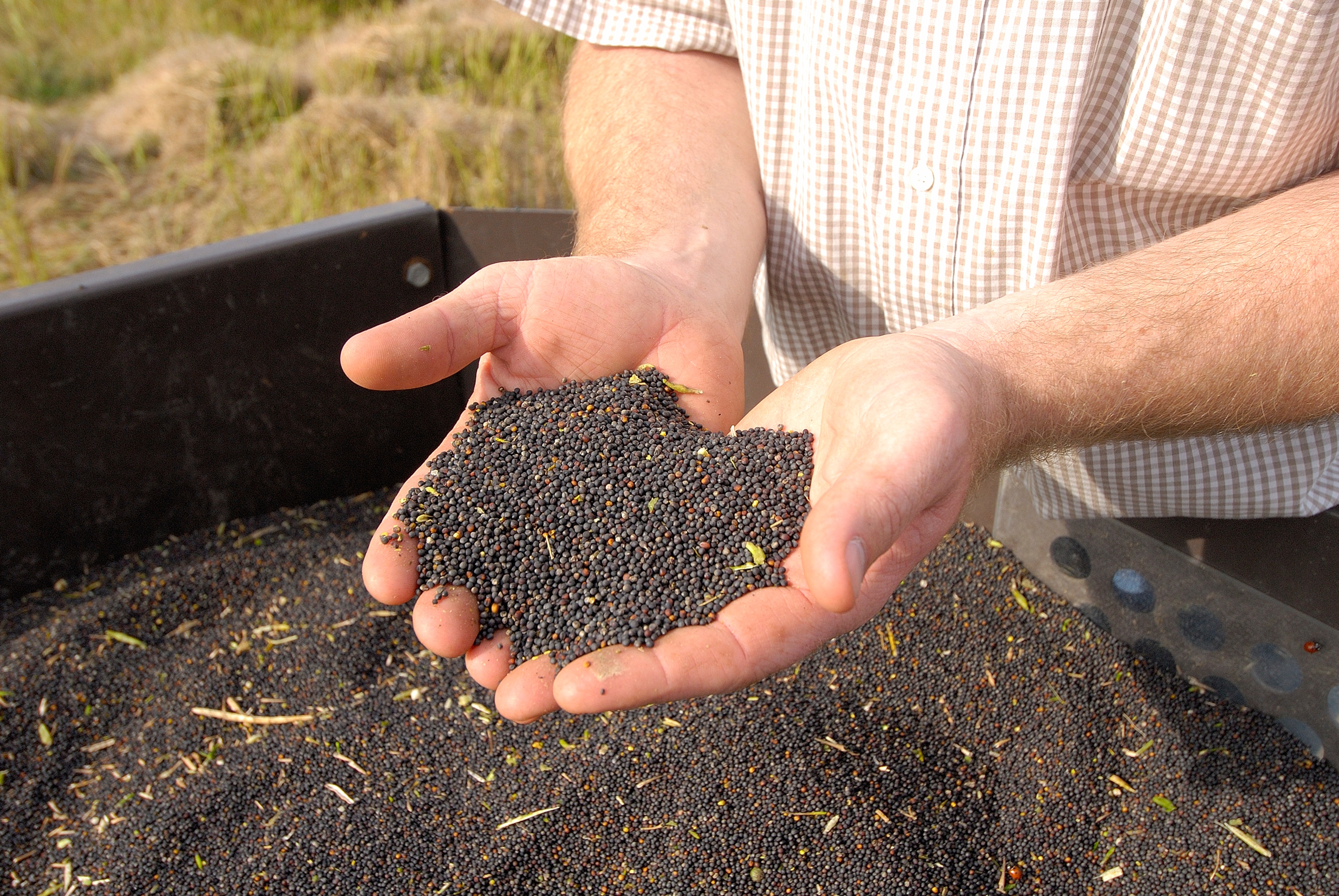
Optimization of crushing and mechanical extraction of oil-protein seeds
Sur devis
As rapeseed evolves, so does your knowledge!
With the rapid evolution of varieties, technical itineraries and decision-making tools, this training course offers a complete update on how to optimize rapeseed cultivation. Whether you're an experienced technician or a beginner, you'll discover the keys to success: genetic innovations, high-performance agronomic levers and benchmarks for making the right decisions at every stage of the campaign.
Day program :
- Yield development diagram and yield components
- Influence of different cultivation techniques
- Results of trials and surveys
- Main cropping decisions and decision rules
At the end of the course, participants will be able to:
- Identify rapeseed yield components and how they are determined
- Analyze the impact of cultivation practices on crop performance
- Select the varieties and inputs best suited to their soil and climate conditions and production objectives
- Adapt technical itineraries according to development stages and conditions encountered
- Make informed decisions throughout the growing season, based on technical, economic and agronomic data.
Active teaching methods: Technical presentations, case studies, feedback, alternating between theoretical input and feedback from field experience.
Evaluation: End-of-session quiz, questions and answers, individual satisfaction survey, self-assessment.
Theoretical support: Lectures, presentations, written material given to participants.
Exchange of practices: Feedback and debates between participants and trainers.
Interactivity: Quizzes, questions and answers, live exchanges with trainers.
Digital supports: Presentations and resources handed out after each session.
Technicians from development, economic organizations and the agri-supply industry. Teachers End-of-session quiz, Q&A, individual satisfaction survey, self-assessment.If you have any requests for adaptations to help you succeed in your course, please contact the disability referent:
Christel CARO
Tel: 01 30 79 95 09
Mail: c.caro@terresinovia.fr
Aucun 480€ TTC 5 15 https://public.dendreo.com/4rsx27tf4npws6tp4zAwc/media/m8h2g66skn8g5r5fm8ctm5ck3fcxc6k5fnwvA8kAnm5w2mttjj6Awmsnnjx2k9ckmr2xgpj5h36w2tdskfsd4zcy3rvh4vzqkntds9cwnbwfcpj8 1 Jour 40 Inter-company and intra-companyCOLZA'Live: Understanding rapeseed crop management in 7 sequences
Our other training courses
Managing insect pests in oilseed rape: towards new collective and regional approaches
Sur devis
Dare to introduce cover crops into your cropping systems
Sur devis
Short-circuit production of edible oil
Sur devis
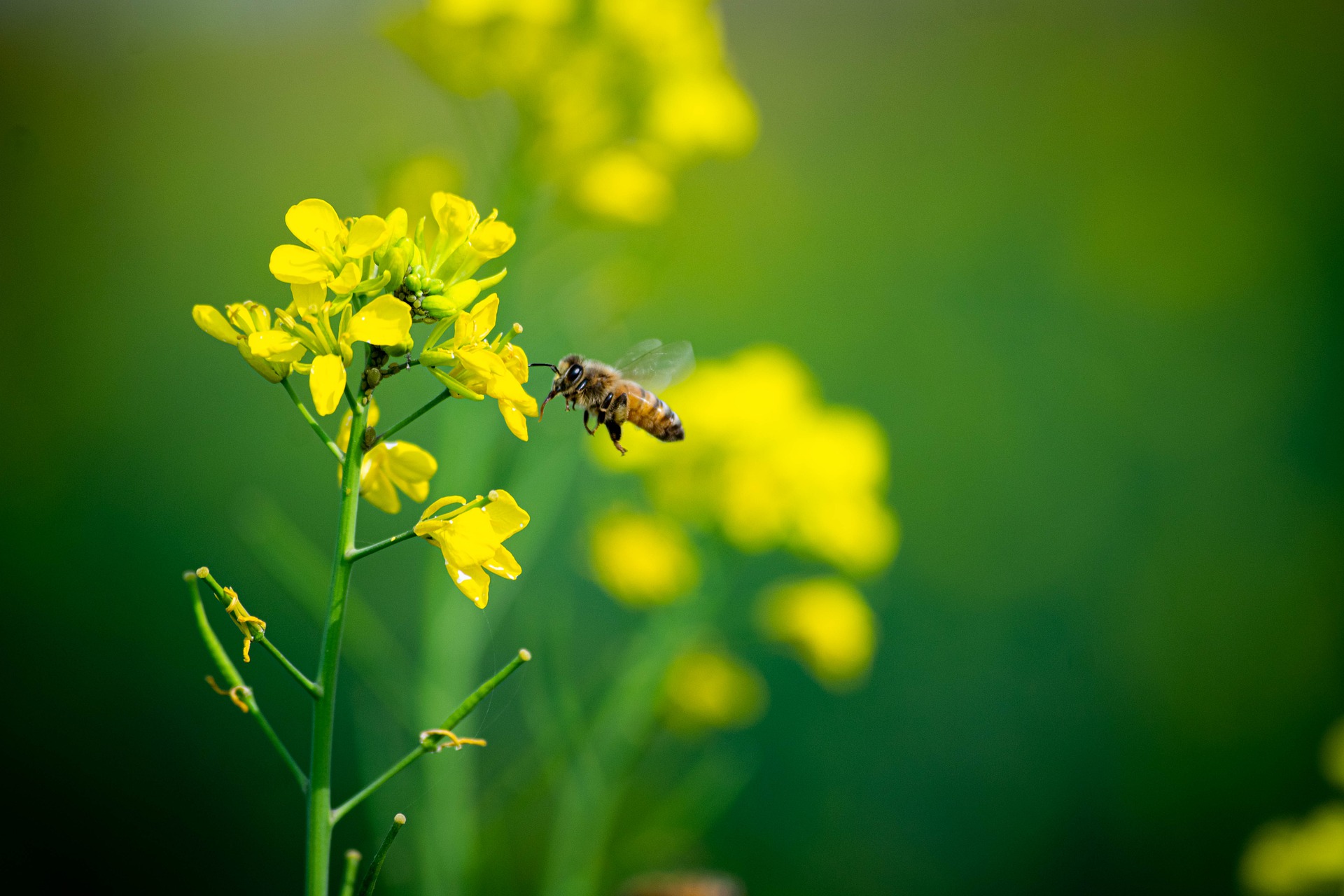
The basics of rapeseed cultivation
Sur devis
Whether you're a beginner or want to update your knowledge, COLZA Live training offers you a complete understanding of rapeseed growing. Thanks to 7 short, interactive sequences, led by experts, you can acquire the essential skills to optimize your farming practices, all in digital format.
Sequence 1: Introduction to the crop and planting
- Global context of rapeseed growing and associated agricultural issues
- Identification of the stages in the rapeseed crop cycle and phenological stages.
- The challenges of rapeseed establishment, the benefits of a robust rapeseed and the key conditions to be achieved, the keys to choosing the optimum establishment techniques according to the context.
Sequence 2: Fertilization
- Rapeseed specificities with regard to nitrogen supply
- Calculation of spring nitrogen dose (Réglette azote colza®) and choice of fractioning strategy
- Rationalization of phosphate, potassium and sulfur fertilization
- Rapeseed needs in trace elements; focus on boron and molybdenum
Sequence 3: Spring pests
- Presentation of the different spring pests: description and development cycle.
- Presentation of the main management strategies
- Presentation of preventive measures (agronomic levers) to limit the impact of pests.
- Nuisibility, risk assessment during the season (presentation of Decision Support Tools and decision rules) and decision-making.
- Choice of insecticides
- Prospects for biocontrol solutions
- Presentation of the main natural enemies.
Sequence 4: Spring diseases
- Review of the main spring diseases: Sclerotinia, Oidium, Alternaria, Mycosphaerella, Phoma, etc.
- Study of the biological cycle and harmfulness of these diseases.
- Control methods available as part of integrated crop protection.
Sequence 5 : Weed control
- Description of the main agronomic control methods.
- Development of herbicide control strategies adapted to weed flora.
- Grass control: Ray-Grass & Vulpin
- Presentation of mechanical control methods and mixed weed control strategies.
Sequence 6: Harvesting and yield components and ecophysiological aspects
- Strategies to limit harvest losses.
- Presentation of the swathing technique to optimize rapeseed harvesting.
- Explanation of the year's yields: rapeseed yield components and favorable factors.
Sequence 7: Autumn pests
- Presentation of the different autumn pests: description and development cycle.
- Presentation of the main management strategies.
- Preventive measures: levers to mobilize upstream to limit risk during the season.
- Nuisibility and risk assessment during the season (presentation of decision-support tools and decision rules).
- Choice of insecticides and slug pellets.
At the end of the course, participants will be able to :
- Understand and master rapeseed cultivation techniques
- Make informed decisions to optimize the crop
- Evaluate the success of rapeseed cultivation
- Optimize rapeseed planting
- Apply effective weed control strategies
- Managing fall and spring pests
- Optimize rapeseed fertilization
- Controlling spring diseases
- Minimize harvest losses
100% digital format: Remote training, accessible from any connected computer.
Active pedagogy: Technical presentations, case studies, feedback.
Evaluation: End-of-session quiz, questions and answers, individual satisfaction survey, self-assessment.
Online sessions: 7 sequences of 2 hours on Teams, led by Terres Inovia expert engineers.
Theoretical support: Presentations, technical documents, ADO proposals.
Interactivity: Quizzes, questions and answers, live exchanges with trainers.
Digital support: Presentations and resources handed over after each session.
Technicians from development, economic and agri-supply organizations. farmers. Teachers End-of-session quiz, Q&A, individual satisfaction survey, self-assessment.If you have any requests for adaptations to help you succeed in your course, please contact the disability referent:
Christel CARO
Tel: 01 30 79 95 09
Mail: c.caro@terresinovia.fr
Aucun 960€ TTC 5 15 https://public.dendreo.com/4rsx27tf4npws6tp4zAwc/media/jzmc9vtrj7yx25d3mmxwqv6vfnjf1mkqmr6Amztbmvrw2552nbvAmqtt4vl254lnnq6Acpj5hjh247kqjyzx3wbwkjwxszsbf8sgg9l3j37Acpj8 7 Jours 28 Inter-company and intra-companyHow to manage mineral fertilization in rapeseed and sunflower?
Our other training courses
Managing insect pests in oilseed rape: towards new collective and regional approaches
Sur devis
Dare to introduce cover crops into your cropping systems
Sur devis
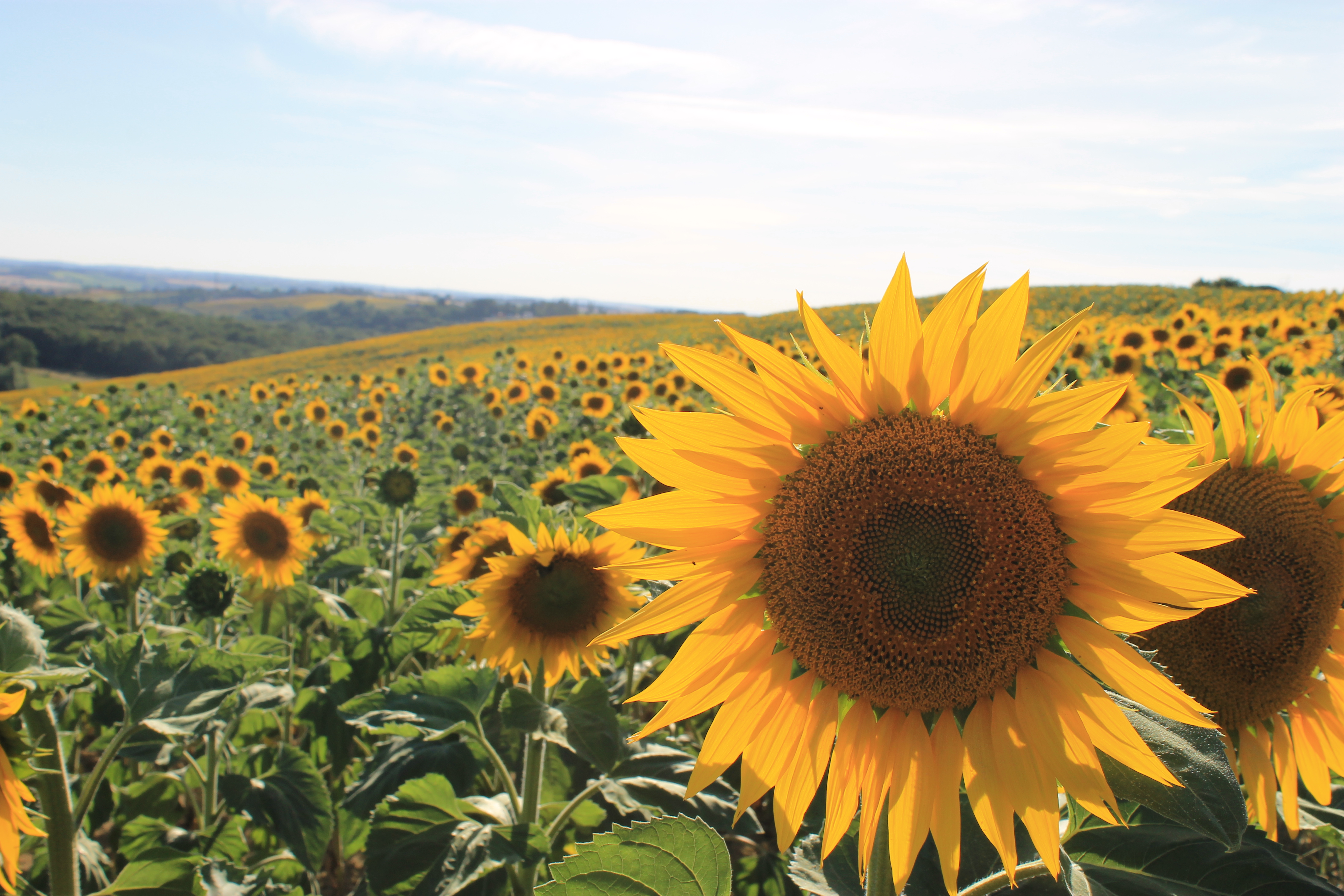
Mastering sunflower cultivation
Sur devis
Short-circuit production of edible oil
Sur devis
Optimize mineral fertilization of rapeseed and sunflower!
This training course will give you a better understanding of the nutritional requirements of these crops, help you reason out your fertilizer inputs and use the right decision-making tools. A day to integrate fertilization into sustainable, high-performance management, in line with agri-environmental issues.
Program:
- Review of the functions of mineral elements (N, P, K, S, trace elements) in rapeseed and sunflower growth
- Nutritional specificities of each crop
- Fertilization decision-making principles: reasoning behind inputs, intervention schedule
- Methods for calculating nutrient doses and variability factors to be taken into account
- Presentation of decision-making tools for managing nitrogen fertilization
- Integrating fertilization into an integrated crop protection strategy
At the end of the course, participants will be able to :
- Identify the specific nutritional requirements of rapeseed and sunflower
- Apply decision rules for mineral crop fertilization
- Use decision-making tools to adapt fertilizer inputs to actual needs
- Integrate fertilization into an integrated crop management approach, particularly from an agri-environmental perspective.
Face-to-face format (1 day)
-
In-class technical input: agronomic reminders, calculation methods, decision-making tools.
-
Exchange: discussions based on feedback from field experience.
Active methods: Presentations, interactive exchanges, case studies, self-assessment of knowledge.
Evaluation: Quiz, questions and answers, self-positioning test, individual satisfaction survey.
Theoretical aids: Presentations, classroom lectures, teaching aids given to participants.
Management tools: Introduction and use of decision-making tools to adjust nitrogen inputs.
Case studies: Fertilization reasoning exercises based on real-life situations.
Practical exchanges: Sharing of experience between participants and trainer, discussion of agri-environmental issues.
Development technicians, agri-supply and distribution professionals, teachers, farmers. Quiz, Q&A, self-positioning test, individual satisfaction survey.If you have any requests for adaptations to help you succeed in your course, please contact the disability referent:
Christel CARO
Tel: 01 30 79 95 09
Mail: c.caro@terresinovia.fr
Aucun 480€ TTC 5 15 https://public.dendreo.com/4rsx27tf4npws6tp4zAwc/media/pfmv48dh3n7wks5An8lf2l6lgvgg2z5lpjqtgl62pb7xAr6cmryhmmsw4ntgqAjwn88d3pj5hjbAs9lrfmxw2l6m4rrhkm5ln35wsvrs3rAw4pj8 1 Jour Emile LEREBOUR 26 Inter-company and intra-companyHerbi1&NoPhy
OFB
1 200 000€
60 months Oui NationalThe challenges
Herbicide management is at the heart of farmers' concerns. There is a strong need for references in a context where the number of active ingredients is decreasing, resistance is developing and climate change is having an impact on weed dynamics and intervention times.
Following on from the XpeGE 0 project, which tested systems without phytosanitary products, Herbi1&NoPhy is based on less risk-taking for farmers and supply chains: the use of herbicides is a low priority, well after agronomic levers - but not excluded - and the use of other phytosanitary products is circumvented by technical choices.
The evaluation of this new project should make it possible to measure the technical and economic consequences of very drastically reducing the use of phytosanitary products, with a view to adapting systems to climate change, based on the notion of diversity (species, varieties, tillage, sowing periods, etc.).
The objectives
The aim of this experimentation and transfer project is to consolidate, build up and disseminate references on field crop and mixed farming systems, with a marked break in the use of phytosanitary products adapted to the context of climate change. It is based on a strong technical partnership between research, development, teaching and farmers.
The experimental sites (2 platforms and 10 observatories) will test annual cropping systems that represent a major break with the past, using all available agronomic, genetic, mechanical and biocontrol levers, with minimal use of herbicides and the use of other products only when absolutely necessary.
Expected results
The aim of the project is to create benchmarks for low-use phytosanitary practices. Estimating the technico-economic impact, the consequences in terms of equipment investment or working time, and assessing the acceptability of these systems to farmers through controlled observatories are the results expected from the project to help farmers adopt these systems.
The role of Terres Inovia

Partner
- Technical intervention on the Haroué platform
- Reflection on intervention thresholds as a last resort
Do you have a question?
Contact our specialist who will respond promptly to your request.
These projects may be of interest to you
Here are some other projects dealing with the same themes.
PLATOON
Towards better management of the cruciferous clubroot problem (Plasmodiophora brassicae): from knowledge of the pathogen to varietal evaluation
Decoproze
Demonstrator of a sustainable, zero-emission, protein-rich rapeseed production chain
ARPEGE
Structuring and developing sustainable agricultural sectors with regenerative agriculture
Project sheet
Towards carbon neutrality with farms
Lorem ipsum dolor sit amet, consectetur adipiscing elit. Sed non risus. Suspendisse lectus tortor, dignissim sit amet, adipiscing nec, ultricies sed, dolor. Cras elementum ultrices diam. Maecenas ligula massa, varius a, semper congue, euismod non, mi. Proin porttitor, orci nec nonummy molestie,…Aurore Baillet - a.baillet@terresinovia.fr
01 janvier 2025 S'adapter au changement climatique Grand Est Regional Chamber of Agriculture En cours NonDecoproze
BPI France
7 800 000€
54 months Oui NationalThe challenges
The various crises (Covid, war in Ukraine) have raised the question of the need to increase France's protein sovereignty and reduce its dependence on imports. Consumers are also calling for more local, environmentally-friendly production. France has a well-structured rapeseed industry.
The aim of the Decoproze project is therefore to test and roll out an "advanced rapeseed" solution on a regional scale, which should contribute to France's protein sovereignty. It could be a lever for France's agricultural transition and protein sovereignty, thanks to the creation of downstream value and its sharing across all links in the production chain.
The objectives
The aim of the project is to develop a demonstrator for the "advanced rapeseed" sector, enabling :
- Improve the protein content of rapeseed meal by 20% and reduce its fiber content by 25%.
- Accelerate the deployment of new production methods on a large scale, using digital tools to facilitate the combination of agronomic levers.
- Implement a viable economic model remunerating sustainable practices to produce protein-rich rapeseed using agroecological growing methods.
Expected results
- Enable the French rapeseed industry to significantly increase France's protein autonomy and reduce dependence on soybean imports;
- Drastically reduce greenhouse gas emissions and the use of chemical and mineral inputs, while improving protein content;
- Enable the development of markets that value quality and sustainability.
The role of Terres Inovia
Partner
- Support for SCAEL and SAIPOL in the co-construction of advanced rapeseed specifications alongside farmers, notably through events and training.
- Set up and monitor evaluation trials on the fertilization method and its management.
- Provision of the Institute's rapeseed expertise to all partners.
- Development of an infrared calibration system to facilitate seed analysis.
- Scientific and professional publications produced throughout the project.
Achievements and spin-offs
Do you have a question?
Contact our specialist who will respond promptly to your request.
Our partners
These projects may be of interest to you
Here are some other projects dealing with the same themes.
PLATOON
Towards better management of the cruciferous clubroot problem (Plasmodiophora brassicae): from knowledge of the pathogen to varietal evaluation
-
Colza
Tournesol
Pois de printemps
Pois d'hiver
Pois chiche
Lentille
Soja
Chanvre
Féverole d'hiver
Féverole de printemps
Lin d'hiver
Lin de printemps
Lupin d'hiver
Lupin de printemps
Cameline
Biodiversité
Herbi1&NoPhy
Experimenting with agroecological systems for pesticide use as a last resort
ARPEGE
Structuring and developing sustainable agricultural sectors with regenerative agriculture
Project sheet
Towards carbon neutrality with farms
Lorem ipsum dolor sit amet, consectetur adipiscing elit. Sed non risus. Suspendisse lectus tortor, dignissim sit amet, adipiscing nec, ultricies sed, dolor. Cras elementum ultrices diam. Maecenas ligula massa, varius a, semper congue, euismod non, mi. Proin porttitor, orci nec nonummy molestie,…Frédéric Giraud - f.giraud@terresinovia.fr
13 juin 2022 S'adapter au changement climatique Saipol En cours NonARPEGE
BPI France
17 700 000€
48 months Oui NationalThe challenges
The ARPEGE project is part of a societal and environmental context aimed at reducing greenhouse gas emissions from agricultural practices, their impact on biodiversity and the use of plant protection products, as well as providing traceability of these practices.
The objectives
The ARPEGE project aims to structure and develop sustainable agricultural value chains based on the principles of regenerative agriculture. Through a collective approach involving cooperatives, manufacturers, technical institutes and startups, the project aims to experiment, co-construct and disseminate innovative solutions to strengthen the resilience of agricultural sectors, enhance the value of committed producers and offer high value-added products.
Expected results
- The creation of agricultural chains that meet Axereal's regenerative agriculture specifications and are structured around peas in particular.
- Increasing production volumes in line with sustainable specifications (up to 30,000 t by 2026).
- Improving farming practices: stable yields, harvest quality, resilient rotations.
- Development of technical tools to support farmers (protocols, diagnostics, monitoring).
- Reducing manufacturers' carbon footprint through sustainable sourcing.
- Enhancing the value of Axereal's regenerative agriculture products.
The role of Terres Inovia
Partner
Terres Inovia is involved in a number of aspects of the project, including characterization of supply chains, stress management (biotic and abiotic), construction of resilient crop rotations and crop quality assessment. Terres Inovia will also contribute to the training of technicians, farmers and students in the integration of legumes into crop rotations and in the levers for diversifying agricultural practices, for example via the Cap Agronomie® approach.
Achievements and spin-offs
Do you have a question?
Contact our specialist who will respond promptly to your request.
These projects may be of interest to you
Here are some other projects dealing with the same themes.
PLATOON
Towards better management of the cruciferous clubroot problem (Plasmodiophora brassicae): from knowledge of the pathogen to varietal evaluation
-
Colza
Tournesol
Pois de printemps
Pois d'hiver
Pois chiche
Lentille
Soja
Chanvre
Féverole d'hiver
Féverole de printemps
Lin d'hiver
Lin de printemps
Lupin d'hiver
Lupin de printemps
Cameline
Biodiversité
Herbi1&NoPhy
Experimenting with agroecological systems for pesticide use as a last resort
Decoproze
Demonstrator of a sustainable, zero-emission, protein-rich rapeseed production chain
Project sheet
Towards carbon neutrality with farms
Lorem ipsum dolor sit amet, consectetur adipiscing elit. Sed non risus. Suspendisse lectus tortor, dignissim sit amet, adipiscing nec, ultricies sed, dolor. Cras elementum ultrices diam. Maecenas ligula massa, varius a, semper congue, euismod non, mi. Proin porttitor, orci nec nonummy molestie,…Carolina Orellana Torrejon - c.orellana@terresinovia.fr
01 janvier 2024 S'adapter au changement climatique Axereal En cours NonQual-Ino
Carnot P2P
48 000 €
12 months Oui NationalThe challenges
Inocula of various Rhizobium species have been marketed in France since the 1970s, and represent the first example of large-scale valorization of inoculated microorganisms in agricultural production. Against a backdrop of expanding regulatory frameworks, more abundant supply, the emergence of new species of valuable bacteria and technological developments, the historic product evaluation system and the quality guarantees it offers users appear fragile, although they could serve as an example for future proposals better adapted to the new context.
The objectives
The aim is to lay the foundations for a system of evaluation and control of inoculation products for all Rhizobia inocula, but also for other bacterial microorganisms, in order to guarantee users a quality product.
Expected results
Draw up a precise inventory of :
- products on the market and the economic players involved (manufacturers and distributors)
- Evaluation and control methods and criteria taken into account
- economic players likely to be involved in controls, with a view to identifying their specific features and expertise
- economic players involved in seeds and their coating with micro-organisms
The role of Terres Inovia
Coordinator
Steering and coordinating actions.
Achievements and spin-offs
Do you have a question?
Contact our specialist who will respond promptly to your request.
Our partners
These projects may be of interest to you
Here are some other projects dealing with the same themes.
-
Colza
Tournesol
Pois de printemps
Pois d'hiver
Pois chiche
Lentille
Soja
Chanvre
Féverole d'hiver
Féverole de printemps
Lin d'hiver
Lin de printemps
Lupin d'hiver
Lupin de printemps
Cameline
Biodiversité
Herbi1&NoPhy
Experimenting with agroecological systems for pesticide use as a last resort
Ricin
Towards a better understanding of the factors affecting the successful establishment of intermediate crops
SOYSTAINABLE
Promoting high-quality, protein-rich soybean production that is locally adapted and resilient to climate change.
Xavier Pinochet - x.pinochet@terresinovia.fr
01 janvier 2023 S'adapter au changement climatique Terres Inovia Terminé NonSYMBIOLEG
FranceAgriMer
Not communicated
29 months Oui NationalThe challenges
Despite growing demand from farmers and consumers, applied research efforts remain very modest, given the still modest size of the pulse seed market. In order to secure production and ensure optimal nitrogen fixation for the various pulse species, it seems essential to work on the production of specific inocula, adapted and directly applied to seeds, to facilitate their use by farmers. However, to date in France, there is no inoculum used routinely with proven efficacy in chickpea, lentil or dry bean.
The development of rhizobium inoculum would undoubtedly enable us to increase the area under legume production, and thus move towards national production autonomy and meet consumer needs, particularly for local products.
The objectives
The overall aim of the project is to develop rhizobium coatings specific to each species, adapted to French growing basins and also suitable for use in organic farming.
Expected results
- Characterization of efficient rhizobium strains per legume species in different production basins in France
- Production of 3 efficient rhizobium strains per species to enable production testing of these strains.
- Development of an industrial rhizobium coating recipe for each species
- Coating chickpea, lentil and dry bean varieties with the selected inocula to enable them to be marketed in France, after obtaining marketing authorization.
The role of Terres Inovia
Partner
- Selection of study areas and sampling for strain characterization
- Field trials on seed coatings
Do you have a question?
Contact our specialist who will respond promptly to your request.
These projects may be of interest to you
Here are some other projects dealing with the same themes.
-
Colza
Tournesol
Pois de printemps
Pois d'hiver
Pois chiche
Lentille
Soja
Chanvre
Féverole d'hiver
Féverole de printemps
Lin d'hiver
Lin de printemps
Lupin d'hiver
Lupin de printemps
Cameline
Biodiversité
Herbi1&NoPhy
Experimenting with agroecological systems for pesticide use as a last resort
Ricin
Towards a better understanding of the factors affecting the successful establishment of intermediate crops
SOYSTAINABLE
Promoting high-quality, protein-rich soybean production that is locally adapted and resilient to climate change.
Zoé Le Bihan - z.lebihan@terresinovia.fr
01 juin 2023 S'adapter au changement climatique Semences de Provence En cours NonVARIETIES
DGER
Not communicated
23 months Oui NationalThe challenges
Oilseed and protein crops are not competitive with the dominant crops in the crop rotation. The National Strategy for Vegetable Proteins aims to significantly increase the acreage of these crops, enabling France to make up part of its shortfall in protein-rich materials. One of the levers for increasing the competitiveness of these crops, and legumes in particular, is to improve genetic progress for these species by increasing varietal renewal on the farm.
The objectives
- Accelerate the development of pulse varieties adapted to French production conditions;
- Increase the use of recent varieties in crop rotation for seed legumes (self-pollinating species);
- Optimize the choice of oilseed and protein crop varieties to meet market demands in terms of protein content, or adaptation to difficult production contexts.
Expected results
- Creation of a cooperative scheme with Mediterranean ambitions for the varietal improvement of pulses
- Communicate on high-performance varieties adapted to production constraints and the needs of protein-rich commodity chains.
The role of Terres Inovia
Coordinator
Steering and coordinating actions.
Do you have a question?
Contact our specialist who will respond promptly to your request.
Our partners
These projects may be of interest to you
Here are some other projects dealing with the same themes.
-
Colza
Tournesol
Pois de printemps
Pois d'hiver
Pois chiche
Lentille
Soja
Chanvre
Féverole d'hiver
Féverole de printemps
Lin d'hiver
Lin de printemps
Lupin d'hiver
Lupin de printemps
Cameline
Biodiversité
Herbi1&NoPhy
Experimenting with agroecological systems for pesticide use as a last resort
Ricin
Towards a better understanding of the factors affecting the successful establishment of intermediate crops
SOYSTAINABLE
Promoting high-quality, protein-rich soybean production that is locally adapted and resilient to climate change.
Martine Leflon - m.leflon@terresinovia.fr
01 janvier 2021 S'adapter au changement climatique Terres Inovia Terminé NonCaso'Pure
AEAG and Fondation Avril
109 440€
24 months Oui National
The challenges
Rapeseed acreage is declining in the Adour-Garonne region, due to difficulties encountered by growers in planting the crop and exacerbated pressure from bio-aggressors. In a sector where rapeseed is a crop used to diversify production systems. This is why the CASO'PURE project, which brings together a wide range of players in agricultural development and involves local farmers, aims to contribute to the design, testing and collective evaluation of technical itineraries adapted to our region, with a view to producing rapeseed that is more respectful of water and biodiversity. It also aims to disseminate the operational knowledge acquired to a wide audience of advisors and farmers.
The objectives
- Test and co-design technical itineraries to develop water- and biodiversity-friendly rapeseed.
- Evaluate the innovative technical performance of rapeseed.
- Promote innovative rapeseed technical itineraries to farmers and advisors.
Expected results
For farmers:
- Access to detailed technical itineraries for growing rapeseed combined with legumes, in a way that respects water and biodiversity.
- Participation in technical days to acquire practical knowledge.
- Solutions to overcome current technical challenges, promoting the reintegration of rapeseed into their farming systems.
For the regions :
- Stabilize or increase rapeseed acreage in the Adour-Garonne basin.
- Contribution to plant protein self-sufficiency, consolidating local rapeseed collection and processing infrastructures.
- Reduction of soil erosion and diffuse pollution.
For water :
- Reduced risk of nitrate leaching thanks to nitrogen uptake by companion plants.
- Reduced diffuse pollution thanks to prolonged plant cover.
For biodiversity:
- Creation of favorable habitats for pollinators and auxiliary insects.
- Diversification of crops, improving the resilience of agricultural ecosystems.
The role of Terres Inovia
Coordinator
Steering and coordinating actions.
Do you have a question?
Contact our specialist who will respond promptly to your request.
These projects may be of interest to you
Here are some other projects dealing with the same themes.
-
Colza
Tournesol
Pois de printemps
Pois d'hiver
Pois chiche
Lentille
Soja
Chanvre
Féverole d'hiver
Féverole de printemps
Lin d'hiver
Lin de printemps
Lupin d'hiver
Lupin de printemps
Cameline
Biodiversité
Herbi1&NoPhy
Experimenting with agroecological systems for pesticide use as a last resort
Ricin
Towards a better understanding of the factors affecting the successful establishment of intermediate crops
SOYSTAINABLE
Promoting high-quality, protein-rich soybean production that is locally adapted and resilient to climate change.
Clémence de Saintignon c.desaintignon@terresinovia.fr
01 novembre 2021 S'adapter au changement climatique Terres Inovia Terminé Non