

Oilseed flax: 2024-2025 campaign review
Oilseed flax: 2024-2025 campaign review
Winter flax sowings in September 2024 were severely disrupted by excess rainfall, particularly on the Atlantic seaboard, in the Centre region and in the Paris Basin. In the Centre-Val de Loire region, sowing was spread out from September 17 to mid-October, with interruptions due to rainfall. Some plots were unable to be planted, resulting in a drop in surface area compared with the previous campaign. However, the excess water caused local plant losses (up to -30%). Weed pressure, particularly ryegrass, was a major limiting factor, complicating weed control strategies. The mild winter, with little frost, enabled the stands to hold up well. Spring conditions were generally favorable for the development of winter flax, with mild temperatures and good sunshine. Flowering took place under good thermal conditions, favoring the establishment of yield components (more branches and bolls per m² than in 2024). Disease pressure remained under control thanks to fungicide treatments.
Yields are average to good, with the Poitou-Charentes and Vendée sectors averaging 23-24 q/ha. The Centre Val de Loire showed intermediate results, with yields ranging from 14 to 25 q/ha. Yields in the South-West of France fell short of the 16 q/ha mark, due in particular to very unfavorable weather conditions at the end of the cycle. Lastly, yields in eastern basins are up, at around 19 q/ha. Oil and Omega 3 contents are average.
Sowing was complicated by excess water in some areas and dry conditions on the Atlantic seaboard. Flowering and filling were often affected by heat stress (temperatures >25°C) and water stress, reducing yield potential. Spring flax yields were very low, and disappointing on the Atlantic seaboard, such as in the Gers and Charentes, where they hardly exceeded 10 q/ha in AB and 15 q/ha in conventional production. Production areas in northern France have very good yields, with averages around 25 q/ha and reaching over 30 q/ha.
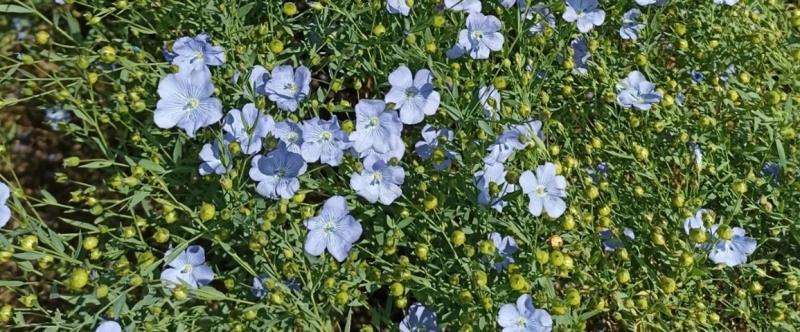
Les rendements sont moyens à bons, le secteur Poitou-Charentes, Vendée présentent des moyennes de 23-24 q/ha en moyenne. Le centre Val de Loire présente des résultats intermédiaires, avec une gamme de rendements comprise entre 14 à 25 q/ha. Le Sud-Ouest présente des décrochages sur les rendements atteignant difficilement les 16 q/ha, en particulier à cause des conditions climatiques très défavorables en fin de cycle. Enfin, les bassins de l’Est présentent des rendements en hausse, autour de 19 q/ha. Les teneurs en huile et Oméga 3 sont moyennes.
Les semis ont été compliqués par l’excès d’eau sur certains secteurs et par des conditions sèches sur la façade atlantique. La floraison et le remplissage ont souvent subi des stress thermiques (températures >25 °C) et hydriques, réduisant le potentiel de rendement. Les rendements en lins de printemps sont très faibles, jugés, très décevants sur la façade atlantique, comme le Gers et les Charentes, où ils dépassent difficilement le 10 q/ha en AB et les 15 q/ha en conventionnel. Les zones de production du Nord français ont des rendements très bons avec des moyennes autour de 25 q/ha et atteignant plus de 30 q/ha.
Pour ce bilan de campagne, une sélection d’illustrations a été réalisée à partir de données des stations météorologiques.
Les résultats présentés dans ce bilan de campagne sont le fruit des retours de l’ensemble des partenaires et techniciens au niveau national travaillant sur la culture, merci à eux pour leur implication !
z.lebihan@terresinovia.fr
Winter oilseed flax: winter output 2025-2026
Introducing the 2025-2026 network
This winter entry report was based on 14 plots of oilseed flax, between February 25 and March 03, 2026. It corresponds to the summary of observations reported by the following partner organizations:
- AXEREAL (4 plots),
- CA 36 (4 plots),
- CA 37 (2 plots),
- CA 41 (1 plot),
- FDGEDA18 (1 plot),
Ets Villemont (2 plots).
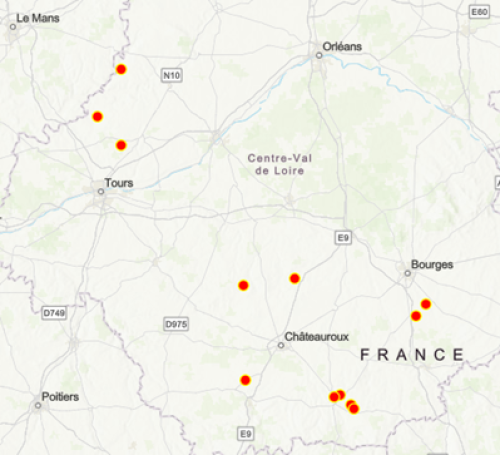
Merci aux partenaires de l’observatoire lin d’hiver en région Centre Val de Loire pour leur implication, votre participation est indispensable à ces synthèses !
z.lebihan@terresinovia.fr
CONCERTO
OFB
592 000 €
72 months Oui NationalLes enjeux
CONCERTO est un projet ancré dans le territoire des plateaux de Bourgogne, qui est en difficulté vis-à-vis de la gestion des insectes phytophages et est particulièrement sensible aux accidents climatiques en raison du faible potentiel des sols qui le composent.
L’approche territoriale proposée par le projet CONCERTO vise à atténuer les dégâts d’insectes phytophages sur l’ensemble des cultures en se passant d’insecticides.
L’action collective d’un groupe d’agriculteurs permet de mobiliser des leviers agroécologiques comme la lutte biologique par conservation ou des techniques de plantes pièges (intercultures pièges pilotée®).
Les approches collectives et paysagères sont particulièrement pertinentes dès lors que l’on souhaite influer sur l’abondance et la diversité des populations d’insectes, qu’ils soient ravageurs ou auxiliaires.
De plus, le projet CONCERTO dans lequel des fermes entières sont engagées, réaffirme la nécessité d’obtenir des systèmes rentables et multi-performants.
Il souhaite répondre à quatre enjeux majeurs pour les agriculteurs du territoire :
- La limitation des dégâts associés aux coléoptères ravageurs d’automne du colza
- La gestion des pucerons d’automne vecteurs de viroses sur les céréales à pailles
- La réduction des dégâts de bruches du pois et de la lentille
- L’amélioration de la fertilité des sols
Les objectifs
CONCERTO, qui s’inscrit dans la continuité des travaux du projet R2D2, visera à accompagner un groupe de producteurs dans la re-conception de leurs systèmes pour supprimer progressivement les applications d’insecticides sur l’ensemble du territoire. Il contribuera à l’atteinte des objectifs du plan ECOPHYTO.
La cible à long terme du projet, définie conjointement avec les agriculteurs est :
- Améliorer les performances des systèmes de culture incluant le colza
- Réduire progressivement les applications d’insecticides sur l’ensemble des cultures
- Réduire des applications d’herbicides
En plus de ces trois objectifs, le projet va travailler à :
- L’adaptation au changement climatique et l’atténuation de ses effets en renforçant la résilience des systèmes agricoles, notamment via le travail autour de l’implantation de haies et d’arbres isolés qui jouent un rôle clé dans le cycle de l’eau et permettent de créer des microclimats plus favorables à proximités des parcelles cultivées.
- La préservation de la biodiversité, en travaillant pour la création d’un maillage d’infrastructures écologiques fonctionnelles autour des parcelles et en renforçant la ressource florale à l’échelle du territoire.
Les résultats attendus
- Suivre le niveau de pression des ravageurs du colza et de la bruche du pois.
- Suivre les régulations biologiques des principaux coléoptères ravageurs du colza.
- Développer l’action collective territoriale pour gérer les insectes phytophages.
- Modifier les structures paysagères afin de favoriser les régulations biologiques selon les principes de la lutte biologique par conservation.
Le rôle de Terres Inovia

Coordinateur
- Animation du projet
- Co-conception et suivi du projet de territoire
- Acquisition et traitement des données issus des suivis scientifiques
- Accompagnement individuel et collectif des agriculteurs
- Expertise agronomique
Do you have a question?
Contact our specialist who will respond promptly to your request.
Our partners
Ces projets pourraient vous intéresser
Voici d'autres projets abordant les mêmes thématiques.
Herbi1&NoPhy
Experimenting with agroecological systems for pesticide use as a last resort
Nicolas Cerrutti - n.cerrutti@terresinovia.fr
01/01/2025 Eclairer les décisions stratégiques Terres Inovia En cours NonM2ProLIV
ANR
undisclosed
59 months Non NationalLes enjeux
L’enjeu de M2ProLIV est de faciliter la transition vers des systèmes alimentaires plus durables, plus sains et économiquement viables, tout en renforçant les capacités technologiques et scientifiques de la France dans ce domaine. Plus particulièrement, il répond à plusieurs enjeux :
- Améliorer la qualité nutritionnelle des aliments en proposant des alternatives aux protéines animales
- Réduire l’impact environnemental de la production alimentaire en se tournant vers les protéines végétales
- Valoriser les co-produits des industries de pressage d’oléagineux et de production de lipides de microalgues
- Développer des procédés pour obtenir des ingrédients protéiques fonctionnels et nutritionnellement intéressants
- Créer un tissu de collaborations interdisciplinaires entre instituts de recherche et partenaires industriels
Les objectifs
Les objectifs du projet M2ProLIV sont axés sur l'amélioration de la durabilité, de la qualité nutritionnelle et de la fonctionnalité des aliments protéiques à partir de ressources végétales :
- Étudier les procédés de fractionnement humide ou sec pour produire des fractions protéiques moins pures mais potentiellement plus fonctionnelles.
- Utiliser la fermentation solide ou la protéolyse enzymatique pour développer des extraits protéiques multifonctionnels, tels que des antioxydants et des émulsifiants.
- Produire des hydrolysats protéiques ayant des propriétés de chélation de métaux pour répondre aux carences en micronutriments, particulièrement en fer et en zinc.
- Comprendre comment les ingrédients naturels s'organisent et évoluent dans des systèmes alimentaires.
- Développer un itinéraire technologique applicable aux graines de chanvre décortiquées permettant de réduire la teneur en lipides à froid pour conserver les propriétés fonctionnelles des protéines.
Les résultats attendus
En développant des ingrédients protéiques multifonctionnels à partir de co-produits végétaux et en utilisant des procédés de transformation douce, M2ProLIV devrait contribuer à une alimentation plus durable et plus saine, mais aussi ouvrir de nouvelles opportunités pour l'industrie agroalimentaire en France.
Le rôle de Terres Inovia

Partenaire
- Acquisition de références sur les conditions de récolte et de séchage de la graine de chanvre :
- Taux de graines vertes
- Acidité de l’huile
- Teneurs en huile et en protéines
- Amélioration de l’extraction mécanique des graines de chanvre décortiquées.
- Caractérisation rhéologique de la graine de chanvre
- Travaux sur l’optimisation des profils de vis pour limiter l’échauffement tout en réduisant la teneur en huile.
- Production de co-produits : fourniture d’une gamme de tourteaux obtenus dans des conditions bien caractérisées pour définir les conditions optimales de production.
- Synthèse et diffusion des résultats
Do you have a question?
Contact our specialist who will respond promptly to your request.
Patrick Carré - p.carre@terresinovia.fr
01/01/2024 Eclairer les décisions stratégiques CIRAD En cours NonTwinFarms
ANR
4 991 289 €
48 Non NationalThe challenges
Originating in engineering, digital twins - virtual replicas of physical systems - have enabled advances in many sectors, driven in particular by the proliferation of sensors. Agriculture is no exception to this trend: on a farm scale, the combination of data from sensors and existing agronomic knowledge opens up promising prospects for supporting the agro-ecological transition, against a backdrop of increasingly stringent climate change.
In a tactical approach, a digital twin farm could help farmers adjust their decisions over the course of the campaign, depending on the condition of crops and/or animals, drawing on in situ sensors as well as external data such as satellite images. This would be particularly useful for reacting to increasingly unpredictable climatic contingencies.
From a strategic perspective, the digital twin would enable farmers to simulate the evolution of their system over the medium to long term, in order to anticipate the effects of different change scenarios.
TwinFarms aims to make these uses tangible and accessible in the field.
The objectives
Twinfarms aims to deploy digital twins at farm level to foster agro-ecological innovation. It will be based on nine demonstrators where the digital twins should provide added value to facilitate tactical or strategic choices.
Expected results
Create a data platform that collects, cleans, organizes and stores accurate data from sensors and other databases.
Establish specifications for digital twins, assess the quality of the twins produced, and anticipate future services to be provided to enhance the agroecological transition.
- Design physical, biological and mathematical models. Learn from temporal, heterogeneous, incomplete and irregularly sampled data, and generalize these models for various applications.
- Develop intuitive and efficient user interfaces to enable farmers to take advantage of digital twins. This includes specifying requirements, implementing prototypes and writing user guides.
The role of Terres Inovia
Partner
- Specification of farmers' needs and expectations with regard to digital twins
- Identification of data sources and existing models
- Participation in a use case: SYSTERRE
Do you have a question?
Contact our specialist who will respond promptly to your request.
These projects may be of interest to you
Here are some other projects dealing with the same themes.
Opening Occitanie
- Supporting the agro-ecological transition of 30 farms in Occitania
Herbi1&NoPhy
Experimenting with agroecological systems for pesticide use as a last resort
Julie Auque - j.auque@terresinovia.fr
Celia Pontet - c.pontet@terresinovia.fr
Acacia
Composez le couvert d'interculture ou le couvert associé au colza adapté à votre situation
Un outil Excel d'aide à la décision, simple d'utilisation et entièrement paramétrable.
Consultez les fiches techniques des principales espèces de couverts
Conduite culturale : période de semis, implantation; caractéristiques : fourniture et piégeage d'azote, appétence limace etc; adaptation à la culture suivante
Composez votre mélange
Choix des espèces adaptées à vos objectifs et contraintes, composition du mélange selon des règles clé (nombre, complémentarité et compatibilité des espèces...) et ajustement des doses de semis
Retrouvez un grand nombre d'informations techniques sur votre mélange
Conseils pour l'implantation, simulation date de floraison et simulation économique


Cap Protéines Challenge: a 5th edition inspired by oilseeds!
The presentation of the shortlisted projects for the Cap Protéines Challenge 5 took place on December 12. The jury selected six teams to take part in the final on May 19, 2026 in Paris.
La présentation des projets des équipes présélectionnées pour le Cap Protéines Challenge 5 s’est tenue le 12 décembre dernier. Le jury en a retenu six, lesquelles participeront à la finale du 19 mai 2026 à Paris.
Pour cette nouvelle édition, 17 dossiers ont été déposés à l’issue du webinaire de lancement du 18 septembre 2025 avec des projets, lesquels répondent aux thématiques du concours. 8 d’entre eux ont passé la première étape de sélection pour ne laisser plus que 6 concurrents en lice, dont les idées ont séduit le jury d’experts le 12 décembre 2025. La finale se tiendra le 19 mai 2026 à Paris.
Des pommes noisettes à base de féverole
Fevie’s est une équipe d’ingénieurs de Sup’Biotech, qui développe des pommes noisettes à base de purée de féveroles. L’idée est d’introduire un nouvel accompagnement à base de légumineuses, sous une forme familière au sein des familles. Le but est d’en faciliter l’acceptabilité et l’introduction dans les habitudes de consommation.
Innovante, gourmande, rapide à préparer et riche en protéines (11,7g pour 100g de produit), la recette ne contient ni additifs ni conservateurs afin de proposer une recette simple et saine.
Bientôt une plateforme collaborative d’échanges de recettes durables

Cap Veggie est le premier organisme de formation professionnelle en cuisine végétarienne et à base de légumineuses pour la restauration collective et commerciale en grand volume. Aujourd’hui, Cap Veggie dispense des formations, participe à des missions de conseils et de la création de recettes.
Depuis quatre ans, Cap Veggie accompagne plus de mille chefs et équipes de cuisine, une vingtaine d’acteurs de l’agroalimentaire, et régale plus de 2 millions de convives avec ses recettes.
Au 2e semestre 2026, les porteurs du projet lanceront Mijote, la première plateforme web collaborative d’échanges de recettes durables pour les professionnels de la restauration collective.
Du sans gluten à base de protéagineux et oléagineux

Quatre entrepreneuses développent, produisent et commercialisent Floorish. Il s’agit de mixes de farine sans gluten à base de coproduits agroalimentaires revalorisés, issus de filières françaises. Les mixes sont à haute valeur nutritionnelle et enrichis grâce – entre autres – à l’utilisation de protéagineux et d’oléagineux. L’objectif est de réinventer le sans gluten en le rendant plus sain, plus gourmand et plus durable, sans compromis ni sur la texture ni sur le goût.
Les mixes pour pâtisseries et pains sont prêts à l’emploi et peuvent remplacer directement la farine de blé dans les recettes traditionnelles, sans ajustement de formulation.
Un jeu de plateau où l’on cultive des oléoprotéagineux

Cinq étudiants de l’école d’ingénieurs de Purpan propose Proté-Win, un jeu de plateau éducatif où chaque joueur incarne un agriculteur chargé de développer son exploitation en cultivant des oléoprotéagineux. Au fil des saisons, les joueurs doivent faire face aux aléas climatiques, aux maladies, aux fluctuations de marché et aux choix stratégiques de leurs voisins.
Entre négociations, alliances, bluffs et décisions économiques, chacun cherche à optimiser ses cultures, valoriser ses productions et progresser en compétences. Ludique et stratégique, le jeu permet de découvrir de manière simple et immersive les réalités de l’agriculture, la diversité des débouchés et le rôle essentiel des protéines végétales dans la filière.
Du pois chiche dans des plats préparés équilibrés

235 Eat vise à réinventer le prêt-à-cuisiner sec avec des préparations cœur de repas équilibrées, gourmandes et saines Les plus : un peu d’eau et hop, 5 minutes au micro-ondes !
Ce projet est porté par une jeune entrepreneuse passionnée d’innovation et avec l’ambition de lutter contre la malbouffe et le « sautage de repas » ; elle travaille dans des startups de l’agrifoodtech depuis huit ans.
La première gamme de ses prêt-à-cuisiner propose des préparations pour moelleux-repas salés ou sucrés, destinées aux jeunes actifs urbains et dont l’ingrédient clef est la farine de pois chiche. Le lancement est prévu en e-commerce à la fin du premier trimestre 2026.
Des "céréales" croquantes à base de pois chiche

BeanBuddiez est porté par un jeune doctorant à AgroParisTech. Il propose des "céréales" croquantes pour petit-déjeuner ou snack sain fabriquées à partir de pois chiches entiers, 100 % végétales, naturellement riches en protéines, en fibres, sans allergènes et avec une liste d’ingrédients courte. Deux déclinaisons de goûts sont imaginées : un Chico Pop enrobé de miel caramélisé et un Chico Pop à la cannelle.
Winter oilseed flax: Winter entry assessment 2025-2026
Le Réseau 2025-2026
The 2025-2026 Network
This winter entry report is based on 14 oilseed flax plots.
It corresponds to the summary of observations reported by the following partner organizations:
- AXEREAL (4 plots),
- CA 36 (4 plots),
- CA 37 (2 plots),
- CA 45 (1 plot),
- CA 41 (1 plot),
- Villemont (2 plots),
- FDEGEDA18 (1 plot).
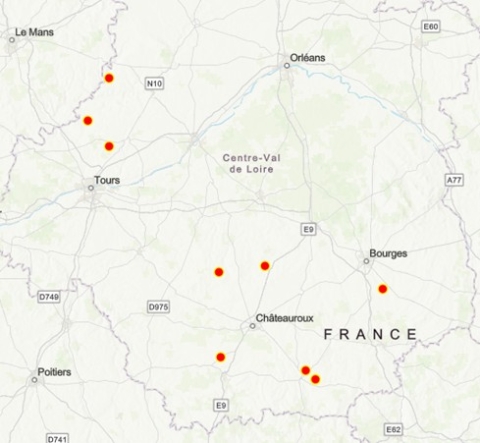
Distribution of plots monitored as part of the flax network
Many thanks to the graders who take the time to visit flax plots to contribute to these summaries!
Fatty acids ISO s/seeds
Method used: NF EN ISO 17059 - NF EN ISO 12966-4

These services may be of interest to you
Building a localized supply chain
Terres Inovia can help you build a new, regionalized industry.From strategy to field…Oilseed impurities
Method used: in-house methodOilseed impurities ISO
Method used: NF EN ISO 658Water content ISO oilseeds
Method used: NF EN ISO 665Would you like a quote?
Would you like to know more about this service or receive a quote? Send us your request!
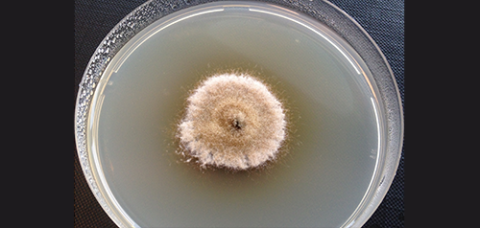
Fungal strain on culture medium
Supply of mycelial growth on culture medium for the fungal species described below.
Price: from 107€ excl. tax per strain
Alternaria brassicae, Alternaria brassicicola, Alternaria tenuissima, Aphanomyces euteiches, Aphanomyces cochlioides, Ascochyta pisi, Ascochyta fabae, Ascochyta rabiei, Botrytis cinerea, Botrytis fabae, Cladosporium sp, Cylindrosporium concentricum, Colletotrichum lini, Colletotrichum lupini, Epicoccum sp., Fusarium oxysporum, Fusarium solani, Leptosphaeria maculans, Leptosphaeria biglobosa, Leptosphaeria lindquistii, Macrophomina phaseolina, Penicillium sp., Phomopsis helianthi, Phoma medicaginis, Phomopsis phaseolorum, Rhizoctonia sp., Pythium sp., Pseudomonas syringae pv. pisi, Rhizopus sp., Sclerotinia sclerotiorum, Sclerotinia trifoliorum, Septoria linicola, Septoria glycines, Stemphyllium sp., Trichoderma sp., Verticillium dahliae, Verticillium longisporum.
These services may be of interest to you
Building a localized supply chain
Terres Inovia can help you build a new, regionalized industry.From strategy to field…Oilseed impurities
Method used: in-house methodOilseed impurities ISO
Method used: NF EN ISO 658Water content ISO oilseeds
Method used: NF EN ISO 665Would you like a quote?
Would you like to know more about this service or receive a quote? Send us your request!