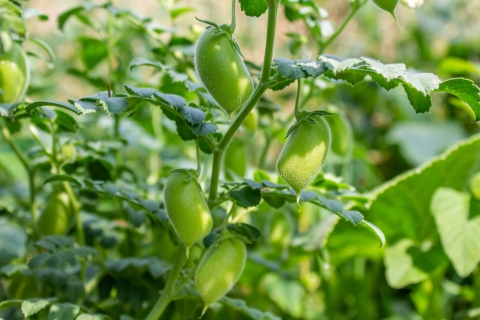

Successfully destroying winter cover crops
The period for destroying winter cover crops is approaching. This operation, which is designed to completely remove the plant cover and create a soil structure favorable to the next crop, must be carried out under optimum soil moisture conditions. However, in the event of a rainy winter, as is the case this year, monitoring soil moisture levels is crucial to identifying the rare windows of opportunity that will arise for destruction.
The period for destroying winter cover crops is approaching. This operation, which is designed to completely remove the plant cover and create a soil structure favorable to the next crop, must be carried out under optimum soil moisture conditions. However, in the event of a rainy winter, as is the case this year, monitoring soil moisture levels is crucial to identifying the rare windows of opportunity that will arise for destruction.
Comment choisir la période de destruction des couvert hivernaux ?
Le déclenchement de la destruction doit faire l’objet du meilleur compromis entre l’atteinte des bénéfices du couvert (protection contre l’érosion, piège à nitrates, …), et le fait d’éviter de porter préjudice à la culture suivante par épuisement des ressources du sol, dégradation de la structure, ou augmentation de la pression ravageurs (limaces). Elle doit en outre être raisonnée en fonction du stade du couvert, sa composition, la présence d’adventices et la date prévisionnelle du semis de la culture suivante.
- Pour un couvert à dominante crucifères ou graminées, la destruction doit survenir au moins deux mois avant la date prévisionnelle de semis de la culture suivante, afin d’éviter une faim d’azote sur les premiers stades de développement de la culture.
- Pour un couvert à dominante légumineuses, la destruction peut être plus tardive, jusqu’à trois semaines avant la date prévisionnelle de semis. Dans ce cas de figure, le principal point de vigilance concerne la présence de résidus non dégradés au moment du semis.
Les conditions d’intervention sont cruciales pour les destructions mécaniques, tout particulièrement sur sols argileux. Les couverts contribuent au ressuyage du sol durant l’hiver, ils participent également au maintien d’une humidité au sol, d’autant plus importante avec des fortes biomasses ou s’ils contiennent des graminées. Il est ainsi primordial de détruire le couvert dès qu’une fenêtre favorable se présente, en d’autres termes, dès que le sol est suffisamment ressuyé sur tout le profil travaillé (consistance friable, ou au pire semi-plastique) pour limiter les risques de tassement ou de lissage. Pour cela, un suivi régulier des conditions d’humidité du sol s’impose à partir de février.
La destruction tardive d’un couvert hivernal à forte biomasse peut conduire à l’assèchement de sols à faible réserve utile, surtout si la fin d’hiver et le début du printemps sont marqués par un déficit de pluviométrie. L’alimentation hydrique de la culture suivante risque alors d’être pénalisée, en particulier en conduite pluviale.
Aussi, il faut savoir arrêter la progression d’un couvert quand il atteint 2 à 4 tonnes de biomasse par hectare (1 à 2 kg de matière verte par m²).
Vouloir trop « pousser » un couvert tardivement, peut conduire, en cas de scénario climatique défavorable, a des destructions trop tardives.
Quel mode de destruction pour mes couverts ?
Les techniques de destruction sont multiples et doivent être choisies en bonne cohérence avec les caractéristiques des espèces implantées et les propriétés du sol. En fin d’hiver, le labour ou des travaux profonds ne pourront être envisagés que sur les sols limoneux ou sableux. Sur sols argileux, le ressuyage suffisant du sol et des interventions qui restent superficielles, sont 2 conditions indispensables. Dans des situations avec des couverts bien développés, un broyage préalable peut être nécessaire.

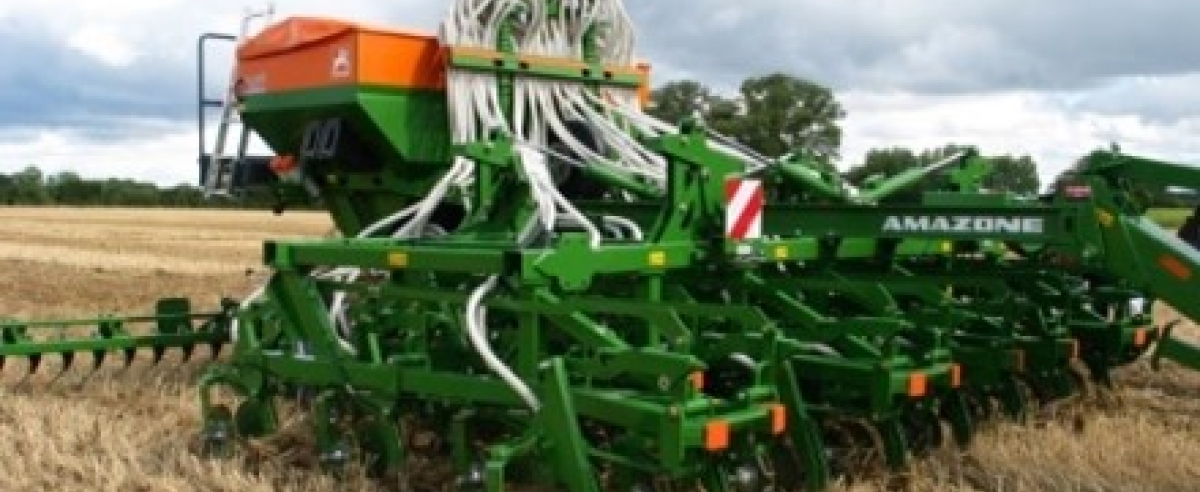
Les travaux menés par Terres Inovia dans le cadre du réseau Syppre Lauragais ont montré que sur des couverts à tige creuse (féverole, phacélie), de nombreux matériels présentent des résultats satisfaisants de destruction (herse rotative, scalpeurs, déchaumeurs à disques indépendants, rouleaux hacheurs). La herse rotative sans rouleau, utilisée à faible profondeur (5-7cm) sur des couverts moyennement développés, assure la dévitalisation des plantes et la création d’un lit de semence favorable à la culture suivante. Le débit de chantier reste toutefois faible, tout comme l’efficacité sur les plantes à pivots et les graminées.
La difficulté principale consiste bien souvent à détruire les graminées adventices qui peuvent se développer dans le couvert pendant l’hiver, auquel cas, les outils à bon recouvrement ou équipés d’ailettes se détachent en termes d’efficacité, même si celle-ci est rarement totale. Aussi, la présence d’adventices et notamment de graminées justifie une destruction précoce, afin d’intervenir sur des stades jeunes, et viser une implantation de la culture suivante sur un sol propre.
Si le choix se porte sur la destruction chimique, des couverts développés vont demander des doses élevées de glyphosate. L’ajout de 2-4D peut améliorer l’efficacité de destruction des dicotylédones, mais s’il est utilisé, veiller rigoureusement au délai d’application avant semis du tournesol (30 jours). Précisions également que le levier de destruction chimique peut être mobilisé après une 1ère étape de destruction mécanique, si des graminées adventives n’ont pas été détruites et si les conditions d’humidité ne sont pas favorables. Dans ce cas de figure, il conviendra de moduler les doses utilisées.
Quel que soit le mode de destruction, il faudra être vigilant à la présence de résidus non dégradés ou trop grossiers qui risquent de perturber le passage de l’élément semeur de la culture suivante, ou nuire au contact sol-graine. Les résidus peuvent également générer une activité plus importante des mollusques au printemps. Une surveillance particulière doit être mise en place pour éviter des potentiels dégâts sur la culture suivante.
Pour aller plus loin
Clémence DE SAINTIGNON - Terres Inovia - c.desaintignon@terresinovia.fr
CONCERTO
OFB
592 000 €
72 months Oui NationalLes enjeux
CONCERTO est un projet ancré dans le territoire des plateaux de Bourgogne, qui est en difficulté vis-à-vis de la gestion des insectes phytophages et est particulièrement sensible aux accidents climatiques en raison du faible potentiel des sols qui le composent.
L’approche territoriale proposée par le projet CONCERTO vise à atténuer les dégâts d’insectes phytophages sur l’ensemble des cultures en se passant d’insecticides.
L’action collective d’un groupe d’agriculteurs permet de mobiliser des leviers agroécologiques comme la lutte biologique par conservation ou des techniques de plantes pièges (intercultures pièges pilotée®).
Les approches collectives et paysagères sont particulièrement pertinentes dès lors que l’on souhaite influer sur l’abondance et la diversité des populations d’insectes, qu’ils soient ravageurs ou auxiliaires.
De plus, le projet CONCERTO dans lequel des fermes entières sont engagées, réaffirme la nécessité d’obtenir des systèmes rentables et multi-performants.
Il souhaite répondre à quatre enjeux majeurs pour les agriculteurs du territoire :
- La limitation des dégâts associés aux coléoptères ravageurs d’automne du colza
- La gestion des pucerons d’automne vecteurs de viroses sur les céréales à pailles
- La réduction des dégâts de bruches du pois et de la lentille
- L’amélioration de la fertilité des sols
Les objectifs
CONCERTO, qui s’inscrit dans la continuité des travaux du projet R2D2, visera à accompagner un groupe de producteurs dans la re-conception de leurs systèmes pour supprimer progressivement les applications d’insecticides sur l’ensemble du territoire. Il contribuera à l’atteinte des objectifs du plan ECOPHYTO.
La cible à long terme du projet, définie conjointement avec les agriculteurs est :
- Améliorer les performances des systèmes de culture incluant le colza
- Réduire progressivement les applications d’insecticides sur l’ensemble des cultures
- Réduire des applications d’herbicides
En plus de ces trois objectifs, le projet va travailler à :
- L’adaptation au changement climatique et l’atténuation de ses effets en renforçant la résilience des systèmes agricoles, notamment via le travail autour de l’implantation de haies et d’arbres isolés qui jouent un rôle clé dans le cycle de l’eau et permettent de créer des microclimats plus favorables à proximités des parcelles cultivées.
- La préservation de la biodiversité, en travaillant pour la création d’un maillage d’infrastructures écologiques fonctionnelles autour des parcelles et en renforçant la ressource florale à l’échelle du territoire.
Les résultats attendus
- Suivre le niveau de pression des ravageurs du colza et de la bruche du pois.
- Suivre les régulations biologiques des principaux coléoptères ravageurs du colza.
- Développer l’action collective territoriale pour gérer les insectes phytophages.
- Modifier les structures paysagères afin de favoriser les régulations biologiques selon les principes de la lutte biologique par conservation.
Le rôle de Terres Inovia

Coordinateur
- Animation du projet
- Co-conception et suivi du projet de territoire
- Acquisition et traitement des données issus des suivis scientifiques
- Accompagnement individuel et collectif des agriculteurs
- Expertise agronomique
Do you have a question?
Contact our specialist who will respond promptly to your request.
Our partners
Ces projets pourraient vous intéresser
Voici d'autres projets abordant les mêmes thématiques.
Herbi1&NoPhy
Experimenting with agroecological systems for pesticide use as a last resort
Nicolas Cerrutti - n.cerrutti@terresinovia.fr
01/01/2025 Eclairer les décisions stratégiques Terres Inovia En cours NonM2ProLIV
ANR
undisclosed
59 months Non NationalLes enjeux
L’enjeu de M2ProLIV est de faciliter la transition vers des systèmes alimentaires plus durables, plus sains et économiquement viables, tout en renforçant les capacités technologiques et scientifiques de la France dans ce domaine. Plus particulièrement, il répond à plusieurs enjeux :
- Améliorer la qualité nutritionnelle des aliments en proposant des alternatives aux protéines animales
- Réduire l’impact environnemental de la production alimentaire en se tournant vers les protéines végétales
- Valoriser les co-produits des industries de pressage d’oléagineux et de production de lipides de microalgues
- Développer des procédés pour obtenir des ingrédients protéiques fonctionnels et nutritionnellement intéressants
- Créer un tissu de collaborations interdisciplinaires entre instituts de recherche et partenaires industriels
Les objectifs
Les objectifs du projet M2ProLIV sont axés sur l'amélioration de la durabilité, de la qualité nutritionnelle et de la fonctionnalité des aliments protéiques à partir de ressources végétales :
- Étudier les procédés de fractionnement humide ou sec pour produire des fractions protéiques moins pures mais potentiellement plus fonctionnelles.
- Utiliser la fermentation solide ou la protéolyse enzymatique pour développer des extraits protéiques multifonctionnels, tels que des antioxydants et des émulsifiants.
- Produire des hydrolysats protéiques ayant des propriétés de chélation de métaux pour répondre aux carences en micronutriments, particulièrement en fer et en zinc.
- Comprendre comment les ingrédients naturels s'organisent et évoluent dans des systèmes alimentaires.
- Développer un itinéraire technologique applicable aux graines de chanvre décortiquées permettant de réduire la teneur en lipides à froid pour conserver les propriétés fonctionnelles des protéines.
Les résultats attendus
En développant des ingrédients protéiques multifonctionnels à partir de co-produits végétaux et en utilisant des procédés de transformation douce, M2ProLIV devrait contribuer à une alimentation plus durable et plus saine, mais aussi ouvrir de nouvelles opportunités pour l'industrie agroalimentaire en France.
Le rôle de Terres Inovia

Partenaire
- Acquisition de références sur les conditions de récolte et de séchage de la graine de chanvre :
- Taux de graines vertes
- Acidité de l’huile
- Teneurs en huile et en protéines
- Amélioration de l’extraction mécanique des graines de chanvre décortiquées.
- Caractérisation rhéologique de la graine de chanvre
- Travaux sur l’optimisation des profils de vis pour limiter l’échauffement tout en réduisant la teneur en huile.
- Production de co-produits : fourniture d’une gamme de tourteaux obtenus dans des conditions bien caractérisées pour définir les conditions optimales de production.
- Synthèse et diffusion des résultats
Do you have a question?
Contact our specialist who will respond promptly to your request.
Patrick Carré - p.carre@terresinovia.fr
01/01/2024 Eclairer les décisions stratégiques CIRAD En cours NonTwinFarms
ANR
4 991 289 €
48 Non NationalThe challenges
Originating in engineering, digital twins - virtual replicas of physical systems - have enabled advances in many sectors, driven in particular by the proliferation of sensors. Agriculture is no exception to this trend: on a farm scale, the combination of data from sensors and existing agronomic knowledge opens up promising prospects for supporting the agro-ecological transition, against a backdrop of increasingly stringent climate change.
In a tactical approach, a digital twin farm could help farmers adjust their decisions over the course of the campaign, depending on the condition of crops and/or animals, drawing on in situ sensors as well as external data such as satellite images. This would be particularly useful for reacting to increasingly unpredictable climatic contingencies.
From a strategic perspective, the digital twin would enable farmers to simulate the evolution of their system over the medium to long term, in order to anticipate the effects of different change scenarios.
TwinFarms aims to make these uses tangible and accessible in the field.
The objectives
Twinfarms aims to deploy digital twins at farm level to foster agro-ecological innovation. It will be based on nine demonstrators where the digital twins should provide added value to facilitate tactical or strategic choices.
Expected results
Create a data platform that collects, cleans, organizes and stores accurate data from sensors and other databases.
Establish specifications for digital twins, assess the quality of the twins produced, and anticipate future services to be provided to enhance the agroecological transition.
- Design physical, biological and mathematical models. Learn from temporal, heterogeneous, incomplete and irregularly sampled data, and generalize these models for various applications.
- Develop intuitive and efficient user interfaces to enable farmers to take advantage of digital twins. This includes specifying requirements, implementing prototypes and writing user guides.
The role of Terres Inovia
Partner
- Specification of farmers' needs and expectations with regard to digital twins
- Identification of data sources and existing models
- Participation in a use case: SYSTERRE
Do you have a question?
Contact our specialist who will respond promptly to your request.
These projects may be of interest to you
Here are some other projects dealing with the same themes.
Opening Occitanie
- Supporting the agro-ecological transition of 30 farms in Occitania
Herbi1&NoPhy
Experimenting with agroecological systems for pesticide use as a last resort
Julie Auque - j.auque@terresinovia.fr
Celia Pontet - c.pontet@terresinovia.fr
The taste of pulses" campaign to celebrate pulses
To mark World Pulses Day on February 10, the INCREASE project, in which Terres Inovia is a partner, is taking part in "The taste of pulses" campaign. The aim? Invite all citizens to share recipes and events dedicated to these species, rich in nutritional benefits and respectful of the environment.
To mark World Pulses Day on February 10, the INCREASE project, in which Terres Inovia is a partner, is taking part in "The taste of pulses" campaign. The aim? Invite all citizens to share recipes and events dedicated to these species, rich in nutritional benefits and respectful of the environment.
On February 10, as part of World Pulses Day, INCREASE is inviting people to mark the occasion by celebrating the versatility of pulses through shared meals featuring delicious legumes. Gathering around a table highlights how legumes such as beans, lentils, chickpeas and lupins connect people from different cultures, enriching our culture, our health and our planet.
Why are legumes synonymous with sustainable, healthy and delicious meals?
Legumes are nutrient-rich, climate-friendly crops that fix nitrogen in soils, reduce the need for artificial fertilizers, promote biodiversity and grow with less water than many other protein sources. By promoting more resilient farming systems, legumes play a key role in sustainable food production. Not only are they good for the planet, they are also essential to a healthy diet. Their versatility on the plate, from traditional stews to innovative vegetarian dishes, shows that sustainability, healthy eating and taste go hand in hand, making pulses indispensable to sustainable, affordable and inclusive eating worldwide.
Find inspiration and share it on The Taste of Pulses
INCREASE makes it easy to share a legume-based meal with family and friends: the "Taste of Pulses" campaign offers a growing collection of recipes from all over Europe, giving people the chance to share their favorite legume-based dish.
As World Pulses Day approaches, INCREASE is encouraging everyone to take action: register your pulse-related events and submit your favorite pulse-based recipes via the "The Taste of Pulses" website, to help showcase the diversity and creativity of pulses across Europe and inspire others to cook, share and celebrate pulses together!
Take part in the INCREASE citizen science experiment
The celebration of World Legume Day is also closely linked to the INCREASE citizen science experiment, in which participants can grow and document different bean varieties, thus contributing to scientific research and the conservation of agricultural biodiversity.
Good news: there's still time to sign up and take part in this hands-on research! Enthusiasts, gardeners, gourmets and curious minds can register for the 2026 edition of the INCREASE citizen science experiment until February 28, 2026 via the INCREASE CSA app. No specialized equipment is required, just a love of legumes, a smartphone and a space to grow. Participants receive a selection of various bean seeds, learn hands-on about plant characteristics, document their observations using the app, and can share seeds and cooking recipes with other citizen scientists across Europe.
Come and join us! Grow beans, share the taste of legumes and join a community shaping a more sustainable food future together.
More information

Recommended lists for soybeans and sunflowers 2026 are available on myvar
Terres Inovia provides you with the recommended lists for sunflower and soybean 2026 sowings. We would like to thank the partners who contribute to the creation of these recommended lists each year.
Terres Inovia met une nouvelle fois à disposition les listes recommandées pour les semis 2026 des cultures du tournesol et du soja. L'institut remercie les partenaires qui participent chaque année à la mise en place de ces listes recommandées. Ces listes régionalisées permettent aux producteurs de sélectionner les variétés les plus adaptées à leur contexte et leur bassin de production.


Arnaud VAN BOXSOM - a.vanboxsom@terresinovia.fr;
Emilie VERDOIS - e.verdois@terresinovia.fr
Grass weed management: what levers are used by growers?
As part of the GRAMICOMBI project, a survey of 32 farmers has just been carried out to gain a better understanding of the obstacles to farmers' adoption of grass weed management levers.
As part of the GRAMICOMBI project, a survey of 32 farmers has just been carried out to gain a better understanding of the obstacles to farmers' adoption of grass weed management levers.
The GRAMICOMBI project was launched as part of the PARSADA program. Spearheaded by Terres Inovia, its aim is to develop combinations of levers for integrated grass weed management and to deploy them on a national scale.
To find out what hinders the adoption of agronomic levers for better grass weed management, a survey was carried out among farmers. " It was carried out as part of the Objectif Cultures Propres (OCP) network in Bourgogne Franche Comté, which aims to assess the effectiveness and feasibility of combining grass management levers at the cropping system level, by monitoring and implementing an action plan for five years on 32 farmers' plots ", explains Victor Fleury, development engineer at Terres Inovia. The network is run by nine partners: Terres Inovia, Arvalis, Alliance BFC, the departmental Chambers of Agriculture of the BFC region and the Tart-le-Bas experimental farm.
Highly heterogeneous adoption of levers
During the survey, each farmer ranked different grass management levers, according to their feasibility, in one of four categories: achievable, possible, restrictive and impossible.

The results show a high degree of heterogeneity in the adoption of levers. " Some practices are already well integrated into cropping systems, such as the application of glyphosate before sowing, diversification of chemical weed control and border maintenance ". On the other hand, some levers are less widely used, despite their recognized agronomic value: the combination of staggered sowing dates, diversification with mechanical weeding and cleaning of harvesting tools offers considerable scope for progress. Lastly, others, such as the introduction of an Intermediate Energy Crop (CIVE), pollarding and the recovery of chaff, are generally perceived as difficult to integrate into current systems.
Economic and technical obstacles
The main obstacles are economic: access to specific equipment, lack of outlets, investment costs and uncertain profitability. The adoption of new grass weed management levers also comes up against technical trade-offs: ploughing, for example, is often seen as a lever of last resort in the event of technical impasse. Similarly, the choice of variety is often prioritized for disease resistance or yield potential, to the detriment of covering power. " The lack of technical references, consensus on the effectiveness of certain levers and feedback from experience also hinders their adoption. The example of covering varieties is a good illustration of this difficulty, with effectiveness perceived as highly variable depending on the context ". Finally, certain obstacles are very specific: working time and site organization for mechanical weeding, recourse to service provision, soil type, plot distribution, etc.
The survey results show that many grass weed management levers are still under-utilized by farmers. While some are hampered by structural or economic obstacles, others require technical support for the farmer, reinforced references and adaptation to the context of each farm. This is precisely the aim of the PARSADA GRAMICOMBI project, led by Terres Inovia, which includes the OCP network: to remove the barriers to adoption and promote a coherent combination of grass weed management levers across the entire cropping system.
Soybeans: A few reminders about inoculation for the 2026 season
<p><strong>Inoculation: a crucial stage in the success of soybean crops</strong></p><p>Soya is a leguminous plant whose ability to fix atmospheric nitrogen, necessary for its growth, relies on its capacity to associate with various specific bacteria, mainly of the Bradyrhizobium genus. These symbiotic partners are not naturally present in French soils. It is therefore necessary to introduce them into the soil by inoculation.</p><p><strong>Conditions for successful inoculation</strong></p><p>To promote nodulation, resulting from the symbiotic association between soybean plants and nitrogen-fixing bacteria, and obtain an optimum number of nodules on the root system (at least 10 per plant at stages V3-R1), we need to create the right conditions for viable, efficient bacteria to settle in. To achieve this, several conditions must be met: </p><ul><li data-list-item-id="eb0cf155a9229125c386eb2c70cea4dbe">Quality, contaminant-free inoculum, stored under the conditions specified by the manufacturer (cool temperatures, protected from light), with an adequate concentration of a live, efficient strain of Bradyrhizobium,</li><li data-list-item-id="e3fa658b3c6992011544b10add5b7d9e8">Carry out inoculation with care, without javelized water, in a dark place and sowing within the time allowed between inoculation and sowing, in order to preserve the viability and efficiency of the bacteria,</li><li data-list-item-id="e770a09fbe677625e0cbe6edc62c38f09">Sowing should be carried out in conditions that do not limit nodulation (surface-refined soil, level and dry but not dry; aerated, porous structure, free from settling, sowing or smoothing; avoid soils with a high concentration of mineral nitrogen). </li></ul><p><strong>Various inoculation techniques</strong></p><p>Various types of inocula are available on the French market for inoculating soybean crops:</p><ul><li data-list-item-id="ec0e571d0db3902d02c79e681637eb940">Some are INRAE-licensed, controlled in terms of bacterial concentration, strain identity, absence of contaminants and stability of properties,</li></ul><p>Other products are unlicensed, offering fewer guarantees for their users.</p><ul><li data-list-item-id="e026cb8d5d7e09a3acfa41f54295ff8c6">1. Commercialized <strong>seed-based peat</strong> inocula</li></ul><p>The oldest inoculation technique is based on the use of a peat-based inoculum. Each bag of peat must contain at least 4*1011 bacteria to guarantee a sufficient concentration of bacteria per seed sown. The contents of the peat sachet are mixed with the seeds after adding approximately one liter of unbleached water or milk. Once mixed and stored in a dark place, sow within 4 hours. </p><p>This initial technique has been supplemented by additives, most often osmo-protective liquids, to limit losses between inoculation and sowing and thus extend the time between these two tasks.</p><p>Here are a few examples of specialties on the market, with comments based on Terres Inovia's expertise gained from a series of field trials:</p><table class="table" style="border-color:hsl(0, 0%, 30%);"><tbody><tr><td style="background-color:#1D5E47;border-color:windowtext;height:20px;padding:0px 7px;width:92px;" width="92"><p class="text-align-center" style="tab-stops:169.9pt;">Manufacturer</p></td><td style="background-color:hsl(0, 0%, 60%);border-color:hsl(0, 0%, 60%);">Product</td><td style="border-color:hsl(0, 0%, 60%);">Use</td><td style="border-color:hsl(0, 0%, 60%);">Strain</td><td style="border-color:hsl(0, 0%, 60%);">INRAE quality control</td><td style="border-color:hsl(0, 0%, 60%);">Terres Inovia opinion</td></tr><tr><td>AGRIFUTUR SARL</td><td>NITROGEN</td><td>Max 4h before sowing</td><td>G49</td><td>Yes</td><td>Not tested TI</td></tr><tr><td>BASF</td><td>NPPL Force 48</td><td>Max 48h before sowing</td><td>G49</td><td>Yes</td><td>Very good</td></tr></tbody></table><p>Here are a few examples of specialties on the market, with comments based on Terres Inovia's expertise following a series of field trials:<br><br><br> </p>
L'inoculation : Une étape cruciale dans la réussite des Sojas
Le soja est une légumineuse dont la capacité à fixer l’azote présent dans l’atmosphère, nécessaire à sa croissance, repose sur sa capacité à s’associer avec diverses bactéries spécifiques, principalement du genre Bradyrhizobium. Ces partenaires symbiotiques ne sont pas naturellement présents dans les sols français. Il est donc nécessaire de les amener une première fois dans les sols par inoculation.
Les conditions d'une inoculation réussie
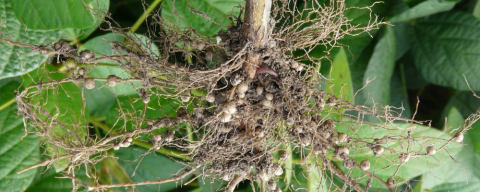
Afin de favoriser la nodulation, issue de l’association symbiotique entre plantes de Soja et bactéries fixatrices d’azote, et obtenir un nombre optimal de nodosités sur le système racinaire (au moins 10 par pied aux stades V3-R1) il convient de créer les conditions favorables à l’installation en nombre de bactéries viables et efficientes. Pour ce faire, plusieurs conditions doivent être satisfaites :
- Disposer d’un inoculum de qualité, sans contaminant, conservé dans les conditions mentionnées par le fabricant (températures fraîches et à l’abri de la lumière) avec une concentration adéquate d’une souche vivante et efficiente de Bradyrhizobium,
- Réaliser l’inoculation avec précaution, sans eau javélisée, à l’abri de la lumière et en allant semer en respectant les délais impartis entre inoculation et semis, dans le but de conserver la viabilité et l’efficience des bactéries,
- Réaliser le semis dans des conditions non-limitantes pour la nodulation (sol affiné en surface, nivelé et ressuyé sans être sec ; structure aérée, poreuse et exempte de tassements, semelles ou lissage ; éviter les sols à forte concentration en azote minéral).
Les diverses techniques d'inoculation
Pour inoculer une culture de soja, différents types d’inocula existent sur le marché français :
- Certains sont sous licence INRAE, contrôlés en termes de concentration en bactéries, d’identité de la souche, d’absence de contaminants et de stabilité des propriétés
D’autres produits sont sans licence, offrant moins de garanties pour leurs utilisateurs
1. Inocula commercialisés à base de Tourbe sur graine
La plus ancienne technique d’inoculation repose sur l’utilisation d’un inoculum sous forme de tourbe. Chaque sachet de tourbe doit contenir au moins 4*1011 bactéries pour garantir une concentration suffisante de bactéries par graine semée. Le contenu du sachet de tourbe est mélangé aux semences après ajout d’environ un litre d’eau non javélisée ou de lait. Il faut, une fois le mélange réalisé et conservé à l’abri de la lumière, semer dans un délai de 4 heures.
Cette technique initiale a été complétée par des additifs, le plus souvent des liquides osmo-protecteurs, permettant de limiter les pertes entre inoculation et semis et donc d’allonger le délai entre ces deux tâches.
Voici ci-dessous quelques exemples de spécialités commercialisées, avec des commentaires issus de l’expertise Terres Inovia, bâtie à la suite de séries d’essais sur le terrain :
Fabricant | Produit | Utilisation | Souche | Contrôle qualité INRAE | Avis Terres Inovia |
| AGRIFUTUR SARL | NITROGEN | Max 4h av. semis | G49 | Oui | Non testé TI |
| BASF | NPPL Force 48 | Max 48h av. semis | G49 | Oui | Très bon |
2. Inocula commercialisés à base de Tourbe sur micro-granulés d’argile
Il s’agit de mélanger le contenu du sachet de tourbe avec 10 kg de micro-granulés d’argile, opération plus facile et moins destructrice par rapport au mélange de 100 kg de semence. Cela aboutit en général à des nodosités mieux réparties sur l’ensemble du système racinaire et moins exposées aux alternances humectation/dessication. On obtient ainsi souvent des nodosités plus régulièrement fonctionnelles avec à l’issue des gains de rendement et/ou de teneur en protéine. Cette technique requiert l’utilisation du micro-granulateur présent sur les semoirs de précision.
| Fabricant | Produit | Utilisation | Souche | Contrôle qualité INRAE | Avis Terres Inovia |
| AGIFUTUR SRL | NITROGEN | Max 4h av. semis | G49 | Oui | Bon |
3. Inocula commercialisés liquides avec adjuvants
Sous format de flacon ou de bidon selon les quantités, ils permettent d’utiliser directement une solution bactérienne sans recours à la tourbe. Ces inocula sont utilisés avec un adjuvant servant de colle et de source carbonée pour une meilleure survie sur la graine, permettant ainsi une augmentation du délai inoculation-semis. Ils offrent de très bons résultats d’inoculation.
*Les souches SEMIA 5079 et 5080 sont issues de processus de sélection ayant eu lieu au Brésil, dans un contexte agropédoclimatique particulier et avec des objectifs très différents du contexte français. Alors que la stratégie brésilienne visait le déploiement de souches efficientes, robustes et très compétitives vis-à-vis des autres rhizobiums présents dans le sol, la position française s’est concentrée sur la sélection d’une souche stable et peu compétitive (souche G49), dans le but de faciliter l’inoculation de nouvelles bactéries en cas d’éventuel progrès génétique ou de perte d’efficience des supports actuels, ce que ne permettraient pas les souches sud-américaines.
| Fabricant | Produit | Utilisation | Souche | Contrôle qualité INRAE | Avis Terres Inovia |
| De Sangosse | Rhizoliq Top | Jusqu’à 10-12 jours | G49 | Oui | Très bon, leader du marché |
| Cerience | Vitalianz R Soja | Jusqu’à 2-3 jours | G49 | Oui | Très bien à 48h |
| Legume Technology Ltd. | Liquifix 120 | Jusqu’à 120 jours d’après Catelin-Logi-Fert | SEMIA 5079 SEMIA 5080 | Non | Déconseillé* |
| Legume Technology Ltd. | Liquifix | Jusqu’à 7 jours d’après Catelin-Logi-Fert | SEMIA 5079 SEMIA 5080 | Non |
4. Semences pré-inoculées en usine
Produits innovants, [QL1.1]mais techniquement difficiles à produire, du fait de la nécessité de maintenir en vie plus d’un million de bactéries par graine pendant 2 à 3 mois, durée moyenne des opérations entre le traitement et l’ensachage des semences jusqu’au semis. De plus, la surface de la graine constitue à priori un environnement hostile à la survie des bactéries qui ne sporulent pas. Il faut donc y associer un produit osmo-protecteur qui puisse également fournir une source carbonée pour sa survie.
Sur le marché, c’est BASF qui domine ce segment, avec le procédé HICOAT, dont la concentration en bactéries est, à ce jour, considérée comme faible par rapport aux concentrations recommandées par l’INRAE (5.105 contre minimum de 1.106 bactéries/graine). Les conditions de survie imposées aux bactéries font que le résultat de nodulation n’est pas toujours à la hauteur des inocula classiques. BASF ne préconise donc pas l’utilisation de graines avec pré-enrobage HICOAT sur des parcelles n’ayant pas porté de soja depuis plus de 5 ans.
| Fabricant | Produit | Utilisation | Souche | Concentration garantie | Avis Terres Inovia |
| BASF | Hicoat Super + Extender | Au semis | 532C | 5.105 Bactéries/grain | Pratique, mais à réserver aux parcelles ayant connu du Soja récemment |
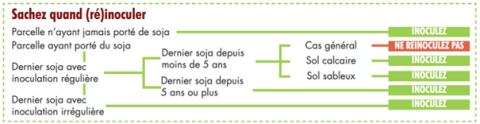
Quand faut-il ré-inoculer ?
Une fois introduit par une première inoculation réussie, les rhizobiums survivent généralement très bien à des niveaux ne nécessitant pas une ré-inoculation ultérieure. Cependant, quelques exceptions existent, constituant des situations pour lesquelles une nouvelle inoculation est nécessaire :
Les sols calcaires avec présence de calcaire actif,
Les sols sableux (>35 % sables) pauvres en matière organique,
Les parcelles n’ayant pas porté de soja depuis de nombreuses années (> 5 ans)
Pour en savoir plus :
Soja : pourquoi et comment inoculer pour avoir un rendement optimal ?
Inoculation : les origines de cette pratique
Inoculation : tout savoir sur la réglementation
Bien préparer sa campagne soja – RTTI 2022
Exprimer le potentiel du soja – RTTI 2023
Rédaction :
Quentin LEVEL (q.level@terresinovia.fr) – Ingénieur régional de développement Sud-Ouest (ex-Aquitaine, Gers, Hautes-Pyrénées)
Emile LEREBOUR (e.lerebour@terresinovia.fr) – Chargé d’étude, nutrition des cultures
Emile LEREBOUR (e.lerebour@terresinovia.fr)
Acacia
Composez le couvert d'interculture ou le couvert associé au colza adapté à votre situation
Un outil Excel d'aide à la décision, simple d'utilisation et entièrement paramétrable.
Consultez les fiches techniques des principales espèces de couverts
Conduite culturale : période de semis, implantation; caractéristiques : fourniture et piégeage d'azote, appétence limace etc; adaptation à la culture suivante
Composez votre mélange
Choix des espèces adaptées à vos objectifs et contraintes, composition du mélange selon des règles clé (nombre, complémentarité et compatibilité des espèces...) et ajustement des doses de semis
Retrouvez un grand nombre d'informations techniques sur votre mélange
Conseils pour l'implantation, simulation date de floraison et simulation économique


Cap Protéines Challenge: a 5th edition inspired by oilseeds!
The presentation of the shortlisted projects for the Cap Protéines Challenge 5 took place on December 12. The jury selected six teams to take part in the final on May 19, 2026 in Paris.
La présentation des projets des équipes présélectionnées pour le Cap Protéines Challenge 5 s’est tenue le 12 décembre dernier. Le jury en a retenu six, lesquelles participeront à la finale du 19 mai 2026 à Paris.
Pour cette nouvelle édition, 17 dossiers ont été déposés à l’issue du webinaire de lancement du 18 septembre 2025 avec des projets, lesquels répondent aux thématiques du concours. 8 d’entre eux ont passé la première étape de sélection pour ne laisser plus que 6 concurrents en lice, dont les idées ont séduit le jury d’experts le 12 décembre 2025. La finale se tiendra le 19 mai 2026 à Paris.
Des pommes noisettes à base de féverole
Fevie’s est une équipe d’ingénieurs de Sup’Biotech, qui développe des pommes noisettes à base de purée de féveroles. L’idée est d’introduire un nouvel accompagnement à base de légumineuses, sous une forme familière au sein des familles. Le but est d’en faciliter l’acceptabilité et l’introduction dans les habitudes de consommation.
Innovante, gourmande, rapide à préparer et riche en protéines (11,7g pour 100g de produit), la recette ne contient ni additifs ni conservateurs afin de proposer une recette simple et saine.
Bientôt une plateforme collaborative d’échanges de recettes durables

Cap Veggie est le premier organisme de formation professionnelle en cuisine végétarienne et à base de légumineuses pour la restauration collective et commerciale en grand volume. Aujourd’hui, Cap Veggie dispense des formations, participe à des missions de conseils et de la création de recettes.
Depuis quatre ans, Cap Veggie accompagne plus de mille chefs et équipes de cuisine, une vingtaine d’acteurs de l’agroalimentaire, et régale plus de 2 millions de convives avec ses recettes.
Au 2e semestre 2026, les porteurs du projet lanceront Mijote, la première plateforme web collaborative d’échanges de recettes durables pour les professionnels de la restauration collective.
Du sans gluten à base de protéagineux et oléagineux

Quatre entrepreneuses développent, produisent et commercialisent Floorish. Il s’agit de mixes de farine sans gluten à base de coproduits agroalimentaires revalorisés, issus de filières françaises. Les mixes sont à haute valeur nutritionnelle et enrichis grâce – entre autres – à l’utilisation de protéagineux et d’oléagineux. L’objectif est de réinventer le sans gluten en le rendant plus sain, plus gourmand et plus durable, sans compromis ni sur la texture ni sur le goût.
Les mixes pour pâtisseries et pains sont prêts à l’emploi et peuvent remplacer directement la farine de blé dans les recettes traditionnelles, sans ajustement de formulation.
Un jeu de plateau où l’on cultive des oléoprotéagineux

Cinq étudiants de l’école d’ingénieurs de Purpan propose Proté-Win, un jeu de plateau éducatif où chaque joueur incarne un agriculteur chargé de développer son exploitation en cultivant des oléoprotéagineux. Au fil des saisons, les joueurs doivent faire face aux aléas climatiques, aux maladies, aux fluctuations de marché et aux choix stratégiques de leurs voisins.
Entre négociations, alliances, bluffs et décisions économiques, chacun cherche à optimiser ses cultures, valoriser ses productions et progresser en compétences. Ludique et stratégique, le jeu permet de découvrir de manière simple et immersive les réalités de l’agriculture, la diversité des débouchés et le rôle essentiel des protéines végétales dans la filière.
Du pois chiche dans des plats préparés équilibrés

235 Eat vise à réinventer le prêt-à-cuisiner sec avec des préparations cœur de repas équilibrées, gourmandes et saines Les plus : un peu d’eau et hop, 5 minutes au micro-ondes !
Ce projet est porté par une jeune entrepreneuse passionnée d’innovation et avec l’ambition de lutter contre la malbouffe et le « sautage de repas » ; elle travaille dans des startups de l’agrifoodtech depuis huit ans.
La première gamme de ses prêt-à-cuisiner propose des préparations pour moelleux-repas salés ou sucrés, destinées aux jeunes actifs urbains et dont l’ingrédient clef est la farine de pois chiche. Le lancement est prévu en e-commerce à la fin du premier trimestre 2026.
Des "céréales" croquantes à base de pois chiche

BeanBuddiez est porté par un jeune doctorant à AgroParisTech. Il propose des "céréales" croquantes pour petit-déjeuner ou snack sain fabriquées à partir de pois chiches entiers, 100 % végétales, naturellement riches en protéines, en fibres, sans allergènes et avec une liste d’ingrédients courte. Deux déclinaisons de goûts sont imaginées : un Chico Pop enrobé de miel caramélisé et un Chico Pop à la cannelle.