
 Se connecter avec Facebook
 Se connecter avec Google
Mastering camelina cultivation
Our other training courses

Short-circuit production of edible oil
Sur devis
Optimization of crushing and mechanical extraction of oil-protein seeds
Sur devis
Identity card: camelina, a minor crop with original characteristics
Outlets for camelina
Cultivation in France
Key phases in the crop cycle: summer catch crop, winter catch crop, main crop, intercropping
Harvesting camelina
Organic camelina
Economic aspects of the crop
Diagnosis
Evaluation of the training day
- Recommend the key cultivation techniques for successful camelina cultivation, whatever the type of crop.
- Understand the challenges of growing camelina and the different outlets for it
Powerpoint
Regulatory texts
Test and experimentation results
Field visits
Technicians, agricultural advisors, farmers, agents of structures working with camelina for biofuel production Q&A, quiz, individual satisfaction survey. Aucun 0€ TTC 1 Jour 102 Intra-entrepriseManaging insect pests in oilseed rape: towards new collective and regional approaches
Our other training courses
Dare to introduce cover crops into your cropping systems
Sur devis
Short-circuit production of edible oil
Sur devis
The basics of rapeseed cultivation
Sur devis
Optimization of crushing and mechanical extraction of oil-protein seeds
Sur devis
Faced with insecticide resistance and increased pressure from rapeseed pests, new strategies are emerging: agronomic levers (trap intercropping, favorable habitats), biological regulation and collective action. This training course presents concrete feedback on how to design effective territorial approaches, integrating auxiliaries and mobilizing farmers aroundagroecological objectives.
Program:
Foundations and interests of collective approaches:
- Introduction to the ecological requirements of several functional groups of beneficials (insect pollinators, flying predators, parasitoid Hymenoptera).
- Opportunities offered by collective and territorial approaches to agro-ecological insect management (pests and auxiliaries)
- Concrete example of the implementation of a concerted management strategy in a 1300 ha area where insect management is an issue, involving 10 farmers wishing to move towards a gradual elimination of insecticide applications.
Support and assessment of collective dynamics
- Keys to success and points to watch out for in order to successfully support farmers in territorial agro-ecological crop pest management projects.
- How to evaluate a territorial project?
The examples presented will be drawn from our experience in pilot territories and as part of multi-year observatories. They will be based on our knowledge of interactions between rapeseed pests and their main natural enemies, parasitoid Hymenoptera, and also on our knowledge of interactions between pollinating insects and plant species.
At the end of the course, participants will be able to :
- Explain the value of collective and territorial approaches to the management of insect pests and crop protection agents.
- Mobilize lessons learned from Terres Inovia's experience with territorial agro-ecological pest management projects
- Use tools, methods and keys to successfully support farmers in this type of approach
- Identify technical levers for limiting insect damage without insecticides, applicable on a territorial scale according to their advantages and limitations (controlled trap intercropping, biological control through habitat conservation).
100% digital format : Remote training, accessible from any connected computer.
Active pedagogy: Technical presentations, case studies, feedback.
Evaluation : End-of-session quiz, questions and answers, individual satisfaction survey, self-assessment.
Online session: 3 hours of training on Teams, led by an expert engineer from Terres Inovia.
Theoretical support: Presentations, technical documents
Interactivity: Quizzes, questions and answers, live exchanges with the trainer.
Digital support: Presentation and resources provided.
Agricultural technicians and advisors, network coordinators, agricultural teachers and trainers, and more generally anyone wishing to support a group of farmers on issues relating to the transition of their systems. End-of-session quiz, Q&A, individual satisfaction survey, self-assessment.If you have any requests for adaptations to help you succeed in your course, please contact the disability referent:
Christel CARO
Tel: 01 30 79 95 09
Mail: c.caro@terresinovia.fr
Aucun 240€ TTC 5 15 1 Jour Nicolas CERRUTTI 96 Inter-company and intra-companyGrowing soybeans successfully in the South-West
Our other training courses
Soya: a strategic crop for sustainable systems
Sur devis
Optimization of crushing and mechanical extraction of oil-protein seeds
Sur devis
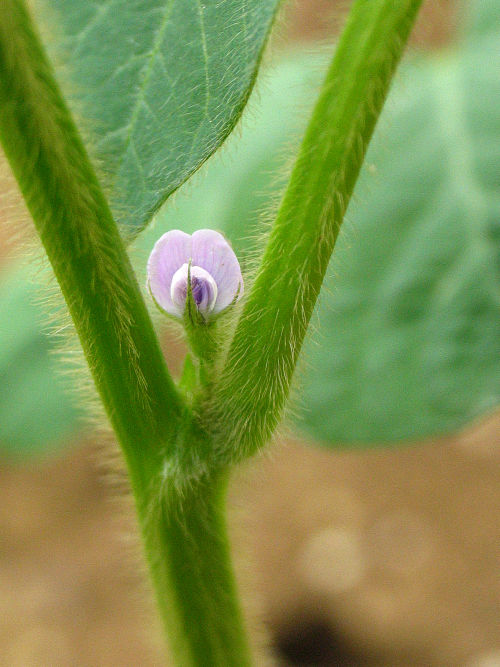
Soya: Diagnosing climatic accidents
Sur devis
Soya, a crop of the future to be mastered!
In a context of agro-ecological transition, soybeans are back in the spotlight thanks to their low input requirements and varied outlets. Boosted by regulatory and economic support (protein plan, MAEC, SIE...), this crop offers real opportunities in both conventional and organic farming. This training course will provide you with a comprehensive, practical technical approach to successfully manage each stage of the crop, secure your yields and make the most of your production.
Program:
Plant and canopy functioning:
- Key aspects of soybean physiology and phenology
- Identifying levers to improve yields
Cultural management adapted to the South-West :
- Planting
- Weed management
- Crop protection
- Water management
- Harvest control
Diagnosis of major accidents :
- Recognition of soybean pests
- Identification of root and leaf diseases
- Frequent climatic accidents in the South West
Approach to organic crop management
Soybeans in catch crops: a few indicators
At the end of the course, participants will be able to :
- Understand how plants function
- Analyze the factors influencing yield and the technical levers for optimization
- Recommend key cultivation techniques for successful soybean cultivation
- Implement good harvesting practices
- Detect and diagnose major crop failures (pests, diseases, abiotic stresses)
- Adapt crop management to the specificities of organic agriculture
Face-to-face format (1 day):
-
Theoretical input via illustrated presentations and case studies.
-
Interactive exchanges between participants and trainers to share experiences and questions.
Active methods: Presentations, case studies, debates, questions and answers.
Evaluation: Quiz, Q&A, individual satisfaction survey, self-assessment.
Theoretical support: Lectures, presentations, written material given to participants.
Case studies: Feedback from the field to illustrate best practices and solutions.
Exchange of practices: Discussions and sharing between trainees and trainers.
Agricultural technicians and advisors, Farmers and producers, Agricultural teachers and trainers, Agronomic and technical sales managers in agricultural distribution, Agri-food / processing industry players Quiz, Q&A, individual satisfaction survey, self-positioning.If you have any requests for adaptations to help you succeed in your course, please contact the disability referent:
Christel CARO
Tel: 01 30 79 95 09
Mail: c.caro@terresinovia.fr
Aucun 480€ TTC 5 15 1 Jour Quentin LAMBERT 93 Inter-company and intra-companyDare to introduce cover crops into your cropping systems
Direct seeding under plant cover (DMCS) combines the cessation of tillage with the establishment of permanent soil cover. Today, this is the most advanced form ofconservation agriculture.
The agronomic advantages of these techniques are major, but only become real and lasting once farmers have mastered the system. Providing participants with the keys to the success of this system is the major challenge of this course.
Theoretical part (distance learning):
- Typology of plant cover crops (annual and permanent): species, associations, agronomic benefits
- Use and presentation of the ACACIA tool
- Construction of a coherent SDCV technical itinerary
- Rationalization of rotations
- Establishing, maintaining and regulating cover crops
- Nutrition, weed, pest and disease management
- Crop associations and agronomic performance
- Economic and environmental analysis of SDCV practices
Field part ( either in Baziège (31) or in Nièvre (58)):
- Visit to SDCV plots
- Soil profile and interpretation
- Exchange of practices
At the end of the course, participants will be able to :
- Explain the agronomic functioning of a direct seeding system under permanent cover
- Identify the plant species that can be used according to their objective and the local soil and climate context
- Develop a permanent soil cover strategy adapted to their cropping system;
- Master the key factors for a successful transition to direct seeding under permanent cover (rotation, fertility, cover crop management, pest management, etc.).
- Evaluate the economic and environmental impact of their DMCS management.
Hybrid format:
- Distance learning theory (2 half-days): Technical inputs, case studies, interactive quizzes.
- Field practice (1 day): Analysis of plots, interpretation of soil profiles, exchanges with practicing farmers.
Active methods: Presentations, debates, questions and answers, practical work.
Evaluation: Quiz, Q&A, individual satisfaction survey, self-assessment.
Theoretical support: Lectures, presentations, written material given to participants.
Management tool: Use and presentation for choosing and managing plant cover crops.
Plot visits: Observation and analysis of soil profiles in real-life situations.
Exchange of practices: Feedback and discussion between participants and trainers.
Farmers in a transition phase or wishing to optimize their practices; Agricultural technicians and advisors (cooperatives, chambers of agriculture, agri-supply companies); Agricultural high school teachers and agro-ecology trainers. Quiz, Q&A, individual satisfaction survey, self-positioning
If you have any requests for adaptations to help you succeed in your course, please contact the disability referent:
Christel CARO
Tel: 01 30 79 95 09
Mail: c.caro@terresinovia.fr
Aucun 960€ TTC 5 4 Jours Michael GELOEN 90 Inter-company and intra-companyMaster the cultivation of lentils, an interesting diversification crop for your rotations!
Our other training courses
Agronomic control of chickpea and lentil cultivation in the southwest of France
Sur devis
Optimization of crushing and mechanical extraction of oil-protein seeds
Sur devis
A spring crop with many advantages, lentils lengthen rotations, break the cycle of pests and diseases, and require no nitrogen, making them particularly well-suited to the current context. Although lentils are often associated with faba beans and protein peas, they have their own specific technical itinerary that needs to be mastered to guarantee satisfactory yields. This training course will help you to grow it successfully, whether organically or conventionally, by making the right technical choices.
Program:
- International and national context
- Lentil physiology and phenology: fundamental principles and key aspects
- Cultural management and associated decision-making rules (planting, varietal choice, crop associations, weed management)
- Harvesting techniques adapted to lentils
- Identification and management of the main damage observed on the crop
- Specific features of lentil production in organic farming
- Plot visits and practical crop analysis
At the end of the course, participants will be able to :
- Understand the international and national production context, as well as the major challenges facing the industry.
- Identify the strengths and weaknesses of the species
- Design and implement appropriate crop management: previous crops, planting, choice of inputs, etc.
- Implement and/or recommend key cultivation techniques for successful lentil cultivation in organic and conventional farming.
- Diagnose the main accidents observed in cultivation
- Define good harvesting practices
Hybrid format:
-
Theory in the classroom: Technical inputs on crop management, discussions and debates.
-
Field practice: Plot visits, observation of development stages, crop analysis in real-life conditions.
Active methods: Presentations, case studies, questions and answers, sharing of experiences between participants and trainer.
Evaluation: Quizzes, oral exchanges, individual satisfaction surveys, self-assessment.
Theoretical support: Lectures, visual presentations, written material given to participants.
Field observation: Plot visits and observation under real conditions to link theory and practice.
Practical exchanges: Feedback from experience, discussions on concrete cases encountered in the field.
Technical tools: Presentation of useful references and documents for monitoring technical developments in cultivation.
Development technicians, agri-supply and distribution professionals, teachers, farmers. Quizzes, oral exchanges, individual satisfaction surveys, self-assessment.If you have any requests for adaptations to help you succeed in your course, please contact the disability referent:
Christel CARO
Tel: 01 30 79 95 09
Mail: c.caro@terresinovia.fr
Aucun 480€ TTC 5 15 https://public.dendreo.com/4rsx27tf4npws6tp4zAwc/media/nbndq56Aj3ys9z53n16x1mdykfhhqrtck2vw275sknrx45lfgr2wg6k43m5AcwkgpjdAcpj5h3xwgmk3gjtvgrsdnb6vm65Ajnyf3vjykyxAcpj8 1 Jour Zoé LE BIHAN 45 Inter-company and intra-companyThe basics of rapeseed cultivation
Our other training courses
Managing insect pests in oilseed rape: towards new collective and regional approaches
Sur devis
Dare to introduce cover crops into your cropping systems
Sur devis
Short-circuit production of edible oil
Sur devis
Optimization of crushing and mechanical extraction of oil-protein seeds
Sur devis
As rapeseed evolves, so does your knowledge!
With the rapid evolution of varieties, technical itineraries and decision-making tools, this training course offers a complete update on how to optimize rapeseed cultivation. Whether you're an experienced technician or a beginner, you'll discover the keys to success: genetic innovations, high-performance agronomic levers and benchmarks for making the right decisions at every stage of the campaign.
Day program :
- Yield development diagram and yield components
- Influence of different cultivation techniques
- Results of trials and surveys
- Main cropping decisions and decision rules
At the end of the course, participants will be able to:
- Identify rapeseed yield components and how they are determined
- Analyze the impact of cultivation practices on crop performance
- Select the varieties and inputs best suited to their soil and climate conditions and production objectives
- Adapt technical itineraries according to development stages and conditions encountered
- Make informed decisions throughout the growing season, based on technical, economic and agronomic data.
Active teaching methods: Technical presentations, case studies, feedback, alternating between theoretical input and feedback from field experience.
Evaluation: End-of-session quiz, questions and answers, individual satisfaction survey, self-assessment.
Theoretical support: Lectures, presentations, written material given to participants.
Exchange of practices: Feedback and debates between participants and trainers.
Interactivity: Quizzes, questions and answers, live exchanges with trainers.
Digital supports: Presentations and resources handed out after each session.
Technicians from development, economic organizations and the agri-supply industry. Teachers End-of-session quiz, Q&A, individual satisfaction survey, self-assessment.If you have any requests for adaptations to help you succeed in your course, please contact the disability referent:
Christel CARO
Tel: 01 30 79 95 09
Mail: c.caro@terresinovia.fr
Aucun 480€ TTC 5 15 https://public.dendreo.com/4rsx27tf4npws6tp4zAwc/media/m8h2g66skn8g5r5fm8ctm5ck3fcxc6k5fnwvA8kAnm5w2mttjj6Awmsnnjx2k9ckmr2xgpj5h36w2tdskfsd4zcy3rvh4vzqkntds9cwnbwfcpj8 1 Jour 40 Inter-company and intra-companySUN'Live: The essentials of sunflower management in 7 sequences
Our other training courses
Dare to introduce cover crops into your cropping systems
Sur devis
Short-circuit production of edible oil
Sur devis
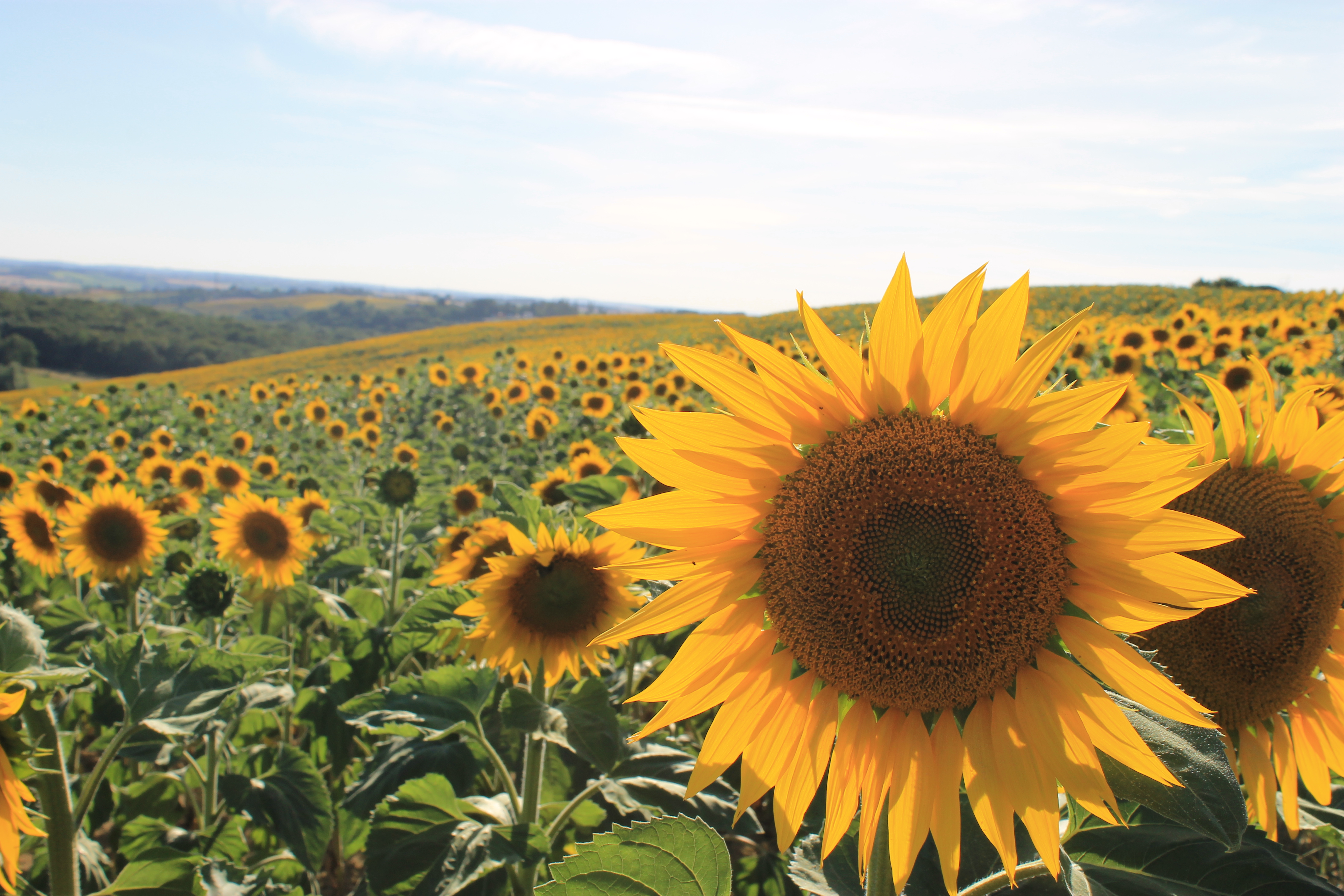
Mastering sunflower cultivation
Sur devis
Optimization of crushing and mechanical extraction of oil-protein seeds
Sur devis
Would you like to learn more about sunflower cultivation? SUN live is a distance learning course featuring 7 sequences led by Terres Inovia experts, covering the key practices and moments essential to sunflower success.It is designed to enable you to master the fundamental aspects of the crop, whether this is your first discovery or a refresher course.
Sequence 1: Planting and pests
- Management of intercropping (including cover crops) prior to sunflower cultivation.
- Techniques for successfully establishing a robust sunflower crop in the face of summer constraints.
- Encourage uniform planting and deep rooting.
- Identification of early-cycle pests, assessment of their harmfulness, and presentation of possible control methods.
Sequence 2: Positioning in crop rotation and economic assessment
- Agro-economic characteristics of the sunflower species: a robustness conditioned by careful and optimized cultivation.
- Optimizing sunflower's place in rotations
- What economic impact does sunflower have on cropping systems?
Sequence 3: Weed control
- Complementarity between agronomic, chemical and mechanical solutions
- Presentation of herbicide solutions and programs
- Targets, spectrum, efficacy, selectivity and conditions of use of the main herbicides for sunflower.
Sequence 4: Fertilization
- Specificities of sunflower with regard to nitrogen supply and calculating the dose to be applied
- Rationale for phospho-potassium fertilization
- Sunflower needs in trace elements; focus on boron and molybdenum
Sequence 5: Harvesting and production quality
- Choosing the right time to harvest.
- Presentation of suitable harvesting equipment.
- Good conservation and storage practices.
Sequence 6: Ecophysiology and water efficiency
- Distribution of water requirements throughout the cycle.
- Importance of early-flowering leaf area index and leaf area duration.
- Irrigating sunflowers: an opportunity to be seized.
- Identification of key periods in the cycle and climatic requirements for each growth stage.
- Factors influencing yield and oil content.
Sequence 7: Diseases and cumana broomrape
- Recognition of the main diseases, biological cycle, harmfulness, protection methods, warning and decision-making tools.
- Orobanche cumana: recognition, harmfulness, monitoring and management of affected areas in France
At the end of the course, participants will be able to :
- Identify the key stages of the crop, from planting to harvest, and evaluate their success.
- Diagnose the main problems affecting sunflower cultivation.
- Understand and use decision-support tools to maximize the crop's potential and profitability.
100% digital format: Remote training, accessible from any connected computer.
Active pedagogy: Technical presentations, case studies, feedback, analysis of real-life situations.
Evaluation: End-of-session quiz, questions and answers, individual satisfaction survey, self-assessment.
Online sessions: 7 sequences of 2 hours on Teams, led by Terres Inovia expert engineers.
Theoretical support: Technical presentations, summary documents, decision-making tools (e.g. fertilization calculations, pest and disease identification grids).
Interactivity: Quizzes, live questions and answers, exchanges with trainers and participants.
Digital support: Presentations and resources handed over after each session.
Technicians from development, economic and agri-supply organizations. farmers. Teachers End-of-session quiz, Q&A, individual satisfaction survey, self-positioningIf you have any requests for adaptations to help you succeed in your course, please contact the disability referent:
Christel CARO
Tel: 01 30 79 95 09
Mail: c.caro@terresinovia.fr
Aucun 960€ TTC 5 15 https://public.dendreo.com/4rsx27tf4npws6tp4zAwc/media/m8zxc7kjnnfc95jq3vl2y9rsn8qtkAdkl1ygy9shfndg3wl5pjmfc8ljkjyAA7snpj3g4pj5hjwvs7dsjn5wkz6nk3z2wndzgfrdcwrznntfcpj8 7 Jours 29 Inter-company and intra-companyCOLZA'Live: Understanding rapeseed crop management in 7 sequences
Our other training courses
Managing insect pests in oilseed rape: towards new collective and regional approaches
Sur devis
Dare to introduce cover crops into your cropping systems
Sur devis
Short-circuit production of edible oil
Sur devis
The basics of rapeseed cultivation
Sur devis
Whether you're a beginner or want to update your knowledge, COLZA Live training offers you a complete understanding of rapeseed growing. Thanks to 7 short, interactive sequences, led by experts, you can acquire the essential skills to optimize your farming practices, all in digital format.
Sequence 1: Introduction to the crop and planting
- Global context of rapeseed growing and associated agricultural issues
- Identification of the stages in the rapeseed crop cycle and phenological stages.
- The challenges of rapeseed establishment, the benefits of a robust rapeseed and the key conditions to be achieved, the keys to choosing the optimum establishment techniques according to the context.
Sequence 2: Fertilization
- Rapeseed specificities with regard to nitrogen supply
- Calculation of spring nitrogen dose (Réglette azote colza®) and choice of fractioning strategy
- Rationalization of phosphate, potassium and sulfur fertilization
- Rapeseed needs in trace elements; focus on boron and molybdenum
Sequence 3: Spring pests
- Presentation of the different spring pests: description and development cycle.
- Presentation of the main management strategies
- Presentation of preventive measures (agronomic levers) to limit the impact of pests.
- Nuisibility, risk assessment during the season (presentation of Decision Support Tools and decision rules) and decision-making.
- Choice of insecticides
- Prospects for biocontrol solutions
- Presentation of the main natural enemies.
Sequence 4: Spring diseases
- Review of the main spring diseases: Sclerotinia, Oidium, Alternaria, Mycosphaerella, Phoma, etc.
- Study of the biological cycle and harmfulness of these diseases.
- Control methods available as part of integrated crop protection.
Sequence 5 : Weed control
- Description of the main agronomic control methods.
- Development of herbicide control strategies adapted to weed flora.
- Grass control: Ray-Grass & Vulpin
- Presentation of mechanical control methods and mixed weed control strategies.
Sequence 6: Harvesting and yield components and ecophysiological aspects
- Strategies to limit harvest losses.
- Presentation of the swathing technique to optimize rapeseed harvesting.
- Explanation of the year's yields: rapeseed yield components and favorable factors.
Sequence 7: Autumn pests
- Presentation of the different autumn pests: description and development cycle.
- Presentation of the main management strategies.
- Preventive measures: levers to mobilize upstream to limit risk during the season.
- Nuisibility and risk assessment during the season (presentation of decision-support tools and decision rules).
- Choice of insecticides and slug pellets.
At the end of the course, participants will be able to :
- Understand and master rapeseed cultivation techniques
- Make informed decisions to optimize the crop
- Evaluate the success of rapeseed cultivation
- Optimize rapeseed planting
- Apply effective weed control strategies
- Managing fall and spring pests
- Optimize rapeseed fertilization
- Controlling spring diseases
- Minimize harvest losses
100% digital format: Remote training, accessible from any connected computer.
Active pedagogy: Technical presentations, case studies, feedback.
Evaluation: End-of-session quiz, questions and answers, individual satisfaction survey, self-assessment.
Online sessions: 7 sequences of 2 hours on Teams, led by Terres Inovia expert engineers.
Theoretical support: Presentations, technical documents, ADO proposals.
Interactivity: Quizzes, questions and answers, live exchanges with trainers.
Digital support: Presentations and resources handed over after each session.
Technicians from development, economic and agri-supply organizations. farmers. Teachers End-of-session quiz, Q&A, individual satisfaction survey, self-assessment.If you have any requests for adaptations to help you succeed in your course, please contact the disability referent:
Christel CARO
Tel: 01 30 79 95 09
Mail: c.caro@terresinovia.fr
Aucun 960€ TTC 5 15 https://public.dendreo.com/4rsx27tf4npws6tp4zAwc/media/jzmc9vtrj7yx25d3mmxwqv6vfnjf1mkqmr6Amztbmvrw2552nbvAmqtt4vl254lnnq6Acpj5hjh247kqjyzx3wbwkjwxszsbf8sgg9l3j37Acpj8 7 Jours 28 Inter-company and intra-companyHerbi1&NoPhy
OFB
1 200 000€
60 months Oui NationalThe challenges
Herbicide management is at the heart of farmers' concerns. There is a strong need for references in a context where the number of active ingredients is decreasing, resistance is developing and climate change is having an impact on weed dynamics and intervention times.
Following on from the XpeGE 0 project, which tested systems without phytosanitary products, Herbi1&NoPhy is based on less risk-taking for farmers and supply chains: the use of herbicides is a low priority, well after agronomic levers - but not excluded - and the use of other phytosanitary products is circumvented by technical choices.
The evaluation of this new project should make it possible to measure the technical and economic consequences of very drastically reducing the use of phytosanitary products, with a view to adapting systems to climate change, based on the notion of diversity (species, varieties, tillage, sowing periods, etc.).
The objectives
The aim of this experimentation and transfer project is to consolidate, build up and disseminate references on field crop and mixed farming systems, with a marked break in the use of phytosanitary products adapted to the context of climate change. It is based on a strong technical partnership between research, development, teaching and farmers.
The experimental sites (2 platforms and 10 observatories) will test annual cropping systems that represent a major break with the past, using all available agronomic, genetic, mechanical and biocontrol levers, with minimal use of herbicides and the use of other products only when absolutely necessary.
Expected results
The aim of the project is to create benchmarks for low-use phytosanitary practices. Estimating the technico-economic impact, the consequences in terms of equipment investment or working time, and assessing the acceptability of these systems to farmers through controlled observatories are the results expected from the project to help farmers adopt these systems.
The role of Terres Inovia

Partner
- Technical intervention on the Haroué platform
- Reflection on intervention thresholds as a last resort
Do you have a question?
Contact our specialist who will respond promptly to your request.
These projects may be of interest to you
Here are some other projects dealing with the same themes.
PLATOON
Towards better management of the cruciferous clubroot problem (Plasmodiophora brassicae): from knowledge of the pathogen to varietal evaluation
Decoproze
Demonstrator of a sustainable, zero-emission, protein-rich rapeseed production chain
ARPEGE
Structuring and developing sustainable agricultural sectors with regenerative agriculture
Project sheet
Towards carbon neutrality with farms
Lorem ipsum dolor sit amet, consectetur adipiscing elit. Sed non risus. Suspendisse lectus tortor, dignissim sit amet, adipiscing nec, ultricies sed, dolor. Cras elementum ultrices diam. Maecenas ligula massa, varius a, semper congue, euismod non, mi. Proin porttitor, orci nec nonummy molestie,…Aurore Baillet - a.baillet@terresinovia.fr
01 janvier 2025 S'adapter au changement climatique Grand Est Regional Chamber of Agriculture En cours NonDecoproze
BPI France
7 800 000€
54 months Oui NationalThe challenges
The various crises (Covid, war in Ukraine) have raised the question of the need to increase France's protein sovereignty and reduce its dependence on imports. Consumers are also calling for more local, environmentally-friendly production. France has a well-structured rapeseed industry.
The aim of the Decoproze project is therefore to test and roll out an "advanced rapeseed" solution on a regional scale, which should contribute to France's protein sovereignty. It could be a lever for France's agricultural transition and protein sovereignty, thanks to the creation of downstream value and its sharing across all links in the production chain.
The objectives
The aim of the project is to develop a demonstrator for the "advanced rapeseed" sector, enabling :
- Improve the protein content of rapeseed meal by 20% and reduce its fiber content by 25%.
- Accelerate the deployment of new production methods on a large scale, using digital tools to facilitate the combination of agronomic levers.
- Implement a viable economic model remunerating sustainable practices to produce protein-rich rapeseed using agroecological growing methods.
Expected results
- Enable the French rapeseed industry to significantly increase France's protein autonomy and reduce dependence on soybean imports;
- Drastically reduce greenhouse gas emissions and the use of chemical and mineral inputs, while improving protein content;
- Enable the development of markets that value quality and sustainability.
The role of Terres Inovia
Partner
- Support for SCAEL and SAIPOL in the co-construction of advanced rapeseed specifications alongside farmers, notably through events and training.
- Set up and monitor evaluation trials on the fertilization method and its management.
- Provision of the Institute's rapeseed expertise to all partners.
- Development of an infrared calibration system to facilitate seed analysis.
- Scientific and professional publications produced throughout the project.
Achievements and spin-offs
Do you have a question?
Contact our specialist who will respond promptly to your request.
Our partners
These projects may be of interest to you
Here are some other projects dealing with the same themes.
PLATOON
Towards better management of the cruciferous clubroot problem (Plasmodiophora brassicae): from knowledge of the pathogen to varietal evaluation
-
Colza
Tournesol
Pois de printemps
Pois d'hiver
Pois chiche
Lentille
Soja
Chanvre
Féverole d'hiver
Féverole de printemps
Lin d'hiver
Lin de printemps
Lupin d'hiver
Lupin de printemps
Cameline
Biodiversité
Herbi1&NoPhy
Experimenting with agroecological systems for pesticide use as a last resort
ARPEGE
Structuring and developing sustainable agricultural sectors with regenerative agriculture
Project sheet
Towards carbon neutrality with farms
Lorem ipsum dolor sit amet, consectetur adipiscing elit. Sed non risus. Suspendisse lectus tortor, dignissim sit amet, adipiscing nec, ultricies sed, dolor. Cras elementum ultrices diam. Maecenas ligula massa, varius a, semper congue, euismod non, mi. Proin porttitor, orci nec nonummy molestie,…Frédéric Giraud - f.giraud@terresinovia.fr
13 juin 2022 S'adapter au changement climatique Saipol En cours Non