The 2026 growing guide for sunflowers is now available
Terres Inovia has updated its sunflower growing guide. This comprehensive guide, updated with the institute's new visual identity, will accompany growers and advisors step-by-step through the coming campaign. As in previous years, it can be downloaded free of charge from the Terres Inovia website, or ordered in printed form.
Terres Inovia a mis à jour son guide de culture consacré au tournesol. Ce support complet, actualisé avec la nouvelle identité visuelle de l’institut, accompagnera pas-à-pas les producteurs et les conseillers lors de la prochaine campagne. Comme chaque année, il est téléchargeable gratuitement sur le site internet de Terres Inovia et peut également être commandé en version imprimée.
Économe en intrants et bénéficiant d’un progrès génétique continu, le tournesol est une culture durable et compétitive, pourvoyeuse de bénéfices pour les systèmes de culture dans lesquels il est inclus. Tête de rotation à cycle court, doté d’une bonne capacité de tolérance au stress hydrique, il s’adapte à de nombreux contextes de production.
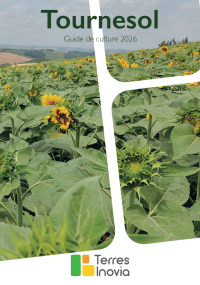
Le guide de culture tournesol de Terres Inovia permet de tout savoir sur l’itinéraire technique du tournesol : choix variétal, implantation, stratégie de lutte contre les bioagresseurs, conservation des graines, etc.
Dans cette édition 2026, Terres Inovia a actualisé l’ensemble de ses conseils et positions techniques, à l’instar des recommandations pour lutter contre le mildiou, les caractéristiques réglementaires des solutions préconisées, ou encore la liste des variétés évaluées dans le réseau Terres Inovia. Quant aux références économiques présentées, elles sont en phase avec les éléments de contexte actuel.
Le guide en version imprimée est également gratuit, seule une participation aux frais de port est demandée. Le guide de culture tournesol 2026 sera livré à partir du 23 février 2026.

Nos autres actualités
North & East zone - Sunflower crop report 2025
Agronomic control of chickpea and lentil cultivation in the southwest of France
Our other training courses
Master the cultivation of lentils, an interesting diversification crop for your rotations!
Sur devis
Optimization of crushing and mechanical extraction of oil-protein seeds
Sur devis
Integrating lentils and chickpeas into your crop rotations: a strategic agronomic choice
Lentils and chickpeas are economical, high-performance crops that improve soil fertility, break pest and disease cycles and offer secure outlets. Adapted to the pedoclimatic context of the South-West of France, the training course offers theoretical contributions and visits to master technical itineraries and integrate these legumes sustainably.
Program:
1 Introduction to legumes:
- Definition of legumes and how they work,
- Role of legumes in soil fertilization and crop rotation.
2 - Lentil management in the South-West of France
- Agronomic characteristics: spring species, low-input crop
- Typologies (blond, coral, green) and value-adding opportunities
- Adapting the technical itinerary to regional constraints: soil types, water availability, temperatures, etc.
- Planting, varietal selection, cultural management, fertilization, protection
- Harvesting: optimal conditions, equipment settings
3. chickpea management in the South-West
- Agronomic, environmental and economic benefits
- Regionalized technical itinerary: choice of sowing dates, densities, management in dry conditions, harvesting, storage and contracting.
- Management of pests and diseases specific to the region
4 Focus on organic farming
Training carried out in collaboration with FILEG (free for their members)
At the end of the course, participants will be able to :
- Explain the agronomic functioning of lentil and chickpea crops
- Identify their agronomic, economic and environmental benefits
- Choose species and varieties suited to the soil and climate conditions of the South West of France
- Implement rational crop management: planting, fertilization, weed and pest management
- Diagnose the main crop accidents
- Apply good harvesting and post-harvest practices
- Integrate the specificities of organic farming into the local context
Face-to-face format:
-
In-class technical input: presentations, case studies, interactive discussions
-
Practical application in the field: plot visits, crop observation, etc.
Active methods: Illustrated presentations, debates, questions and answers, feedback
Evaluation: Quizzes, questions and answers, application exercises, individual satisfaction surveys, self-assessment
Theoretical support: Lectures, visual presentations, written material given to participants.
Field visits: Analysis of lentil and chickpea crops in real-life conditions, identification of key technical points.
Practical exchanges: Feedback from field experience and group discussions with the trainer.
Advisors/Technicians from development, economic and agri-supply organizations. Teachers. Farmers Quiz, Q&A, application exercise, individual satisfaction survey, self-positioningIf you have any requests for adaptations to help you succeed in your course, please contact the disability referent:
Christel CARO
Tel: 01 30 79 95 09
Mail: formation@terresinovia.fr
Aucun 480€ TTC 5 15 https://public.dendreo.com/4rsx27tf4npws6tp4zAwc/media/nf6fsAsf4852qmjwlj3gqzsjgv6g97l3mn2x4ml2nbgwsAlx4flhkmk5mjww49tc3nbggpj5hjlw2765g8lhgyzA3fgAc9trjf8hmq5kmfbAcpj8 1 Jour Quentin LAMBERT 94 Inter-company and intra-companyGrowing soybeans successfully in the South-West
Our other training courses
Soya: a strategic crop for sustainable systems
Sur devis
Optimization of crushing and mechanical extraction of oil-protein seeds
Sur devis
Soybeans: Diagnosing climatic accidents
Sur devis
Soya, a crop of the future to be mastered!
In a context of agro-ecological transition, soybeans are back in the spotlight thanks to their low input requirements and varied outlets. Boosted by regulatory and economic support (protein plan, MAEC, SIE...), this crop offers real opportunities in both conventional and organic farming. This training course will provide you with a comprehensive, practical technical approach to successfully manage each stage of the crop, secure your yields and make the most of your production.
The program includes
1 Plant and canopy functioning:
- Key aspects of soybean physiology and phenology
- Highlighting levers for improving yields
2 - Cultural management adapted to the South-West :
- Planting
- Weed management
- Crop protection
- Water management
- Harvest control
3 Diagnosis of major accidents :
- Recognition of soybean pests
- Identification of root and leaf diseases
- Frequent climatic accidents in the South West
4 Approach to organic crop management
5 - Soybeans in catch crops: some indicators
Training organized in collaboration with FILEG (free for their members)
At the end of the course, participants will be able to :
- Understand how plants function
- Analyze the factors influencing yield and the technical levers for optimization
- Recommend key cultivation techniques for successful soybean cultivation
- Implement good harvesting practices
- Detect and diagnose major crop failures (pests, diseases, abiotic stresses)
- Adapt crop management to the specificities of organic agriculture
Face-to-face format (1 day) :
-
Theoretical input via illustrated presentations and case studies.
-
Interactive exchanges between participants and trainers to share experiences and questions.
Active methods: Presentations, case studies, debates, questions and answers.
Evaluation: Quiz, Q&A, individual satisfaction survey, self-assessment.
Theoretical support: Lectures, presentations, written material given to participants.
Case studies: Feedback from the field to illustrate best practices and solutions.
Exchange of practices: Discussions and sharing between trainees and trainers.
Agricultural technicians and advisors, Farmers and producers, Agricultural teachers and trainers, Agronomic and technical sales managers in agricultural distribution, Agri-food / processing industry players Quiz, Q&A, individual satisfaction survey, self-positioning.If you have any requests for adaptations to help you succeed in your course, please contact the disability referent:
Christel CARO
Tel: 01 30 79 95 09
Mail: formation@terresinovia.fr
Aucun 480€ TTC 5 15 https://public.dendreo.com/4rsx27tf4npws6tp4zAwc/media/jv72wsdgmr5hgzdf4ztwyrdxmngvm7dw4brh16cxj27A2wrr38rcwz53hbfgy5lmmzt25pj5hj6x1Azrj77v46cnn83w99jvgngs98bvgzhfcpj8 1 Jour Quentin LAMBERT 93 Inter-company and intra-companySoybeans: Diagnosing climatic accidents
Our other training courses
Growing soybeans successfully in the South-West
Sur devis
Soya: a strategic crop for sustainable systems
Sur devis
Optimization of crushing and mechanical extraction of oil-protein seeds
Sur devis
Hail, heatstroke, thunderstorms... Do you really know how to recognize a climatic accident on soybeans?
Yield losses due to climatic hazards are on the rise, and an error in diagnosis can compromise compensation or effective intervention. This training course will give you the reflexes you need to accurately identify climatic damage and differentiate it from other causes (diseases, pests, deficiencies, etc.). Gain in responsiveness, reliability... and expertise.
Program:
1. soybean physiology
- Key stages in development
- Factors influencing yield production
2 Cultural management and critical points
- Emergence, flowering, pod filling
- Impact of practices on performance
3.crop accidents - typology and recognition
- Climatic hazards: hail, heat stroke, excess water, strong winds
- Pest and disease damage
- Nutritional deficiencies and abiotic stress
- Phytotoxicities (herbicides)
- Other observable anomalies
On completion of the course, participants will be able to:
- Explain the key elements of soybean physiology in relation to crop management and yield formation.
- Identify sensitive phases in soybean development, from emergence to harvest.
- Diagnose the main climatic accidents (hail, wind, heat, storms, etc.).
- Differentiate between other causes of damage: diseases, pests, nutritional deficiencies, phytotoxicities, etc.
Face-to-face format:
-
Classroom contributions: Presentation of the types of climatic accidents, case studies, application exercises.
-
Field observation (if conditions are favorable): Analysis of real-life situations in the field (depending on date and availability of sites).
Active methods: Presentations, discussions, questions and answers, case studies, applied diagnostics.
Evaluation: Quiz, questions and answers, practical exercises, self-assessment, individual satisfaction survey, self-assessment.
Theoretical support: Presentations, lectures, summary documents given to participants.
Case studies: Real-life situations analyzed collectively, according to context.
Exchange of practices: Feedback between participants and trainers to enrich diagnoses.
Agricultural technicians and advisors, Employees of agricultural cooperatives and sales outlets (agronomy and technical sales departments), Agricultural insurance experts or inspectors, Soybean industry managers, Teachers and trainers, Farmers looking to improve their skills or carry out self-diagnosis on their plots of land Quiz, Q&A, self-positioning, individual satisfaction survey.If you have any requests for adaptations to help you succeed in your course, please contact the disability referent:
Christel CARO
Tel: 01 30 79 95 09
Mail: formation@terresinovia.fr
Aucun 240€ TTC 5 15 https://public.dendreo.com/4rsx27tf4npws6tp4zAwc/media/mvwgk65Akbww49dtgfA2mAdtjyytqs5rj7zt14cp38wx2n5knz2g3s5vk25fg7lzjjlAcpj5hjcxc55rfncs9Ack38kAgvd2jqvxqrsA4Axvcpj8 1 Jour 34 Inter-company and intra-companySunflower: Diagnosing climatic accidents
Our other training courses
Dare to use cover crops in your cropping systems
Sur devis
Short-circuit production of edible oil
Sur devis
Mastering sunflower cultivation
Sur devis
Optimization of crushing and mechanical extraction of oil-protein seeds
Sur devis
Climatic events regularly have an impact on sunflower yields. For insurers and field technicians alike, it is essential to distinguish precisely between weather-related damage and that caused by other factors (diseases, pests, deficiencies, phytotoxicities). This training course will give you the keys to accurately observe, analyze and diagnose sunflower claims, in order to inform your decisions and avoid misinterpretations.
The program includes
- Elements of physiology: key stages of the crop
- Sensitive points in crop management
- Main crop accidents: Weather-related accidents, Pest damage, Disease damage, Nutritional deficiencies, Herbicide-related phytotoxicities, Other accidents
At the end of the course, participants will be able to :
- Understand the key elements of sunflower physiology influencing crop management and yield formation.
- Identify sensitive points in sunflower cultivation, from emergence to harvest, in relation to growing conditions.
- Diagnose the main climatic accidents that can affect sunflowers: hail, wind, heat stroke, storms, etc.
- Recognize other accidents that can affect sunflower crops: pests, diseases, deficiencies, etc.
Face-to-face format:
-
Theory in the classroom: Technical inputs, case studies, interactive exchanges.
-
Practical in the field (subject to favorable conditions): Diagnosis of plots, observation of climatic accidents (subject to favorable conditions), collective analysis of situations encountered.
Active methods: Presentations, discussions, questions and answers, role-playing, analysis of real-life cases.
Evaluation: Quiz, questions and answers, self-assessment at start and end of training, individual satisfaction survey.
Theoretical support: Lectures, presentations, written material given to participants.
Observation tools: Diagnostic grids and damage recognition sheets.
Plot visits: Analysis of accidents under real conditions (climate, phytotoxicity, diseases, etc.) if present.
Practical exchanges: Feedback and discussions between participants and trainer to enhance diagnosis.
Agricultural technicians and advisors, Employees of agricultural cooperatives and sales outlets (agronomy and technical sales departments), Agricultural insurance experts or inspectors, Soybean industry managers, Teachers and trainers, Farmers seeking to improve their skills or carry out self-diagnosis on their plots of land. Quiz, Q&A, self-assessment at start and end of training, individual satisfaction survey, self-positioning.If you have any requests for adaptations to help you succeed in your course, please contact the disability referent:
Christel CARO
Tel: 01 30 79 95 09
Mail: formation@terresinovia.fr
Aucun 480€ TTC 5 15 https://public.dendreo.com/4rsx27tf4npws6tp4zAwc/media/3vcgAmsdjq72385l3rk2qz5w4jbg3rk2jvyt1ys2lbkA7ykfpbAd2ytnj8xw3k62j2ytqpj5hj7dq6d3kfzwwy52hfjh46jljvzdgz52jyvw4pj8 1 Jour Matthieu ABELLA 33 Inter-company and intra-companySUN'Live: The essentials of sunflower management in 7 sequences
Our other training courses
Dare to use cover crops in your cropping systems
Sur devis
Short-circuit production of edible oil
Sur devis
Mastering sunflower cultivation
Sur devis
Optimization of crushing and mechanical extraction of oil-protein seeds
Sur devis
Would you like to learn more about sunflower cultivation? SUN live is a distance learning course featuring 7 sequences led by Terres Inovia experts, covering the key practices and moments essential to sunflower success. It is designed to enable you to master the fundamental aspects of the crop, whether this is your first discovery or a refresher course.
The program includes
Sequence 1: Planting and pests
- Management of intercropping (including cover crops) prior to sunflower cultivation.
- Techniques for successfully establishing a robust sunflower crop in the face of summer constraints.
- Encourage uniform planting and deep rooting.
- Identification of early-cycle pests, assessment of their harmfulness, and presentation of possible control methods.
Sequence 2: Positioning in crop rotation and economic assessment
- Agro-economic characteristics of the sunflower species: a robustness conditioned by careful and optimized cultivation.
- Optimizing sunflower's place in rotations
- What economic impact does sunflower have on cropping systems?
Sequence 3: Weed control
- Complementarity between agronomic, chemical and mechanical solutions
- Presentation of herbicide solutions and programs
- Targets, spectrum, efficacy, selectivity and conditions of use of the main herbicides for sunflower.
Sequence 4: Fertilization
- Specificities of sunflower with regard to nitrogen supply and calculating the dose to be applied
- Rationale for phospho-potassium fertilization
- Sunflower needs in trace elements; focus on boron and molybdenum
Sequence 5: Harvesting and production quality
- Choosing the right time to harvest.
- Presentation of suitable harvesting equipment.
- Good conservation and storage practices.
Sequence 6: Ecophysiology and water efficiency
- Distribution of water requirements throughout the cycle.
- Importance of early-flowering leaf area index and leaf area duration.
- Irrigating sunflowers: an opportunity to be seized.
- Identification of key periods in the cycle and climatic requirements for each growth stage.
- Factors influencing yield and oil content.
Sequence 7: Diseases and cumana broomrape
- Recognition of the main diseases, biological cycle, harmfulness, protection methods, warning and decision-making tools.
- Orobanche cumana: recognition, harmfulness, monitoring and management of affected areas in France
At the end of the course, participants will be able to :
- Identify the key stages of the crop, from planting to harvest, and evaluate their success.
- Diagnose the main problems affecting sunflower cultivation.
- Understand and use decision-making tools to help the crop reach its full potential and maximize profitability.
100% digital format: Remote training, accessible from any connected computer.
Active pedagogy: Technical presentations, case studies, feedback, analysis of real-life situations.
Evaluation: Quiz at each session, Q&A, individual satisfaction survey, self-assessment.
Online sessions: 7 sequences of 2 hours on Teams, led by Terres Inovia expert engineers.
Theoretical support: Technical presentations, summary documents, decision-making tools (e.g. fertilization calculations, pest and disease identification grids).
Interactivity: Quizzes, live questions and answers, exchanges with trainers and participants.
Digital support: Presentations and resources handed over after each session.
Technicians from development, economic and agri-supply organizations. Farmers. Teachers Quiz at each session, Q&A, individual satisfaction survey, self-positioningIf you have any requests for adaptations to help you succeed in your course, please contact the disability referent:
Christel CARO
Tel: 01 30 79 95 09
Mail: formation@terresinovia.fr
Aucun 960€ TTC 5 15 https://public.dendreo.com/4rsx27tf4npws6tp4zAwc/media/4vjvAl6wk8mhs76Am85vm6kqgvct15dt3rAhgnl3kj7A7wk2krvfgrrAjbdvqwclg8kAspj5hjhxkztppbsdc7lzjnmwc56pjbhfkz6qmz3Acpj8 7 Jours 29 Inter-company and intra-companyIRRIsoja
An irrigation control tool using Watermark probes
IRRIsoja answers three key questions when irrigating soybeans:
- When to start the first round of watering?
- When to resume irrigation after a significant rainfall?
- When to stop irrigating the plot?
It is the most suitable tool for controlling soybean irrigation as closely as possible to needs, making the most of all available soil water reserves. In fact, it takes into account the type of soil in the plot, changes in soil moisture thanks to tensiometric probes, and adapts to the constraints of each farmer (duration of water turn).
IRRIsoja is specifically designed for farmers and irrigation advisors following a network of plots.
It can be downloaded free of charge by clicking on "Access the tool" above (Excel file / 1.9 MB).
Instructions for use
- IRRIsoja user guide and instructions for setting up the system (tensiometer station and tension measurement)