
Automatically generated translation
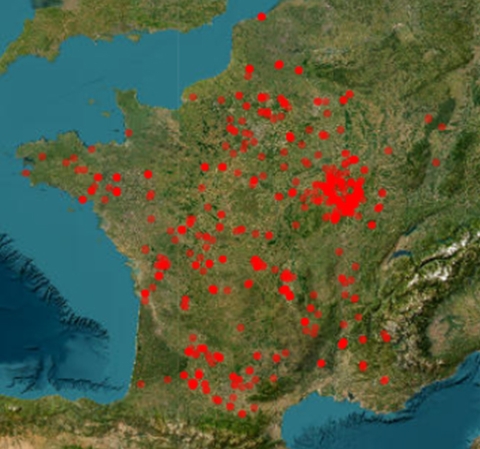
Suitable for a wide range of soil and climate conditions, camelina is grown throughout France. It can be easily integrated into a variety of cropping systems, in both conventional and organic farming.
One distinctive feature of camelina is its very short growing cycle, which also makes it suitable for intercropping.
Camelina as a main crop
As a Stand Crop
Camelina can be grown as a stand-alone main crop, with both winter and spring varieties. In areas with a mild climate (where winter temperatures do not drop below -10°C), spring varieties can also be planted in the fall.
As a main crop, the proportion of camelina produced organically is particularly high, due to its hardiness and resistance to pests, as well as the opportunities for using the oil in human food.
In some countries in the southern Mediterranean basin, camelina is grown on so-called “marginal” lands with low potential, which it makes good use of.
In intercropping
Camelina lends itself well to intercropping, particularly in organic farming. The lentil-camelina combination is notably widely practiced, with camelina acting as a support plant, which helps limit the risk of lentil lodging.
Furthermore, if growing conditions are favorable, camelina grows rapidly and exhibits strong competitive ability against weeds during the rosette stage, unlike the generally slow initial growth of legumes, which contributes to better weed control. Other camelina–legume combinations mentioned in the literature include camelina combined with peas, lupins, or chickpeas.
References also exist regarding camelina combined with barley or wheat, but these highlight competition between the two species and associated yield losses (M. Leclère’s thesis on the introduction of camelina in Picardy).
In intercultural
The camelina growing season, which lasts about three months for short-season varieties, makes it suitable for intercropping. Recent changes in the regulatory framework are opening up significant market opportunities for camelina grown as an intercrop, such as sustainable aviation fuel.
As a summer catch crop
Although camelina adapts well to a wide range of soil and climate conditions, certain factors must nevertheless be present to maximize its chances of success as a summer intercrop: sufficient rainfall during the establishment period (late June–early July), few days of high temperatures (35°C–40°C) during flowering, and finally a sufficient temperature sum (1,700°D at base 0) to reach maturity before mid-October. These criteria exclude the far northern and southern regions of France.
To maximize the chances of success, camelina grown as a summer intercrop must be planted after a previous early-harvested crop, such as barley or winter peas.
As a winter intercrop
It is also possible to grow camelina as a winter intercrop, preceding a late-sown spring crop such as sunflower or sorghum. The challenge with this type of crop rotation is to harvest the camelina early enough so as not to delay the sowing of the subsequent crop too much and thereby impact its yield potential.

Our other articles

-
Rapeseed
Tournesol
Féverole d'hiver
Féverole de printemps
Soja
Pois d'hiver
Pois de printemps
Lentille
Pois chiche
Lin d'hiver
Lin de printemps
Lupin d'hiver
Lupin de printemps
Cameline
Chanvre
Implantation
Récolte
Ravageurs
Choix variétal
Watch the recordings of the Terres Inovia 2026 webinars
-
Rapeseed
Tournesol
Pois d'hiver
Pois de printemps
Soja
Féverole d'hiver
Féverole de printemps
Lentille
Pois chiche
Lin d'hiver
Lin de printemps
Lupin d'hiver
Lupin de printemps
Cameline
Chanvre
Diversifier son système de culture