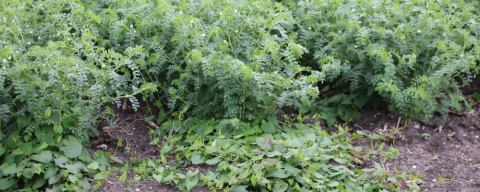
Successful sunflower cultivation begins with careful soil preparation!
Sunflowers are taproot plants with a short growth cycle, which makes them very demanding in terms of planting quality, particularly to ensure good establishment and better withstand periods of water stress through good rooting. Any rooting defects result in a loss of yield (up to 10 q/ha) and quality (% oil).
Le tournesol est une plante à pivot et à cycle court, ce qui rend cette culture très exigeante vis-à-vis de la qualité d’implantation, notamment pour assurer l’installation du peuplement et mieux supporter les périodes de stress hydrique par un bon enracinement. Tout défaut d’enracinement entraine une perte de rendement (jusqu’à 10 q/ha) et de qualité (% d’huile).
La préparation du sol vise 4 objectifs principaux :
- Assurer la porosité du sol,
- Assurer un lit de semence homogène et rappuyé,
- Favoriser un réchauffement rapide du sol,
- Contrôler la présence précoce des adventices.
Assurer un bon état structural
L’objectif du travail du sol est de corriger les défauts de structure pour ameublir le sol et permettre un bon enracinement. L’idéal est de viser 15 cm de structure poreuse (cf. illustration ci-dessous).

Un bon enracinement aidera la plante à s’adapter aux périodes de stress hydrique, notamment durant la floraison où le tournesol est le plus sensible à la restriction d’eau.
L’adaptation du tournesol aux différents modes d’implantation est récapitulée dans le tableau ci-dessous.

Adapter la préparation au contexte de l’année et au type de sol
ATTENTION : avant de réaliser un travail du sol, vérifier son état d’humidité en profondeur. Cette observation se fait à l’aide d’une bêche. La présence de mottes encore humides entre 15 et 20 cm de profondeur vous incitera à décaler l’intervention de quelques jours pour permettre le ressuyage et limiter la création d’une zone non favorable à la croissance de la racine. Cette année, cette observation est d’autant plus importante, compte tenu des précipitations hivernales.

Source : Arvalis
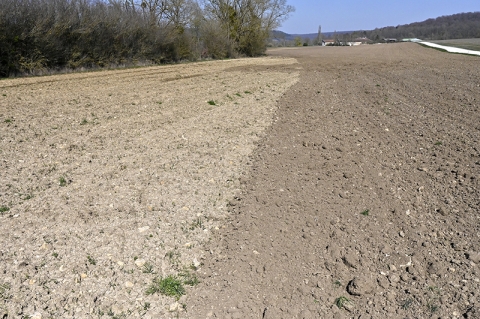
Si vous réalisez un travail profond en sortie hiver dans un sol encore humide en profondeur, vous risquez de tasser le sol et/ou limiter l’efficacité du passage de l’outil. Sur la photo ci-dessous, un passage d’outil a été réalisé à 15 cm dans un sol encore en condition plastique. Vous observez la restructuration sur le passage de la dent mais son action a été insuffisante entre les dents. Dans ces conditions, l’implantation du tournesol sera pénalisée.

Gestion des sols argileux
Les sols argileux présentent une forte capacité de rétention en eau, une sensibilité au compactage et une tendance à former des mottes si le travail est réalisé en conditions humides.
Dans la plupart des situations, un travail d’hiver a déjà été réalisé (soit un labour, soit un passage d’outil profond sur 15-20 cm). Les préparations profondes à la dent durant l’été montrent aujourd’hui de belles structures en comparaison des interventions durant l’hiver (passages sur le gel) du fait de conditions de sol plus favorables (sol suffisamment sec et friable).
Hivers plus pluvieux : l’été devient la clé pour préparer les sols
Si le changement climatique entraine une augmentation des pluviométries hivernales, ces interventions profondes, pour restructurer le sol durant l’été et complétées par le semis d’un couvert végétal, seront à favoriser.
Une reprise superficielle (5 à 8 cm selon les outils) sera à réaliser dès que les conditions de sol le permettront afin d’assurer le ressuyage et la préparation du lit de semence. Un second passage sera réalisé quelques jours avant le semis pour finaliser la préparation, niveler et réchauffer le sol. Les outils à disques sont à éviter pour limiter les risques de lissage. Privilégier les outils à dents, voire la herse rotative (pas idéal mais possible dans ce type de sol pour sa capacité à casser les mottes). L’alternance de l’un et l’autre est souvent observée.

Gestion des sols limoneux
Ces sols présentent moins de contraintes que les sols argileux. Ils restent plus faciles à travailler mais sont sensibles à la battance si la surface du lit de semence est trop affinée.
Un travail profond (15-20 cm) peut être réalisé dès que les conditions de ressuyage du sol le permettront (labour ou outil à dents). Par la suite, 1 à 2 interventions seront nécessaires pour affiner le lit de semence, le niveler et le réchauffer. Veiller à ne pas faire trop de terre fine en surface, ce qui augmente le risque de battance. Dans ces conditions, les outils trop énergiques (type herse rotative) sont à proscrire. Privilégiez les outils à dents (type vibro ou herse lourde) qui conserveront des mottes en surface.

Dans les situations de non-labour, le recours à un herbicide non sélectif peut être envisagé pour détruire les adventices notamment les vivaces et les graminées développées qui seront difficiles à détruire mécaniquement et risqueraient de repiquer dans le tournesol.
A lire aussi

North & East zone - Sunflower crop report 2025
Hemp: key steps for successful cultivation
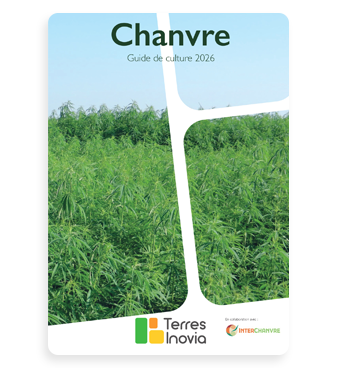
The establishment of hemp is a crucial step for successful cultivation. As a short-cycle species, it cannot tolerate any interruption in growth after sowing. The aim is therefore to achieve rapid and uniform emergence through appropriate soil structure and controlled nitrogen fertilization management.
L’implantation du chanvre est une étape déterminante pour la réussite de la culture. Espèce à cycle court, il ne tolère aucun arrêt de croissance après le semis. L’objectif est donc d’obtenir une levée rapide et homogène grâce à une structure du sol adaptée et une gestion maitrisée de la fertilisation azotée.
Viser une levée rapide grâce à une bonne structure du sol
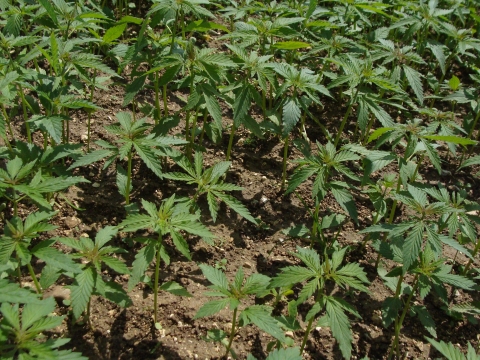
Le chanvre, malgré son système racinaire pivotant et sa forte capacité d’adaptation, reste très sensible à une mauvaise structure du sol. Il est essentiel que la préparation du sol permette un enracinement profond pour absorber eau et nutriments, et un lit de semences fin, aéré et réchauffé pour assurer une levée rapide et homogène. Pour limiter les tassements nuisibles aux racines, il est recommandé de réduire les passages sur la parcelle en utilisant des trains d’outils adaptés ou des équipements tels que des roues jumelées ou des pneus à basse pression.
Optimiser le lit de semences grâce au faux semis
Après le labour, (qu’il soit hivernal ou printanier), l’utilisation d’un outil à dents permet d’ameublir le sol, favorise la pénétration racinaire, accélère le réchauffement du lit de semences et limite le dessèchement. Cette technique fait germer les adventices, qui seront éliminées mécaniquement avant le semis.
Semer dans des conditions optimales
La levée du chanvre, idéale entre 4 et 10 jours après semis, est une étape critique. Les conditions de semis suivantes doivent être respectées :
- Profondeur : 1 à 2 cm
- Température du sol : 12°C à 3 cm de profondeur
- Période de semis de fin mars à début mai selon les régions
- Semer en ligne avec un semoir à céréales classique à disques, idéalement équipé d’une roulette de rappui, avec un écartement de 9 à 17 cm.
Après le semis, le roulage n’est pas une étape systématique. Il se justifie dans deux situations :
- En sol sec et absence de pluie annoncée dans les cinq jours : le roulage favorise un meilleur contact entre les graines et le sol, assurant ainsi l’humidité nécessaire à la germination.
- En présence importante de cailloux en surface : ces derniers peuvent nuire à la qualité des pailles à la récolte. Le roulage les enfonce et améliore les conditions de récolte.
Limiter les adventices grâce à une couverture rapide
Une levée réussie permet une couverture rapide du sol. Environ quatre semaines après le semis, le feuillage forme un écran empêchant la photosynthèse des adventices déjà germées.

Adapter la densité de semis selon les débouchés et les modes de récolte
Le poids de 1 000 grains varie habituellement de 15 à 17 g.
| Débouchés | |||
Paille (mode non battu) | Mixte (mode battu) | Graines | Textile fibres longues | |
Densité en kg/ha | 50-55 | 45-50 | 25-30 | 75-85 |
Peuplement en pieds levés/m² | 280-320 | 240-280 | 200-250 | 400-500 |
Source : Terres Inovia “Guide de culture chanvre 2026”
D’un point de vue réglementaire, pour les cultures à usage industriel, une dose minimale de semis de 25 kg/ha doit être respectée.
Garantir un bon démarrage avec l’azote
La fertilisation minérale vise à compléter les fournitures d’azote du sol, avec un besoin total de 13-15 unités/t de matière sèche. Il est recommandé de se référer aux valeurs définies dans les GREN et de respecter les doses maximales fixées par les arrêtés de la Directive Nitrates de votre région.
Le chanvre absorbe près de la moitié de cet azote entre le semis et le stade 5-6 paires de feuilles. Pour des raisons pratiques, les apports sont généralement réalisés en totalité au moment du semis, mais un fractionnement est possible : deux tiers de la dose avant le semis/levée, le reste au stade 50-60 cm de la plante. Les formulations liquides sont à proscrire en végétation car elles peuvent provoquer des brûlures.
Pour les fibres longues, la fertilisation azotée ne doit pas dépasser 70 unités/ha, reliquats compris. Au delà, les risques de verse sont importants.
Ainsi une préparation soignée du sol, un semis dans de bonnes conditions, une densité adaptée et une fertilisation maîtrisée sont essentiels pour assurer une implantation rapide et performante du chanvre.
En savoir plus
Sunflower pre-seeding preparation: a crucial stage for establishment
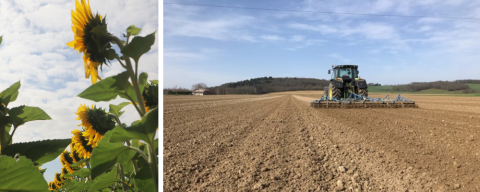
Preparing the plots before sowing is already a key step towards obtaining a robust sunflower. The main challenge this year will be to prepare the soil in good moisture conditions.
Preparing the plots before sowing is already a key step towards obtaining a robust sunflower. The main challenge this year will be to prepare the soil in good moisture conditions.
There are two major issues to consider when carrying out seedbed preparation operations:
1-Preserve soil structure
On clay soils, the structural state of the soil must not be degraded by seed preparation operations. In late winter, deep tillage should be avoided. Only in conditions of perfect drainage at working depth, which should be extremely rare this year, can clay soils be cracked and aerated.
For silty soils, deep cracking or ploughing may be necessary, even late in the season, just before sunflower sowing.
2-Get a seedbed with at least as much fine soil as clods, to ensure good soil-seed contact.
Caution: too many passes can result in excess fine soil, which can be detrimental in soils prone to capping or erosion.
Raisonner le type d’outils, ainsi que le nombre de passages est indispensable
La préparation des parcelles en sortie d’hiver s’appuie sur 2 piliers :
- Travailler des sols ressuyés, à consistance friable sur tout le profil travaillé. C’est le cas si les mottes, pétries dans la main, s’émiettent sans coller et donnent de la terre fine. Cette règle fondamentale invite à réaliser des observations très régulières de la consistance du sol, sur toute la profondeur de travail envisagée. Cela semble particulièrement crucial après l’hiver très pluvieux que nous venons de connaitre, afin de déclencher les opérations de reprise dès que les premiers créneaux favorables se présenteront (la fenêtre risque d’être courte cette année), et d’être prêt à semer dès le début du mois d’avril.
Le choix et les conditions d’utilisation des outils de travail du sol.
Outre l’état du sol au moment de l’intervention, ces deux autres critères s’avèrent déterminants pour réussir la préparation au semis.
- Privilégier les outils à dents non animés pour préparer le lit de semences. Si 2 passages sont envisagés, le 1er peut être réalisé à 10-15cm de profondeur, sans rouleau pour favoriser le réchauffement du sol. Le 2ème passage à 6-8cm aura pour objectif principal de niveler et d’affiner
- Combiner les outils pour limiter le nombre de passages
- Lutter contre la compaction du sol, en utilisant des équipements de type roues jumelées ou pneus basse pression. En l’absence de tels équipements, vérifier et adapter la pression des pneumatiques.
Dans quel cas réaliser des faux semis printaniers ?
Sur des flores printanières et estivales qui lèvent tôt en saison comme l’ambroisie, la renouée liseron, le xanthium ou même un peu plus tardivement le datura, le faux-semis peut s’avérer efficace pour réduire les infestations dans le tournesol.
Le faux-semis consiste à réaliser un travail superficiel du sol assez tôt en saison pour faire lever les adventices, bien rappuyé avec un rouleau et positionné de préférence avant une pluie. 1 à 3 semaines après, on détruira ces levées, soit chimiquement dans les situations où le glyphosate est autorisé, soit mécaniquement, en veillant à remuer le sol le moins possible pour éviter de provoquer de nouvelles germinations. Cette stratégie s’accompagne souvent d’un décalage de la date de semis du tournesol de 15 à 20 jours, nécessaire à la réalisation de cette chaine d’interventions.
Attention, des semis tardifs de tournesol, au-delà du 1er mai, peuvent pénaliser les résultats de la culture. Un compromis est donc à trouver entre bénéfices retirés du faux-semis, et risques occasionnés pour le tournesol. Ce décalage de la date de semis est à réserver aux situations où il est prioritaire d’alléger la pression exercée par les flores dites « problématiques », car difficiles à détruire et exerçant une forte concurrence sur la culture (ambroisie, renouée liseron, tournesol sauvage, xanthium).
Vos contacts régionaux
- Quentin LAMBERT (q.lambert@terresinovia.fr) – Ingénieur régional de développement – Occitanie
Quentin LEVEL (q.level@terresinovia.fr) – Ingénieur régional de développement – Ex-Aquitaine, Gers, Hautes-Pyrénées - Alexandra DENOYELLE - Terres Inovia (a.denoyelle@terresinovia.fr) - Auvergne Rhône-Alpes et Provence Alpes Côte d'Azur
Sunflower sowing: golden rules for successful planting
A robust sunflower that limits biotic stresses (pests, diseases, weeds) and abiotic stresses (climatic factors) throughout the cycle requires good planting. This is conditioned, on the one hand, by demanding soil preparation and, on the other, by successful sowing to secure the stand.
A robust sunflower that limits biotic stresses (pests, diseases, weeds) and abiotic stresses (climatic factors) throughout the cycle requires good planting. This is conditioned, on the one hand, by demanding soil preparation and, on the other, by successful sowing to secure the stand.
Adapt the sowing period and earliness to your region
Sowing in good conditions and in sufficiently warm soil (8°C at a depth of 5 cm) is essential to ensure a rapid start to the crop. Adapting the sowing period and varietal earliness helps limit the risk of late harvests. Recommendations by sector are given in the table below.

La bonne densité pour faire succès
Semez entre 65 000 et 75 000 graines/ha selon la situation de la parcelle, afin de viser 50 000 à 60 000 plantes levées. Les écartements de 40 à 60 cm permettent généralement de gagner quelques quintaux par rapport à un écartement plus large de type maïs (75 à 80 cm), à densité équivalente.
Semez avec un semoir monograine à 5 km/h maximum, à une profondeur de 2 à 3 cm si le sol est frais, et plus profondément, entre 4 et 5 cm, si le sol est sec en surface.
En savoir plus
Spring flax planting, the key stage in good crop management!
Choisir sa parcelle
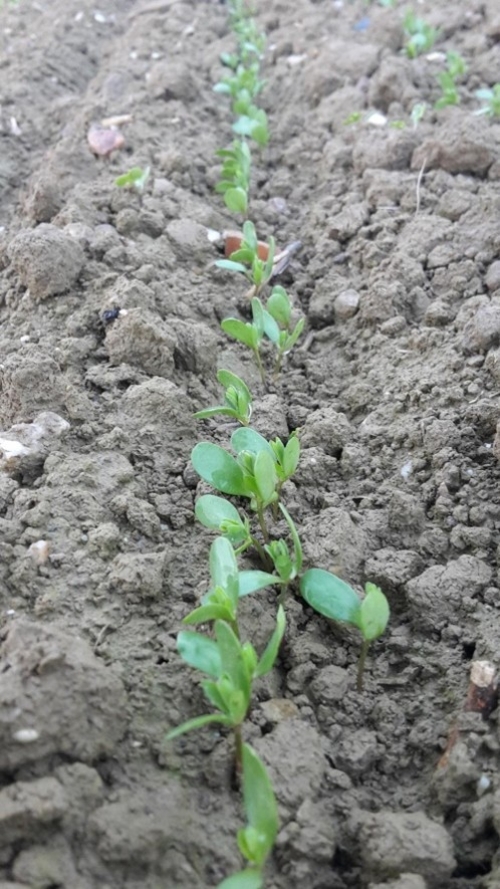
Le lin est sensible au stress hydrique dès le début floraison qui a lieu courant juin, il faut donc éviter les sols séchants et superficiels pour implanter le lin de printemps. Les parcelles se réchauffant vite au printemps seront également à privilégier pour permettre des levées rapides.
Enfin, le lin est une culture peu couvrante et sensible à la concurrence des adventices et disposant de peu de solutions chimiques pour le désherbage. Il est fortement conseillé de l’implanter sur une parcelle à très faible enherbement, en particulier pour les graminées.
Dans les régions concernées, les parcelles infestées en orobanche rameuse peuvent être implantées en lin de printemps. Le lin de printemps est une espèce faux hôtes de l’orobanche rameuse : elle stimule la germination des graines d’orobanches par ses exsudats racinaires, mais celles-ci ne peuvent se fixer aux racines du lin et dépérissent rapidement, on parle de « germination suicide ».
Apporter un soin particulier à la préparation du lit de semences
L'objectif est d’obtenir une bonne structure de sol pour assurer un enracinement optimal. Le lin oléagineux de printemps est une plante assez exigeante en eau au cours de la floraison, il est important que la culture puisse exploiter au mieux la réserve hydrique du sol (ses racines peuvent explorer plus de 90 cm de profondeur).
Une levée rapide et homogène du lin sera facilitée par une structure superficielle, fine et aplanie, si possible rappuyée pour optimiser le contact sol-graine (Rester vigilant face aux phénomènes de battance qui peuvent pénaliser la levée). Il est également conseillé d’éviter au maximum les amas de débris végétaux (veiller à la bonne destruction des couverts végétaux et à la bonne répartition des résidus avant le semis du lin). Cette levée rapide permet également de limiter l’impact des altises du lin, qui consomment les cotylédons du lin.
Date de semis
Les dates de semis optimales pour le lin de printemps sont à adapter à la zone géographique.
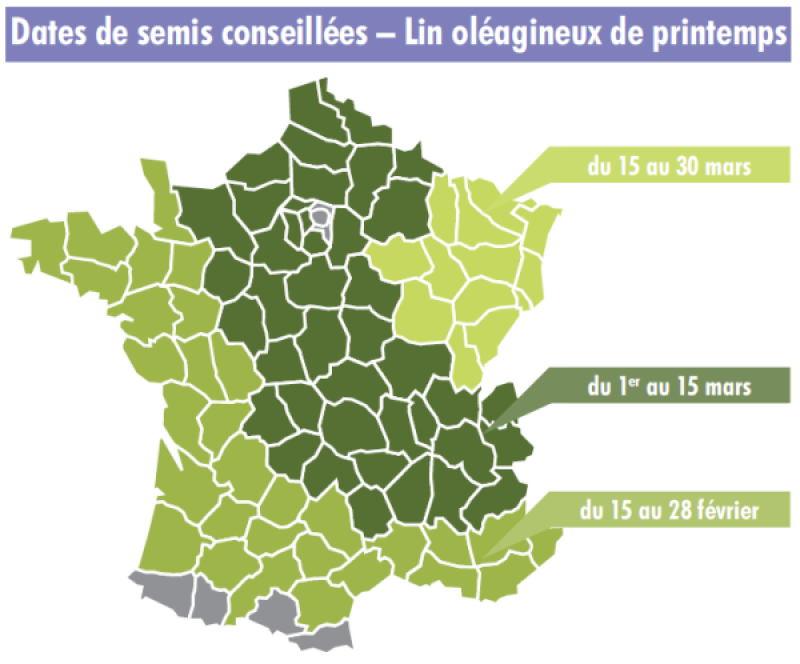
Attention aux décalages de dates de semis trop importants par rapport aux dates optimales : les semis les plus tardifs seront potentiellement plus sensibles aux conditions de sec de l’été. Les stress hydriques et thermiques pendant la floraison peuvent directement impacter le potentiel de rendement.
En agriculture biologique, retarder le semis (fin-mars à mi-avril) pour que le sol soit suffisamment réchauffé. Une levée rapide de la culture permettra de limiter les dégâts d’altises.
Maitriser la densité, la profondeur et la vitesse de semis
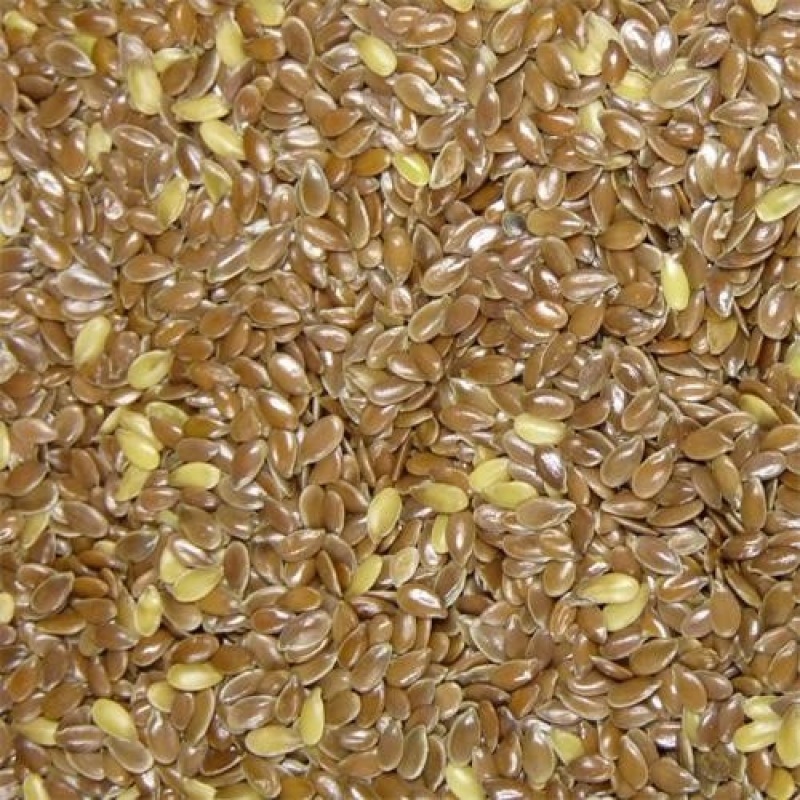
800 graines/m² (selon pertes estimées à la levée) au semoir à céréales pour obtenir un peuplement de 450 à 550 plantes / m². Dans les secteurs où la reprise est plus tardive au printemps (type Lorraine, Bourgogne), il est souvent conseillé de semer à 750-800 graines / m². Les graines de lin sont fluides : contrôler la densité du semis car le Poids de Mille Grains peut varier de 5 à 8 g selon les variétés.
En agriculture biologique, il est conseillé de semer entre 75 et 80 kg/ha pour une meilleure couverture du sol et anticiper les pertes liées au désherbage mécanique.
Calculer la densité de semis (en kg/ha) selon le PMG du lin de printemps
PMG (g) | Nombre désiré de graines / m² | |
650 | 800 | |
5 | 33 | 40 |
5.5 | 36 | 44 |
6 | 39 | 48 |
6.5 | 42 | 52 |
7 | 46 | 56 |
7.5 | 49 | 60 |
8 | 52 | 64 |
*Lecture du tableau : pour un PMG de 7 g, semer environ 46 kg/ha pour avoir 650 graines / m² en lin de printemps.
Semer à 1-2 cm de profondeur, au semoir à céréales. Une vitesse de semis réduite favorise la bonne répartition des graines sur la ligne de semis.
En cas de faible densité, le lin est capable de compenser en émettant des tiges supplémentaires. Cependant, le lin de printemps ramifie moins que le lin d’hiver (0 à 1 ramification en moyenne par plante). Avec 300 plantes/m², correctement réparties, le potentiel de la culture est affecté mais la parcelle peut généralement être conservée si les adventices sont maîtrisées.
Fertilisation azotée
Le lin n’est pas une culture exigeante en azote et supporte mal les surplus d’azote. L’excès d’azote augmente le risque de verse et peut altérer la qualité finale de la récolte en impactant les teneurs en oméga 3 de la graine. Il est donc fortement conseillé de réaliser une analyse de reliquats d’azote avant lin de printemps et de prendre en compte l’azote que pourra restituer le couvert intermédiaire pour calculer la dose d’azote prévisionnelle.
Il est recommandé d’apporter la dose d’azote au semis en incorporé. Si la dose à apporter est supérieure à 80 unités, fractionner en deux l'apport pour limiter le risque verse : 30 à 50 unités au semis et le complément, sous forme solide, à l'apparition des boutons floraux.
Si la parcelle reçoit régulièrement des apports de matière organique, réduire la dose d’azote à apporter d’environ 30 à 40U (selon types d’effluents et l’historique d’apports sur la parcelle).
► Se référer aux règles de calcul des doses d’azote à apporter dans vos régions.
Fertilisation en Zinc, en cas général, l’enrobage de la semence suffit
Le lin exporte beaucoup de zinc, de l’ordre de 300 g/ha d’élément pur. Le calcaire actif bloquant le zinc, éviter de réaliser un chaulage avant une culture de lin. Le lin de printemps est plus sensible aux carences en zinc que le lin d’hiver.
► Cas général : l’enrobage des semences avec du zinc est suffisant, mais en l’absence d’enrobage, procéder à l’application de sulfate ou du chélate de zinc (volume de bouillie conseillée = 400 l/ha) au stade cotylédons-premières feuilles apparentes (= 2 cm).
► Dans les situations à risque de carence (sols superficiels argilo-calcaires, sols sableux, pH supérieur à 7,5, apports de chaux et de résidus d’origine agro-industrielle) : opter pour des semences enrobées et prévoir l’application de sulfate de zinc ou du chélate de zinc (forme plus sélective en conditions gélives ou en présence de morsures d’altises) au stade cotylédons-premières feuilles apparentes (volume de bouillie conseillée = 400 l/ha).
► Ne pas faire d'applications en cas de risque de gelées nocturnes
Et le choix de ma variété ?
Consultez la synthèse variétale de lin de printemps 2023 sur le site

Zoé Le Bihan - z.lebihan@terresinovia.fr - Référente lin et lentilles zone Centre & Ouest
Planting lentils in good conditions
Lentils have their place in crop rotations, provided they are carefully planted. From plot selection to fertilization and soil preparation, there are several technical levers that can help secure yield potential and harvest quality.
La lentille trouve pleinement sa place dans les rotations, à condition de soigner son implantation. Du choix de la parcelle à la fertilisation en passant par la préparation de sol, plusieurs leviers techniques permettent de sécuriser le potentiel de rendement et la qualité de la récolte.
Choisir la parcelle adéquate
Pour garantir une bonne mise en place des nodosités qui sont essentielles à la nutrition azotée de la culture, il est recommandé d’implanter la lentille dans des sols drainants, bien aérés avec de faibles reliquats azotés.
La lentille s’adapte donc particulièrement bien aux sols superficiels présentant une réserve utile faible à moyenne. Les sols argilo-calcaires superficiels à moyens, ainsi que certains sols volcaniques ou granitiques dans le Velay (premier bassin historique de production de lentille), offrent des conditions favorables à son développement. Les craies de Champagne sont également des types de sol propices à la lentille.
Les sols hydromorphes, les limons battants ou, à l’inverse, les sols très séchants sont donc à éviter. Des sols fertiles et profonds favorisent un développement végétatif excessif, augmentant les risques de verse et la sensibilité aux maladies foliaires.
Anticiper les maladies telluriques
La lentille est sensible à l’Aphanomyces euteiches, ainsi qu’à des complexes de Fusarium spp. et Pythium spp. La gestion est essentiellement préventive. Il est indispensable d’éviter les retours trop fréquents de la lentille ou d’autres cultures hôtes (pois, luzerne…) sur une même parcelle. L’allongement des rotations constitue le principal levier de maîtrise.
Miser sur des parcelles propres
Au début de son cycle, la lentille supporte mal la concurrence avec les adventices. Les parcelles à faible salissement sont à privilégier, notamment celles exemptes d’adventices problématiques comme le datura, l’ambroisie, le bleuet ou l’ortie royale. Certaines espèces, telles que les morelles, le xanthium ou l’ambroisie, peuvent entraîner un déclassement de la récolte vers l’alimentation animale, avec des conséquences économiques directes.
Soigner le lit de semences et le semis
Dans l’Ouest et le Sud de la France, les semis peuvent débuter dès la mi-février. Dans les régions plus froides, il est préférable d’attendre le mois de mars et un réchauffement suffisant des sols.
Un travail du sol soigné sur les 15 premiers centimètres et un sol bien ressuyé sont indispensables. Une température supérieure à 6 °C au moment du semis favorisera une levée rapide et homogène.
La profondeur optimale de semis se situe entre 2 et 3 cm avec un semoir à céréales. En sols caillouteux, un roulage post-semis peut être envisagé pour niveler la surface, en veillant à intervenir avant le stade 7–8 feuilles.
L’objectif de peuplement est de 220 à 250 plantes levées/m². En agriculture biologique, une majoration de densité de 10 à 30 % est souvent pratiquée pour renforcer la compétitivité vis-à-vis des adventices. Attention cependant, une densité trop élevée favorise l’auto-compétition, réduit les ramifications et accroît les risques de verse et de maladies fongiques.
Une fertilisation raisonnée
Grâce à sa symbiose avec Rhizobium leguminosarum, bactérie naturellement présente dans les sols, la lentille fixe l’azote atmosphérique et ne nécessite pas d’apport azoté. Pour les autres éléments fertilisants, ses besoins restent modérés. Les apports conseillés se situent autour de 30 à 50 unités de phosphore, 60 à 80 unités de potasse et 20 à 25 unités de magnésium.
Autres documents
Successfully destroying winter cover crops
The period for destroying winter cover crops is approaching. This operation, which is designed to completely remove the plant cover and create a soil structure favorable to the next crop, must be carried out under optimum soil moisture conditions. However, in the event of a rainy winter, as is the case this year, monitoring soil moisture levels is crucial to identifying the rare windows of opportunity that will arise for destruction.
The period for destroying winter cover crops is approaching. This operation, which is designed to completely remove the plant cover and create a soil structure favorable to the next crop, must be carried out under optimum soil moisture conditions. However, in the event of a rainy winter, as is the case this year, monitoring soil moisture levels is crucial to identifying the rare windows of opportunity that will arise for destruction.
Comment choisir la période de destruction des couvert hivernaux ?
Le déclenchement de la destruction doit faire l’objet du meilleur compromis entre l’atteinte des bénéfices du couvert (protection contre l’érosion, piège à nitrates, …), et le fait d’éviter de porter préjudice à la culture suivante par épuisement des ressources du sol, dégradation de la structure, ou augmentation de la pression ravageurs (limaces). Elle doit en outre être raisonnée en fonction du stade du couvert, sa composition, la présence d’adventices et la date prévisionnelle du semis de la culture suivante.
- Pour un couvert à dominante crucifères ou graminées, la destruction doit survenir au moins deux mois avant la date prévisionnelle de semis de la culture suivante, afin d’éviter une faim d’azote sur les premiers stades de développement de la culture.
- Pour un couvert à dominante légumineuses, la destruction peut être plus tardive, jusqu’à trois semaines avant la date prévisionnelle de semis. Dans ce cas de figure, le principal point de vigilance concerne la présence de résidus non dégradés au moment du semis.
Les conditions d’intervention sont cruciales pour les destructions mécaniques, tout particulièrement sur sols argileux. Les couverts contribuent au ressuyage du sol durant l’hiver, ils participent également au maintien d’une humidité au sol, d’autant plus importante avec des fortes biomasses ou s’ils contiennent des graminées. Il est ainsi primordial de détruire le couvert dès qu’une fenêtre favorable se présente, en d’autres termes, dès que le sol est suffisamment ressuyé sur tout le profil travaillé (consistance friable, ou au pire semi-plastique) pour limiter les risques de tassement ou de lissage. Pour cela, un suivi régulier des conditions d’humidité du sol s’impose à partir de février.
La destruction tardive d’un couvert hivernal à forte biomasse peut conduire à l’assèchement de sols à faible réserve utile, surtout si la fin d’hiver et le début du printemps sont marqués par un déficit de pluviométrie. L’alimentation hydrique de la culture suivante risque alors d’être pénalisée, en particulier en conduite pluviale.
Aussi, il faut savoir arrêter la progression d’un couvert quand il atteint 2 à 4 tonnes de biomasse par hectare (1 à 2 kg de matière verte par m²).
Vouloir trop « pousser » un couvert tardivement, peut conduire, en cas de scénario climatique défavorable, a des destructions trop tardives.
Quel mode de destruction pour mes couverts ?
Les techniques de destruction sont multiples et doivent être choisies en bonne cohérence avec les caractéristiques des espèces implantées et les propriétés du sol. En fin d’hiver, le labour ou des travaux profonds ne pourront être envisagés que sur les sols limoneux ou sableux. Sur sols argileux, le ressuyage suffisant du sol et des interventions qui restent superficielles, sont 2 conditions indispensables. Dans des situations avec des couverts bien développés, un broyage préalable peut être nécessaire.

Les travaux menés par Terres Inovia dans le cadre du réseau Syppre Lauragais ont montré que sur des couverts à tige creuse (féverole, phacélie), de nombreux matériels présentent des résultats satisfaisants de destruction (herse rotative, scalpeurs, déchaumeurs à disques indépendants, rouleaux hacheurs). La herse rotative sans rouleau, utilisée à faible profondeur (5-7cm) sur des couverts moyennement développés, assure la dévitalisation des plantes et la création d’un lit de semence favorable à la culture suivante. Le débit de chantier reste toutefois faible, tout comme l’efficacité sur les plantes à pivots et les graminées.
La difficulté principale consiste bien souvent à détruire les graminées adventices qui peuvent se développer dans le couvert pendant l’hiver, auquel cas, les outils à bon recouvrement ou équipés d’ailettes se détachent en termes d’efficacité, même si celle-ci est rarement totale. Aussi, la présence d’adventices et notamment de graminées justifie une destruction précoce, afin d’intervenir sur des stades jeunes, et viser une implantation de la culture suivante sur un sol propre.
Si le choix se porte sur la destruction chimique, des couverts développés vont demander des doses élevées de glyphosate. L’ajout de 2-4D peut améliorer l’efficacité de destruction des dicotylédones, mais s’il est utilisé, veiller rigoureusement au délai d’application avant semis du tournesol (30 jours). Précisions également que le levier de destruction chimique peut être mobilisé après une 1ère étape de destruction mécanique, si des graminées adventives n’ont pas été détruites et si les conditions d’humidité ne sont pas favorables. Dans ce cas de figure, il conviendra de moduler les doses utilisées.
Quel que soit le mode de destruction, il faudra être vigilant à la présence de résidus non dégradés ou trop grossiers qui risquent de perturber le passage de l’élément semeur de la culture suivante, ou nuire au contact sol-graine. Les résidus peuvent également générer une activité plus importante des mollusques au printemps. Une surveillance particulière doit être mise en place pour éviter des potentiels dégâts sur la culture suivante.
Pour aller plus loin
Clémence DE SAINTIGNON - Terres Inovia - c.desaintignon@terresinovia.fr
Successful planting of spring peas and field beans
Sowing of spring protein crops begins at the end of January in Poitou-Charentes/Vendée, and will continue until mid-March in all production basins in the northern half of France. Planting is a key stage in ensuring the crop's development and future yield potential.
Choisir sa parcelle
Les protéagineux de printemps sont sensibles au stress hydrique de fin de cycle (floraison à remplissage), il faut éviter de les implanter en sols séchants et superficiels. En conduite pluviale, les sols profonds sont donc à privilégier avec une réserve utile idéalement de 150 mm et plus (>100 mm à minima). Attention également aux argiles lourdes et limons hydromorphes, pouvant compliquer leur implantation.
Les parcelles saines d’aphanomyces sont à privilégier pour implanter un pois de printemps. L’Aphanomyces étant la maladie tellurique la plus préjudiciable sur le pois (pertes de rendement importantes), le risque doit être évalué avant l’implantation (évaluer le risque avec l’outil EVA de Terres Inovia). La féverole n’est pas concernée par la maladie.
Préparer une structure favorable aux nodosités
L’objectif est d’obtenir une bonne structure de sol pour assurer l’enracinement du pois et développer les nodosités. Le lit de semences doit être meuble sur les 8-10 premiers centimètres du sol pour favoriser un bon contact sol/graine et une levée rapide. Une structure poreuse sur les 15-20 premiers centimètres permettra aux nodosités et radicelles de se développer correctement. Le pois est très sensible aux asphyxies racinaires, les zones compactes doivent être évitées afin de favoriser le ressuyage.
En cas de mauvais nivellement ou de sol refermé durant l’hiver, une reprise sur 5-10 cm est conseillée avant toute implantation. Pour les sols à risque de battance, ne pas hésiter à laisser quelques mottes en surface (2-3 cm). Un roulage est conseillé (hors sol battant) pour assurer le contact sol-graine et protéger de la phytotoxicité des herbicides.
Date de semis, profondeur et densité
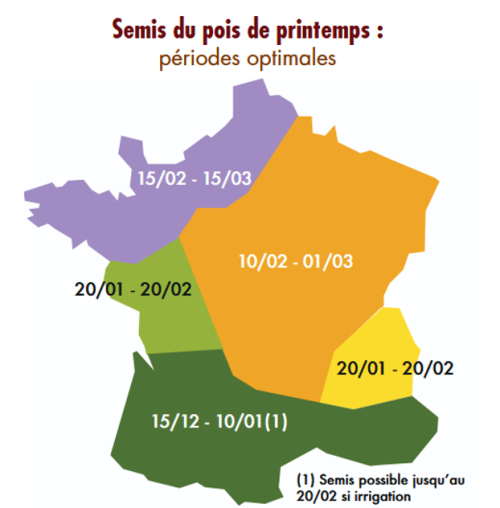
Les dates de semis des protéagineux de printemps sont à adapter à la zone géographique. En Poitou-Charentes et en Vendée, les semis peuvent démarrer dès fin janvier si le sol est bien ressuyé et si des températures gélives fortes ne sont pas attendues dans les 2 à 3 jours qui suivent le semis (gel possible des graines lors de l’imbibition). À noter qu’il est possible de semer sur sol gelé, la graine s’imbibera une fois la phase de gel passée. Si les conditions de portance le permettent, favoriser les semis précoces, qui permettent de diminuer l’exposition de fin de cycle des protéagineux aux stress climatiques (hydrique, thermique).
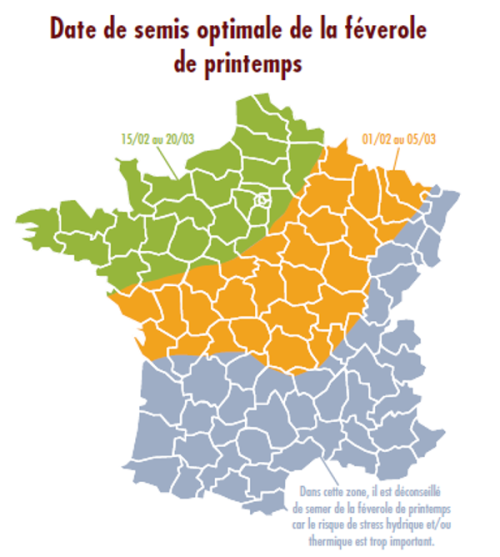
En termes de réglementation et d’usage des herbicides, les protéagineux semés avant le 01/02 sont considérés comme des protéagineux d’hiver, et à partir du 01/02 comme des protéagineux de printemps (peu importe le type variétal, « hiver » ou « printemps »). Certaines solutions disponibles en pois d’hiver ne le sont pas en pois de printemps et inversement. La date de semis est donc à prendre en compte dans la stratégie de désherbage.
Semer à 4-5 cm de profondeur les pois et 6-7cm pour les féveroles. Attention à ne pas semer trop dense, au risque de surinvestir le poste de semences et de favoriser les maladies foliaires et la verse en fin de cycle. Dans le cadre d’utilisation de graines de ferme, un test de germination est fortement recommandé pour bien maîtriser son peuplement.
Doses de semis selon le type de sol et le PMG des graines de pois de printemps :
Sol limoneux | Sol argileux ou caillouteux | Sol calcaire | |
70 à 80 graines/m² | 90 graines/m² | 105 graines/m² | |
PMG 230 g | 160 à 180 kk/ha | 205 kg/ha | 240 kg/ha |
PMG 260 g | 180 à 210 kg/ha | 235 kg/ha | 275 kg/ha |
Doses de semis selon le type de sol et le PMG des graines de féveroles de printemps :
Sol limoneux | Sol argileux ou caillouteux | |
40 à 45 graines/m² | 45 à 50 graines/m² | |
PMG 400 g | 160 à 180 kg/ha | 180 à 200 kg/ha |
PMG 450 g | 180 à 200 kg/ha | 200 à 225 kg/ha |
Le pois s’adapte à des écartements de 12 à 35 cm. La féverole peut se semer de 17 à plus de 45 cm d’écartement. Les semis au monograine permettent de diminuer la densité de 5 grains/m² et d’envisager des stratégies de binage.
Fertilisation
Aucun apport d’engrais azoté n’est nécessaire : les protéagineux sont autonomes pour leur nutrition azotée grâce à la fixation symbiotique de l’azote atmosphérique.
Le pois et la féverole sont moyennement exigeants en phosphore et potasse. Cependant, ces éléments restent essentiels au bon développement de la plante et des nodosités. La dose est à raisonner en fonction des exportations, de la teneur du sol en P et K et du nombre d’années sans apport.
Doses moyennes conseillées | Pois | Féverole | |
| Phosphore | Pailles non exportées | 55 | 60 |
| Pailles exportées | 65 | 60 | |
| Potasse | Pailles non exportées | 85 | 70 |
| Pailles exportés | 145 | 100* | |
Doses conseillées en kg/ha pour un rendement de 55q/ha en pois et 40 q/ha en féverole
* seulement si sol pauvre, autrement pas de compensation supplémentaire
Choisir sa variété
Consultez la synthèse variétale Pois de printemps (graines jaunes) 2025 et la synthèse féverole de printemps sur le site myvar de Terres Inovia.
Solana Vera - s.vera@terresinovia.fr - Ingénieure de développement zone Centre & Ouest
Bastien Remurier - b.remurier@terresinovia.fr - Référent protéagineux zone Centre & Ouest
Planting lentils in good conditions
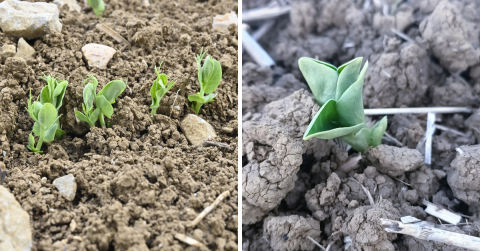
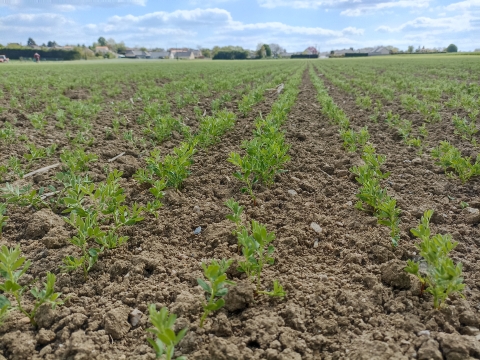
Les semis de lentille pourront débuter dès la mi-février en Poitou-Charentes/Vendée. Voici quelques recommandations pour réussir une bonne implantation.
Choisir sa parcelle
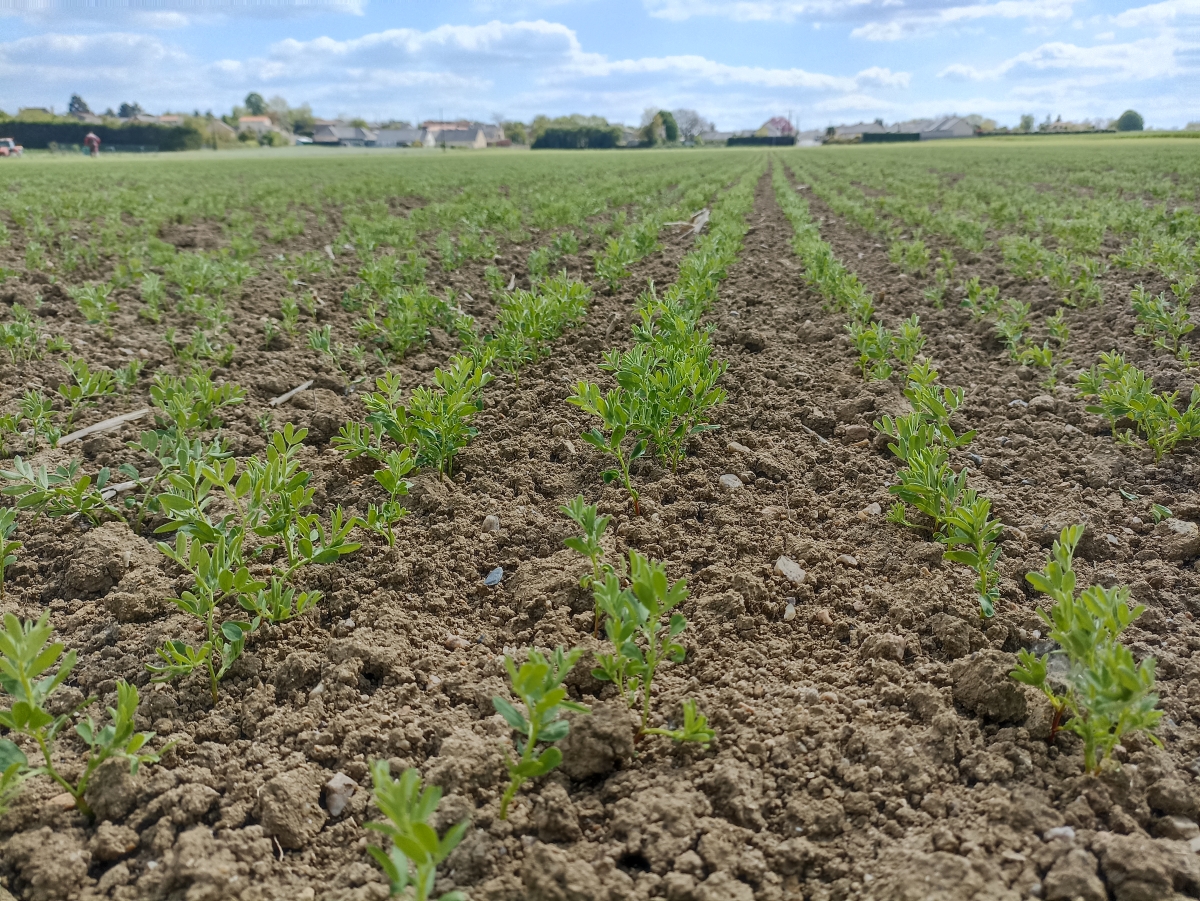
La culture de la lentille est très adaptée pour valoriser les sols superficiels qui présentent une réserve utile faible à moyenne. Les sols à privilégier sont les sols argilo-calcaires superficiels, moyens ou des sols volcaniques et granitiques.
Afin de favoriser la bonne mise en place des nodosités, il est recommandé d’implanter les lentilles dans des sols drainants, aérés et appuyés, avec de faibles réserves azotées. La lentille étant sensible aux excès d’eau et au stress hydrique en fin de cycle, il faut éviter les sols hydromorphes, limons battants et les sols très séchants. De plus, une forte réserve utile favorisera une végétation exubérante, et augmentera le risque de verse en fin de cycle et les maladies foliaires.
Enfin, la lentille étant une culture avec des premières gousses proches du sol, les sols très caillouteux peuvent compliquer le chantier de récolte.
Limiter les risques liés aux maladies telluriques
Les maladies telluriques affectant la lentille sont provoquées par des champignons tels que l’Aphanomycès euteiches, ou des complexes de Fusarium spp et Pythium spp. La présence d’agents pathogènes du sol est à prendre en compte lors du choix de la parcelle car la lutte est préventive : il faut éviter le retour trop fréquent de la lentille ou d’autres cultures hôtes sur la même parcelle.
Pour évaluer le potentiel infectieux des parcelles, vous pouvez contacter le laboratoire de Terres Inovia pour obtenir un diagnostic : Le test aphanomyces
Privilégier les parcelles à faibles pressions adventices
La lentille est une culture peu concurrentielle durant le début de son cycle, qui peut être fortement pénalisée si la flore adventice est trop élevée. Les parcelles à faibles pressions adventices sont à privilégier, ainsi que les parcelles indemnes de flores difficiles telles que le datura, l’ambroisie, le bleuet ou l’ortie royale. Certaines adventices, comme les morelles, le xanthium, l’ambroisie ou le datura peuvent également entrainer le déclassement de la récolte vers l’alimentation animale.
Préparation du lit de semences et semis des lentilles
En pluriannuel sur le secteur Poitou-Charentes, les parcelles de lentilles sont généralement semées entre la mi-février et la mi-mars. Ces dates correspondent aux préconisations de Terres Inovia.
La lentille supporte très mal les sols compactés, qui sont défavorables à l’enracinement et à la formation des nodosités. Il est conseillé de la semer dans un sol bien travaillé et ressuyé sur les 15 premiers centimètres. Un sol bien réchauffé (supérieur à 6 °C) au moment du semis permettra un départ dynamique de la culture.
La profondeur optimale de semis se situe entre 2 et 3 cm de profondeur avec un semoir à céréales. L’écartement recommandé est entre 12 et 17 cm pour éviter un trop grand salissement de la parcelle. En cas de sols très caillouteux, un roulage des parcelles peut être réalisé post-semis afin de niveler le sol (ne pas dépasser le stade 7-8 feuilles de la culture).
Semer 270 grains/m² pour les semis précoces, et 300 grains/m² pour les semis tardifs. L’objectif de peuplement à la levée est d’obtenir entre 220 à 250 plantes/m² levées.

En agriculture biologique, les densités de semis sont majorées afin de mieux gérer le salissement de la parcelle. Cette majoration varie entre +10 et +30% par rapport aux densités préconisées en conventionnel. Attention cependant à ne pas semer trop dense : des surdensités trop importantes peuvent entraîner de l’auto-compétition, moins de ramifications, et favoriser la verse et les maladies fongiques.
La lentille peut également être semée en association, en gardant la même dose de semis qu’en pur. En Poitou-Charentes, la lentille est principalement associée à de la cameline ou à du lin.
Enfin, la lentille étant peu couvrante durant le début de son cycle, la mise en place d’un programme de désherbage est recommandée pour limiter la croissance des adventices.
Fertilisation
Dans ses nodosités, la lentille réalise une symbiose avec la bactérie Rhizobium leguminosarum, naturellement présente dans les sols, pour fixer l’azote atmosphérique. Elle n’a donc pas besoin de nutrition azotée.
La lentille est une culture peu exigeante : pour un rendement de 15 à 25 q/ha, apporter 30 à 50 unités de P2O5, 60 à 80 unités de K2O et 20 à 25 unités de Mg.
Choisir sa variété
Consultez les résultats complets des essais variétés 2025 sur le site Myvar de Terres Inovia.
Controlling weed in chickpea: act early to be effective
Chickpea is a slow-growing crop in the first part of the cycle, right up to the start of flowering, which is conducive to inter-row weed infestations. At present, a strategy based on a pre-emergence application is essential to ensure acceptable efficacy. This can be followed by a post-emergence application, depending on the flora.
Application de la prélevée
Selon les conditions climatiques, la levée du pois chiche peut être relativement longue. Toutefois, il est conseillé de ne plus appliquer d’herbicides dans les quelques jours qui précèdent la levée afin d’éviter tout risque de phytotoxicité. Le positionnement de la prélevée au plus près du semis est donc à privilégier. L’humidité dans les premiers centimètres du sol conditionnera l’efficacité de ces herbicides racinaires dans les semaines qui suivent l’application. Pour leurs larges spectres, deux stratégies sont privilégiées : Prowl 400 2l/ha + Challenge 600 2l/ha ou Nirvana S 1,8 à 2l/ha (voir tableau ci-dessous). Attention, dès cette camapagne, le Prowl 400 n’est plus utilisable sur les pois chiches semés avant le 01/02.
Antidicotylédones en post-levée : deux spécialités commerciales disponibles
Le Challenge 600 peut être utilisé en post levée (à 0,5 l/ha), sous conditions d’une impasse de cette spécialité commerciale en prélevée. Il doit être appliqué tôt, au stade 2-3 feuilles du pois chiche sur des adventices jeunes (2-3 feuilles maximum). ONYX (Pyridate 600 g/l) apporte un bénéfice net sur la postlevée avec une efficacité régulière sur datura, repousses de tournesol, morelle et renouées. Comme le Challenge, il doit être appliqué tôt, à partir de 2 feuilles (et jusqu’à 8 feuilles) sur des adventices entre 2 et 4 feuilles. Une application par an et fractionnable en 2x 0,75l/ha. Un effet dose est constaté sur datura, morelle, renouées et matricaire (1,5 l plutôt que 0,75 ou 1 l).

(1) Utilisation possible seulement si semis réalisé après le 01/02.
(2) En fonction du type de sol, moduler la dose de Nirvana entre 1,5 et 2 l/ha maximum. Déconseillé dans les sols sableux.
(3) Si Challenge 600 non utilisé en prélevée
(4) Renouées en relais d’une prélevée efficace uniquement
(5) Fractionnement à 7-10 jours d’intervalle
(6) Non couvert par les firmes
Voir le tableau complet des herbicides en fin d'article
Désherbage mécanique
En complément ou en substitution, des solutions de désherbage mécanique sont possibles et montrent chez certains producteurs des efficacités tout à fait acceptables.
- Un passage d’herse étrille « à l’aveugle » en post semis prélevée sera profitable, puis de nouveau en végétation, à partir du stade 3-4 feuilles (le pivot des plantes est alors assez développé pour ne pas être arraché par l’outil). En adaptant la vitesse et l’agressivité, le passage de herse étrille est possible dès 1 feuille.
- Un passage de bineuse dans l’inter-rang est possible, si l’implantation est réalisée au semoir monograine, à partir du stade 4-5 feuilles (en veillant à ne pas recouvrir les plantes).
Le déclenchement des passages mécaniques se fera selon la levée des adventices (privilégier des interventions sur adventices jeunes), le stade de la culture (voir tableau ci-dessous) et les conditions météorologiques (intervenir toujours par temps séchant : sol bien ressuyé et pas de pluie annoncée dans les jours suivants, afin d’éviter le repiquage des adventices ou la mise en germination de nouvelles graines).
Dans nos essais, en situation de printemps humide, écartement à 60 cm, nous avons pu constater qu’une stratégie basée uniquement sur l’utilisation de la herse étrille en début de cycle à 1-2 feuilles, n’a pas donné satisfaction. De même, une stratégie basée uniquement sur du binage à partir de 4 feuilles ne permet pas une efficacité comparable à une stratégie combinant les deux outils : Herse étrille à 1-2 feuilles puis binage à partir de 3-4 feuilles, stratégie qui pour le coup a présenté de bons résultats en expérimentation. La météo de l’année et la diversité de la flore dans la parcelle ont une grande influence sur les résultats.
Désherbage mécanique du pois chiche, réglages et possibilités de passage en fonction du stade de la culture et du choix de l'outil.

Désherbage mixte
Allier chimique et mécanique prend tout son sens, d’autant plus pour une culture mineure où les solutions disponibles sont peu nombreuses et ne permettent pas toujours de répondre à toutes les flores rencontrées. En situation sèche au semis ou pluvieuse au printemps par exemple, une stratégie tout en prélevée peut s’avérer insuffisante : inefficacité de la prélevée ou re-salissement au printemps. On peut alors adopter, en substitution ou complément de la prélevée, une stratégie avec herbicide de post-levée appliqué à 3-4 feuilles en combinaison avec un ou plusieurs passages de bineuse à partir de 4-5 feuilles. L’application de la post-levée sera considérée en fonction des levées d’adventices. Cette stratégie donne de bons résultats en flore simple à moyenne (dans notre essai 2023 : renouée liseron, mercuriale, véronique des champs et ray-grass).
Pour aller plus loin