

Automatically generated translation
The climatic conditions of the 2025 growing season are characterized by a particularly wet winter, followed by a dry spring, a trend that appears set to continue in the coming weeks. This sequence of conditions has significantly influenced the growth dynamics of protein crops as well as the disease pressures observed. After a winter that was conducive to the establishment of certain fungal pathogens, the spring water deficit is now helping to slow their spread. Conversely, however, current conditions appear to be favoring pest populations, calling for vigilance.
Key takeaways
| Stadium | Notes | Keep an eye on | |
| Winter peas | 7–12 days | Complex of ascochytosis, bacterial blight, and Colletotrichum developed at the end of winter, but controlled in spring (dry conditions + early fungicide application) | Be cautious if wet conditions return; apply a fungicide treatment before flowering |
| Winter field beans | Flowering | High botrytis pressure emerging in winter | Fungicide protection recommended Conditions favorable to rust and significant botrytis inoculum present |
| Spring field beans | 4–6 f | High aphid activity No aerial diseases at this time | Manage aphids if they affect nodules |
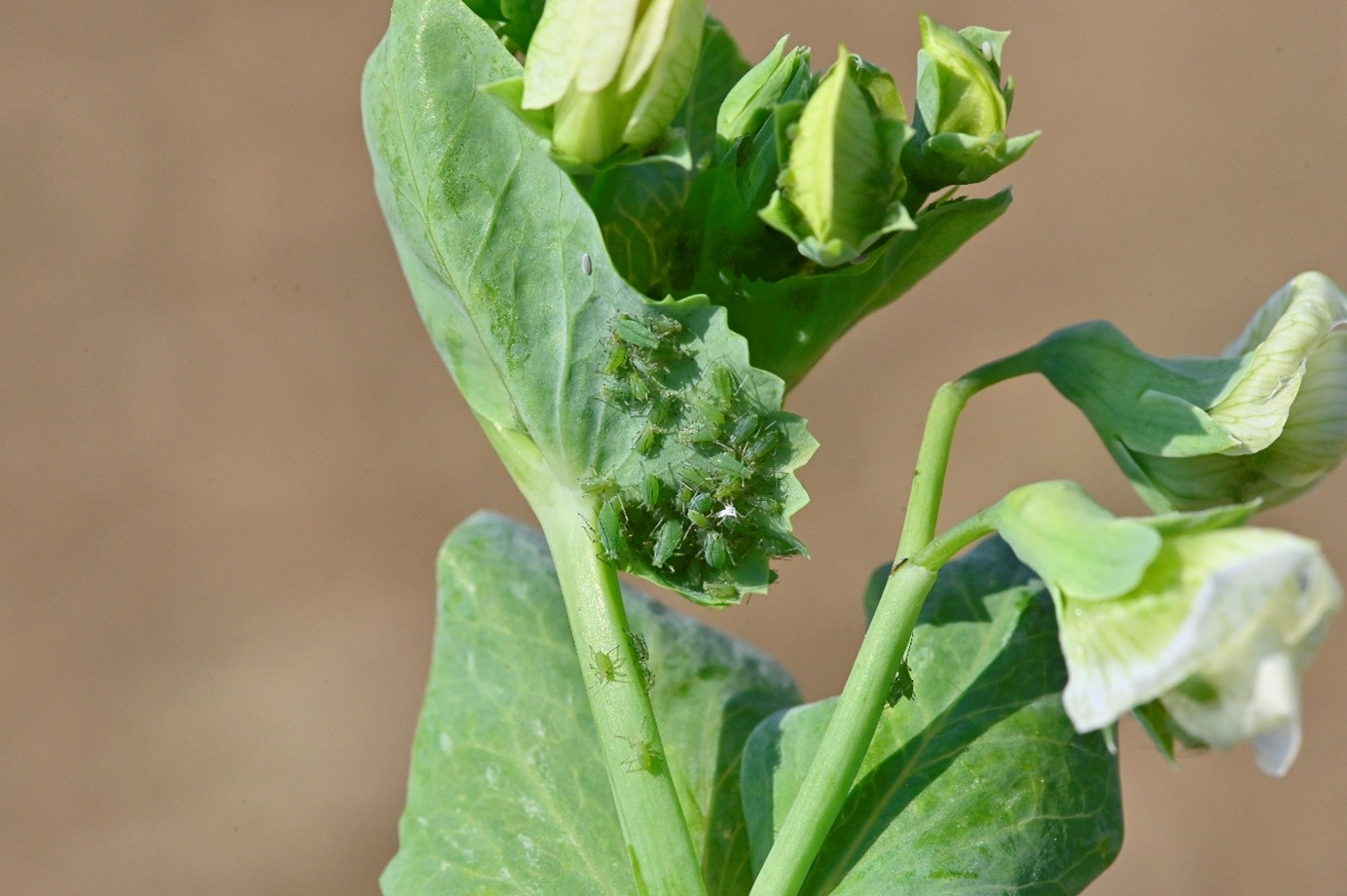
| Spring peas | 4–7 days | High aphid activity No above-ground diseases at this time | Watch for green aphids |
| Lentils | 5–6 days | High aphid activity | Watch for green aphids |
Winter peas
Winter peas are currently at the 7- to 12-leaf stage. In the earliest-maturing areas, particularly in the southern part of the northeastern region, the crops are nearing flowering, which is expected in the rest of the region within one to two weeks, depending on weather conditions. Establishment is generally satisfactory, with well-developed root systems and functional nodulation observed, ensuring good nitrogen self-sufficiency.
In terms of plant health, the disease complex (ascochytosis, bacterial wilt, Colletotrichum) developed significantly over the winter, aided by mild temperatures (February, March) and persistent humidity. However, the application of early fungicide protection, combined with the return of dry conditions in the spring, has significantly slowed its progression in most cases.
Disease risk management remains a priority, however. In plots not treated early or showing symptoms, a follow-up application is still recommended while awaiting the early-bloom treatment if flowering is delayed.
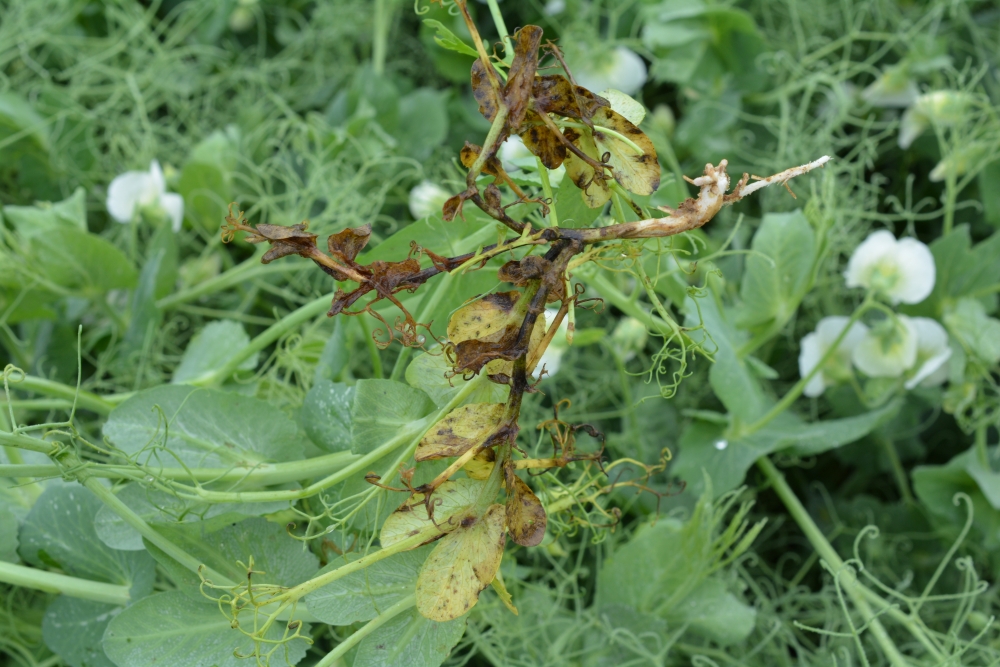
Winter field beans
Winter field beans, which were also sown over a broad winter planting window, are currently in full bloom.
The end of winter was marked by heavy botrytis pressure, a direct result of prolonged wet conditions. However, the shift to a dry spring has helped contain the spread of the disease. These same conditions may be conducive to rust, which should be monitored in the coming weeks.
The onset of flowering is the key stage for implementing fungicide protection. Given the current high pressure at the end of winter, a program based on azoxystrobin alone or combined with pyrimethanil (SCALA) may be considered. A follow-up treatment may be considered 15 to 30 days later, depending on weather conditions and plant health.
Vigilance remains essential in the event of a return to humid conditions, which are particularly conducive to Botrytis during the flowering phase.
If treatment is applied during flowering, due to the current bee protection order in effect, be sure to verify that the product’s trade name (not the active ingredient) is authorized for use during the flowering period, and to adhere to the time windows specified by this order.
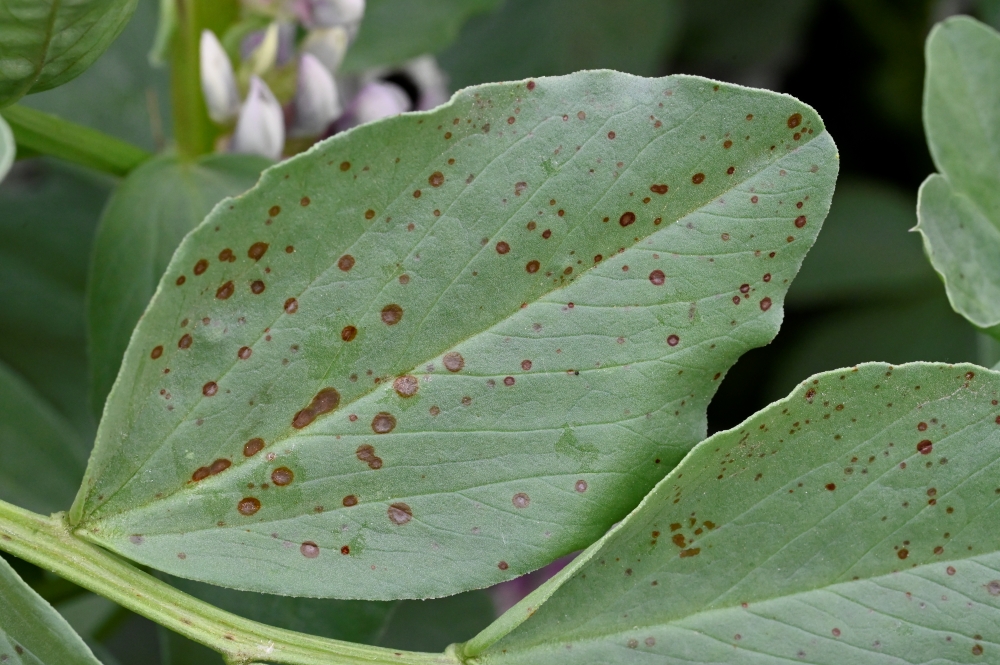
Spring field bean
Spring field beans are generally at the 4- to 6-leaf stage, with mostly uniform emergence despite varying planting conditions. The dry spring has helped the crops establish themselves well. Pest pressure is dominated by cutworms, whose activity has been fueled by sunny conditions. Leaf damage is frequently observed, posing a risk of affecting nodule formation, which could impair nitrogen fixation. Vigilance is therefore advised, particularly in the most exposed areas.
In terms of plant health, current dry conditions are significantly limiting the development of above-ground diseases, and no notable symptoms have been observed at this stage.
Rappel sur les sitones
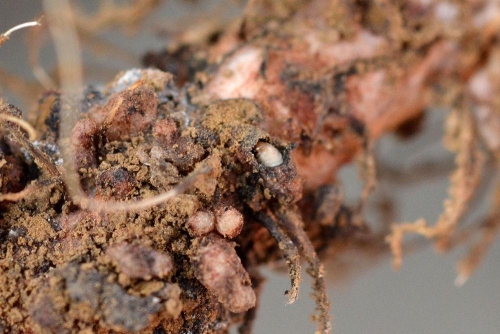
- Le sitone est un charançon actif dès 12°C ; les adultes provoquent des encoches sur feuilles (peu nuisibles), mais les larves détruisent les nodosités, impactant la nutrition azotée.
- La lutte cible uniquement les adultes, les larves étant inaccessibles.
- Pois de printemps : surveiller de la levée à 6 feuilles ; seuil d’intervention = 5 à 10 encoches/plante.
- Intervenir s'il y a de nombreuses encoches avant 6 feuilles.
- En cas de dépassement des seuils : traitement pyréthrinoïde homologué, à appliquer en conditions favorables (temps ensoleillé, sans vent).
Pois de printemps
La majorité des pois de printemps se situe entre les stades 4 et 7 feuilles. Le début de cycle, marqué par des conditions ensoleillées, a fortement favorisé l’activité des sitones. Les dégâts sont fréquents, avec la présence d’encoches sur folioles et quelques fois des nodosités perforées, susceptibles d’impacter la fixation symbiotique de l’azote. La vigilance reste également de mise vis-à-vis des pucerons verts. Bien que leur arrivée soit généralement observée à l’approche de la floraison, les conditions actuelles (temps sec et températures douces) pourraient favoriser une installation plus précoce.
À ce stade, les couverts restent globalement sains vis-à-vis des maladies aériennes, le contexte sec étant peu favorable à leur développement.
Lentilles
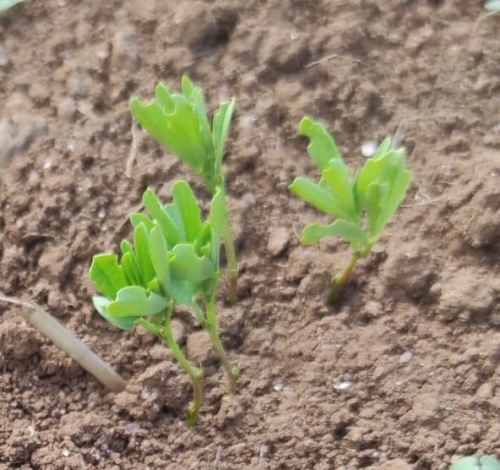
Semées début mars, les lentilles sont aujourd’hui levées de manière homogène. Les parcelles les plus précoces atteignent des stades proches de 5 à 6 feuilles.
La mise en place de la nodulation débute, traduisant une installation correcte de la symbiose.
Cependant, comme sur pois et féverole de printemps, la pression de sitones est élevée cette année, avec des dégâts parfois significatifs observés sur jeunes plantes. L’impact sur le potentiel reste à surveiller dans les semaines à venir, notamment en lien avec la capacité des cultures à maintenir leur croissance dans un contexte sec. Il conviendra également d’avoir une vigilance précoce autour des pucerons verts sur la culture.
Seuils et solutions selon les stades et la culture contre les pucerons
| Stades | Pois | Féverole | Lentille |
| Levée - 6 feuilles | ≥ 10% plantes avec pucerons Pyréthrinoïde | ||
| 6 feuilles - avant début floraison | Si au moins 5-10 pucerons/plante Pyréthrinoïde | Si au moins 10% de plantes avec pucerons Pyréthrinoïde | |
| Conserver le flonicamide (TEPPEKI ou AFINTO) pour réintervenir en floraison si efficacité des pyréthrinoïdes insuffisante ou si arrivée durant la floraison | |||
| Début floraison à fin floraison +10-15 jours (2) | Si au moins 20 pucerons/plante TEPPEKI ou AFINTO (3) | Si au moins 20% de plantes avec manchons (1) TEPPEKI ou AFINTO (3) | Si au moins 2 pucerons/plante TEPPEKI ou AFINTO (3) |
(1) On parle de colonie de pucerons à partir d’une dizaine d’individus. Mais lorsque cette colonie grossit et compte plusieurs dizaines ou centaines d’individus accolés sur les tiges et forme une tache noire d’au moins 0,5 cm², on parle de manchon.
(2) Respecter la réglementation sur la protection des abeilles et autres insectes pollinisateurs durant la floraison
(3) Ne pas utiliser d'adjuvant ou d'huile en pois, féverole, lupin et lentille avec TEPPEKI ou AFINTO.
Bilan
La campagne 2026 illustre bien l’effet combiné des conditions climatiques sur les protéagineux : une forte pression sanitaire initiale en sortie d’hiver, suivie d’un net ralentissement grâce au printemps sec.
La suite de la campagne dépendra largement de l’évolution météorologique. Un maintien des conditions sèches limiterait les maladies mais pourrait accentuer certains stress (hydriques, thermiques et ravageurs). À l’inverse, un retour des pluies relancerait rapidement les dynamiques pathogènes, en particulier sur les cultures entrant en floraison.
Dans ce contexte, la surveillance des parcelles et l’adaptation des stratégies de protection restent essentielles pour sécuriser le potentiel de rendement.