

Automatically generated translation
Terres Inovia has recently conducted a survey on the farming practices of sunflower growers, based on responses from 1,594 participants who took part in this voluntary online survey.
What are the characteristics of the responding farms?
Farmers have an average UAA of 175 hectares, 15% of which is planted with sunflowers. This proportion ranges from 10% (in the Northeast) to 22% (in the Southwest).
What motivates farmers to grow sunflowers?
• Crop rotation and low input use (66%).
• Drought tolerance (45%)
• Crop profitability (36%)
The national average yield for 2025 is 24.2 q/ha, higher than the Agreste estimate (21.3 q/ha). In fact, 55% of producers are fairly satisfied with this figure. The yield gap also shows that producers in the Terres Inovia panel pay closer attention to crop management than the average.
What are the key features of the 2025 campaign?
The 2025 growing season, which was generally unfavorable for summer crops in France, was marked by drought (67%) and extreme heat (46%), as well as early-season pests and diseases (27%). Diseases were rarely reported, which is surprising given, for example, the rise of Verticillium wilt in many production regions, suggesting a lack of observation by farmers. Oilseed sunflowers dominate (86%), remaining at a historically high level.
What farming practices?
• The soils are predominantly clay-limestone, with moderate depth (48%) or even shallow depth (37%). Soft wheat is the primary preceding crop (44%), followed by barley (15%) and corn (15%); it should be noted that corn accounted for only 9% of the total area in 2023.
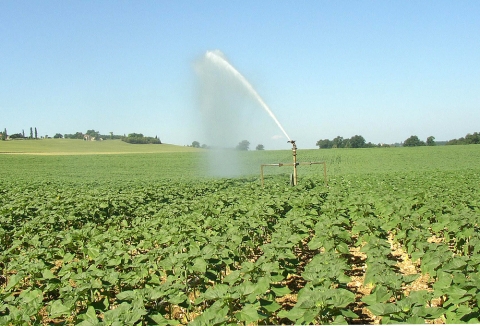
• Irrigation remains limited but, in recent years—particularly in 2025—it has been increasing, now accounting for 9% of the area. The reasons could include more frequent irrigation during dry summers, which makes particularly efficient economic use of water, or the more frequent planting of sunflowers in corn-growing regions, a trend reinforced by favorable market prices.
• The intercrop preceding sunflowers is still overwhelmingly managed using deep tillage. The share of plowed land, which declined between 2000 and 2020, has stabilized and accounts for 47% of the area in 2025. Shallow tillage is used on 16% of the land, more frequently in northern France than in the south. Tillage remains predominantly deep, with 47% plowed and 51% under cover crops.
• The use of cover crops continues to grow in the Southwest (27% of the land area in 2025); it remains stable elsewhere, reaching 51% of the land area nationwide.
• Growers choose their varieties primarily based on yield (52%), early maturity (43%), or herbicide tolerance (37%). The share of VTH varieties continues to grow, reaching 51.2% of acreage in 2025 (compared to 29% in 2019), with a sharp increase in “Express Sun” varieties since 2023. Early and mid-early varieties dominate the market, each accounting for 42% of sunflower acreage in France.
• In 2025, sunflower planting began earlier in the Northeast (April 10) and later in the Southwest (April 25) than the national median (April 15). This can be explained by the high proportion of staggered planting (a technique based on delaying the planting date) reported by producers: this practice was implemented on 40% of the sunflower acreage in France during the 2025 growing season.
• Pests (birds, slugs) remain a major challenge despite the protective measures put in place. On 82% of the acreage, producers report no damage to the crop (28%) or only a few missing plants at emergence (54%); partial or total re-seeding affected 15% of the acreage. In response to these major risks, growers protect their fields with bird deterrents (acoustic or visual scare devices, culling), which is the case for 4 out of 5 fields in France. In addition, 70% of the areas were protected by a slug control treatment, and control of wireworms is also becoming more widespread (49% of treated areas).
• Weed management: Weed control programs including post-emergence treatments remain the majority (56% of the area, linked to the use of VTH). However, 17% of the area sown with VTH reportedly did not receive a post-emergence herbicide treatment. Other trends highlighted by the survey: the application of herbicide during the growing season on 55% of fields in 2025, compared to 23% in 2019, a trend likely linked to the increase in cover crops. The proportion of acreage receiving mechanical weed control remains virtually unchanged from 2023, with hoeing accounting for the overwhelming majority of this type of intervention.
• Disease management: downy mildew was observed on 12% of the acreage, with very few severe outbreaks reported, and 24% of the acreage is reported to have received no anti-downy mildew treatment. Nevertheless, 10% of sunflower acreage received at least one fungicide application in 2025, a figure lower than in 2023, most likely due to particularly hot and dry conditions.
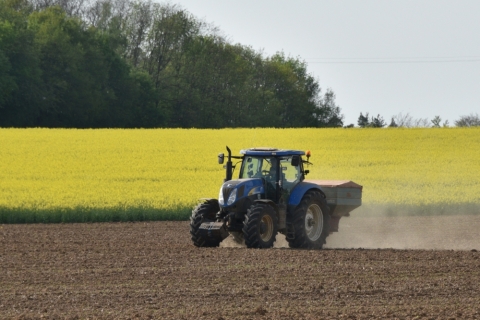
• Fertilization management: only 7% of fields received no mineral or organic fertilizer. The application of PRO on a regular basis or prior to sunflower planting is becoming slightly more common. The average rates of mineral nitrogen in 2025 (excluding fallow years) were 45 units for applications at planting and 53 units for applications during the growing season. The rate of fertilizer-free years for P and K increased compared to previous years, partly as a result of the sharp rise in fertilizer prices. As for boron, it is applied to 57% of the land, mainly during the growing season (46%).
• Harvest: the straw-cutting method adapted for sunflowers is the primary method used in France to harvest sunflowers (52.3% of the area). However, the use of sunflower-specific headers continues to grow across all growing regions; for example, the full-length sunflower header with trays was used on 30% of the area in 2023, compared to 22% in 2019. Finally, unlike in 2019 and 2023, a small proportion of the national acreage was harvested in 2025 with less than 7% moisture content. This is due to exceptionally high rainfall during the second half of August in many growing regions.