Filtres
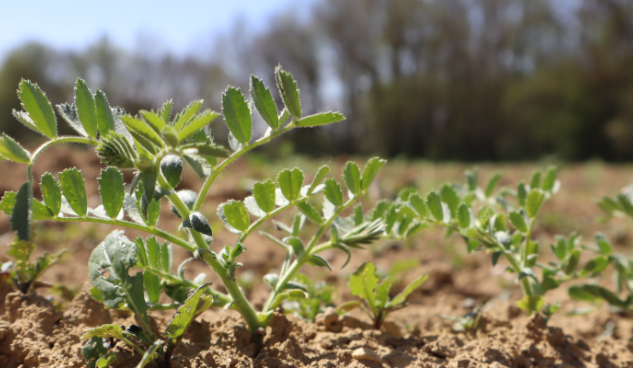
The chickpea growing guide is available for the upcoming growing season
An essential tool to support producers and advisors in their day-to-day work

Delicate Blooms: A Regional Overview as of March 30, 2026
Rapeseed: Understanding the Phenomenon of Slow, Subdued Flowering and Its Contributing Factors
-
Seed legumes
Pois d'hiver
Pois de printemps
Soja
Féverole d'hiver
Féverole de printemps
Lentille
Pois chiche
Hauts-de-France
FiLoLég: Utilization of co-products and by-products from grain legumes

Create your Terres Inovia account
- News from your crops
- Your training courses and events
- Your favorite content and tools
- Your order history

How should you apply your key fungicide to rapeseed?
In Poitou-Charentes, Vendée, and Centre-Val de Loire, rapeseed crops were subjected to heavy pressure from pollen beetles in late February and early March during their early growth stages. Dropping nighttime temperatures and morning frosts locally exacerbated damage to floral parts, resulting in the loss of buds and even flowers. Other crop issues were often already present: widespread infestation of large flea beetle larvae, and locally, of terminal bud weevil larvae; poor root development and/or a taproot degraded by winter waterlogging. This is unprecedented: such an extremely early growing season with flowering beginning on March 5–10. With much shorter daylight hours than in April, we can assume impacts on plant function, including reduced light energy capture and lower mobilization of assimilates. Added to this are the consequences of delayed fertilizer applications for a crop that is ahead in development (waiting for the soil to dry out), sometimes resulting in a significant delay between application and utilization (waiting for the return of rain). High temperatures have also accelerated the development of rapeseed, which has not always been able to feed itself properly and at the right time: climatic stress was exceptionally high in March. The explanation for plots in difficulty is often multifactorial. These abnormally stressed rapeseed plants could rebound once favorable conditions return.
Today, flowering is impaired in many situations, and the timing of fungicide application requires careful consideration. Forecasted weather conditions are dry and cold, which is generally unfavorable for the development of Mycosphaerella in affected fields. Additionally, wind will reduce application windows and limit the number of petals adhering to leaves (a route of Sclerotinia contamination).
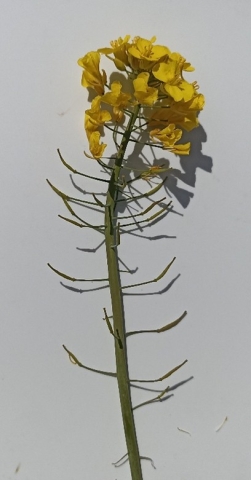
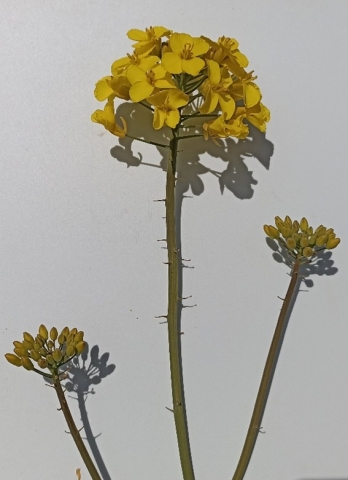
In this context, determining stage G1 is complicated, and consequently, the decision to apply the key fungicide is as well. As a reminder, stage G1 is commonly referred to as “the first petals falling,” but petals fall from the very start of flowering! Another definition of this key stage is possible and easier to grasp: it is the formation of the first siliques on the main stem.
| Stage G1 = the first 10 siliques on the main stem are present and measure less than 2 cm on 50% of the plants in the field. |
| 
|
Stage G1 reached: Schedule | No siliques |
March 26, 2026, Angliers (17) | |