

Automatically generated translation
Launched in 2017, this project led by Terres Inovia is building a comprehensive seed legume supply chain in Occitanie, from production to market. Its annual general meeting marks a significant step forward for the collective effort.
On March 17, approximately 70 members attended FILEG’s general meeting. The key message? The need to “build the sector”—an expression that has become central to the strategy of this flagship project aimed at promoting legumes in Occitanie.
Agenda for the 2026 General Meeting
The event, held at the agricultural high school in Carcassonne, featured several highlights:
• Speeches by the president, Édouard Cavalier; representatives of the financial supporters, the Adour-Garonne Water Agency and the Occitanie Region; and Laurent Rosso, CEO of Terres
Inovia• The re-election of the FILEG
Board of Directors• The presentation of the annual report and the outlook for 2026 and
2027• A roundtable discussion addressing 360° risk management in the legume sector in Occitanie.
The Role of Terres Inovia
In addition to coordinating the FILEG association, Terres Inovia leads the “Production” pillar of the roadmap through training sessions and specific working groups on soybeans and pulses, as well as the “Economic Observatory” pillar (in collaboration with the DRAAF and INRAE).
FILEG’s FALEB project, focusing on the use of flours in baking, pastry making, and catering, is funded by Cap Protéines + and led by Terres Inovia.
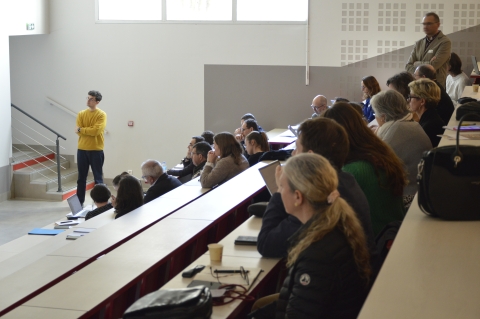
Identify the specific risks associated with legumes
Contrary to popular belief, legumes are indeed emerging today as drivers of agricultural and food innovation, addressing pressing issues such as the agricultural transition and nutrition… “Through its work with communities of stakeholders in institutional food service, commercial food service, and the ‘flour’ ecosystem, FILEG is helping to change perceptions,” notes Cyrielle Mazaleyrat, co-coordinator of the FILEG Occitanie project for Terres Inovia.
This day of discussions also highlighted existing risk management mechanisms specific to legumes, aimed at reducing risks at the plot, farm, farmer collective, sector, and regional levels. Numerous examples were cited, such as varieties, production practices, crop rotations, training, pooling resources, insurance, and contracts… “It appears strategic for FILEG to propose a risk management plan while continuing to follow its roadmap,” the coordinator adds.
The work carried out under the FILEG initiative demonstrates that a genuine collective momentum has been built. It is important that our shared commitment remains consistent over time in order to produce concrete results that can strengthen the engagement of all stakeholders
Spotlight on a highlight
Legume Week, which took place from February 9 to 15, 2026, featured:
• More than 700 participating
locations• 285,000 meals served•
28 tons of legumes
FILEG: A Range of Successes
• Research by CISALI on protein self-sufficiency highlights the strategic role that legumes can play in value creation and the resilience of livestock systems.
• The strong engagement of agricultural stakeholders in training programs—with more than 50 advisors trained over the past three years—as well as in working groups and numerous R&D projects;
• As part of the economic observatory co-led by Terres Inovia, DRAAF, and INRAE, FILEG members are working to analyze value creation, value distribution, and risk management in order to build a more equitable and sustainable sector.
The Outlook
FILEG has a host of projects planned to advance its roadmap in the coming months: technical training sessions next June led by Terres Inovia, the formation of a working group on animal feed, and participation in regional discussions organized by the French government, the Occitanie Region, and the Regional Chamber of Agriculture as part of the Conference on Food Sovereignty, among other initiatives.