
Automatically generated translation
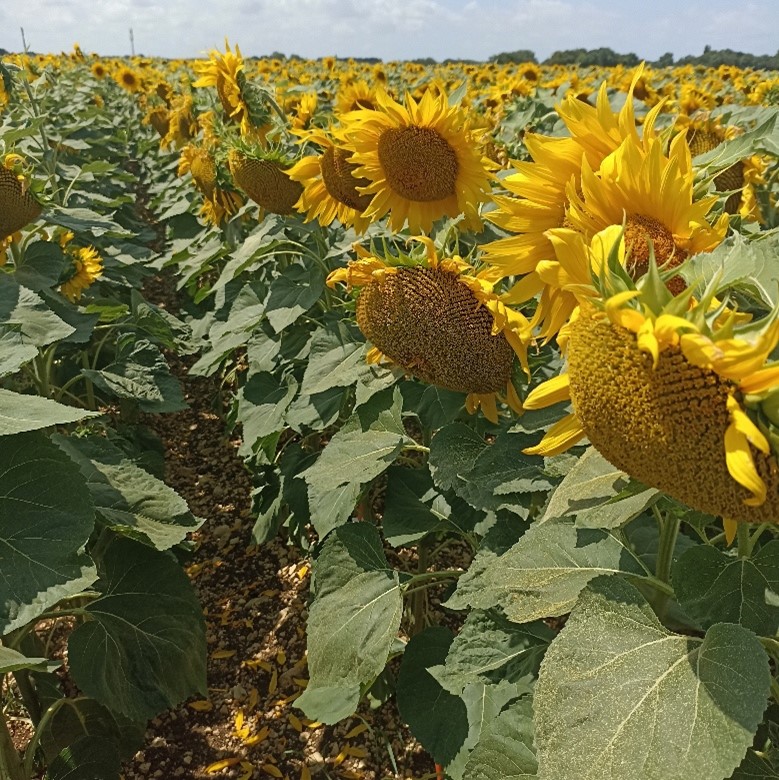
Key highlights of the growing season: 2025 was a hot and dry year. As a result, average yields were affected and fell below 20 q/ha in some regions. The growing cycle can be broken down as follows:
- an early planting period (March 20 to mid-May) under variable weather conditions, resulting in relatively uniform emergence; the wait for the soil to dry out delayed deep soil preparation;
- a hot vegetative phase resulting in average-sized sunflowers, although the latest-sown plants remained “daisy”-sized,
- an early flowering phase under water stress for all soil types,
- a confirmed water deficit during the ripening phase that persisted until harvest.
Despite a temperature sum that was more than sufficient, the total precipitation over the entire growing cycle was significantly below sunflower requirements: development was accelerated by heat while growth was limited by drought. Stands are satisfactory in terms of attacks by slugs and birds, and locally by hares and soil pests (soil-dwelling moths, wireworms). Green aphid pressure is occasionally high (Vendée) with curled sunflowers requiring protection.
Water stress during flowering is detrimental to seed set and reduces the yield component of seeds per flower head. Periods of high evapotranspiration had a significant impact from late June to mid-July and then in mid-August. Without being offset by rainfall, they limited seed filling. The return of rainfall in late July and late August generally comes too late; the damage is already done. Faced with this sustained climatic stress, three rounds of irrigation were necessary to maintain the sunflower’s production potential.