

Automatically generated translation
Sunflowers are a particularly attractive crop for slugs. Over the past several growing seasons, increased slug attacks have led to crop damage. In a climate characterized by mild winters and wet springs—conditions that favor the survival of slug populations—slug risk management has become a key factor in the success of the crop. Slug risk management begins during the intercropping phase and is based on three pillars: assessing the risk, implementing agronomic measures, and ensuring increased monitoring to intervene early if necessary.
A brief but crucial period
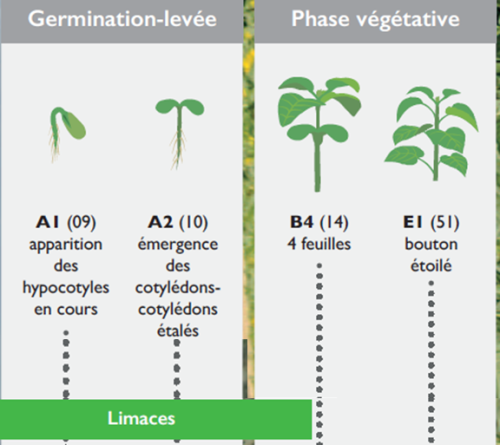
Sunflowers are susceptible to slugs between germination and the four-leaf stage. Early attacks on germinating seeds or cotyledons have a direct impact on crop establishment. These losses cannot be recovered later.
Beyond the 4-leaf stage, the crop becomes significantly less susceptible. The challenge is therefore to effectively protect the crop during this initial phase, based on the risk level of the field.
Assess the risk and identify high-pressure situations
The level of risk depends on a combination of climatic and agronomic factors. Slugs are active in humid and mild conditions, with activity occurring mainly at night.
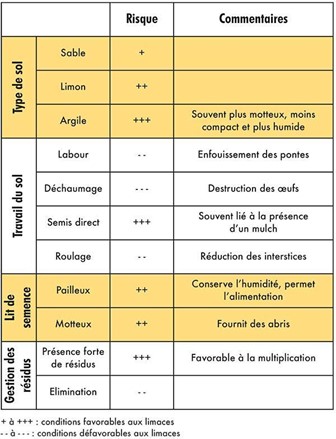
The situations posing the greatest risk are characterized by:
- Loamy soils or soils with high surface moisture
- Presence of crop residues or mulch
- Late removal of cover crops; therefore, early removal is essential for sunflowers: generally 2 months before planting, 3 weeks if the cover crops are predominantly legumes
- Favorable preceding crops (canola, sunflowers, legumes)
- Limited or simplified tillage
See the dedicated reference article - Slugs: Risk Assessment
A preliminary assessment is essential for planning protection. To do this, check for slugs before planting, under humid conditions, either by direct observation early in the day or by trapping starting 15 days before planting.
This approach allows the field to be classified as low, medium, or high risk and enables the protection strategy to be adapted. It must be supplemented by regular monitoring at emergence.
Ensure a solid foundation and intervene early
The quality of the planting is key to minimizing damage. To ensure rapid and uniform germination, it is recommended that you:
- Sow in well-drained, warmed soil (temperature ≥ 8 °C at a depth of 5 cm)
- Ensure good seed-to-soil contact
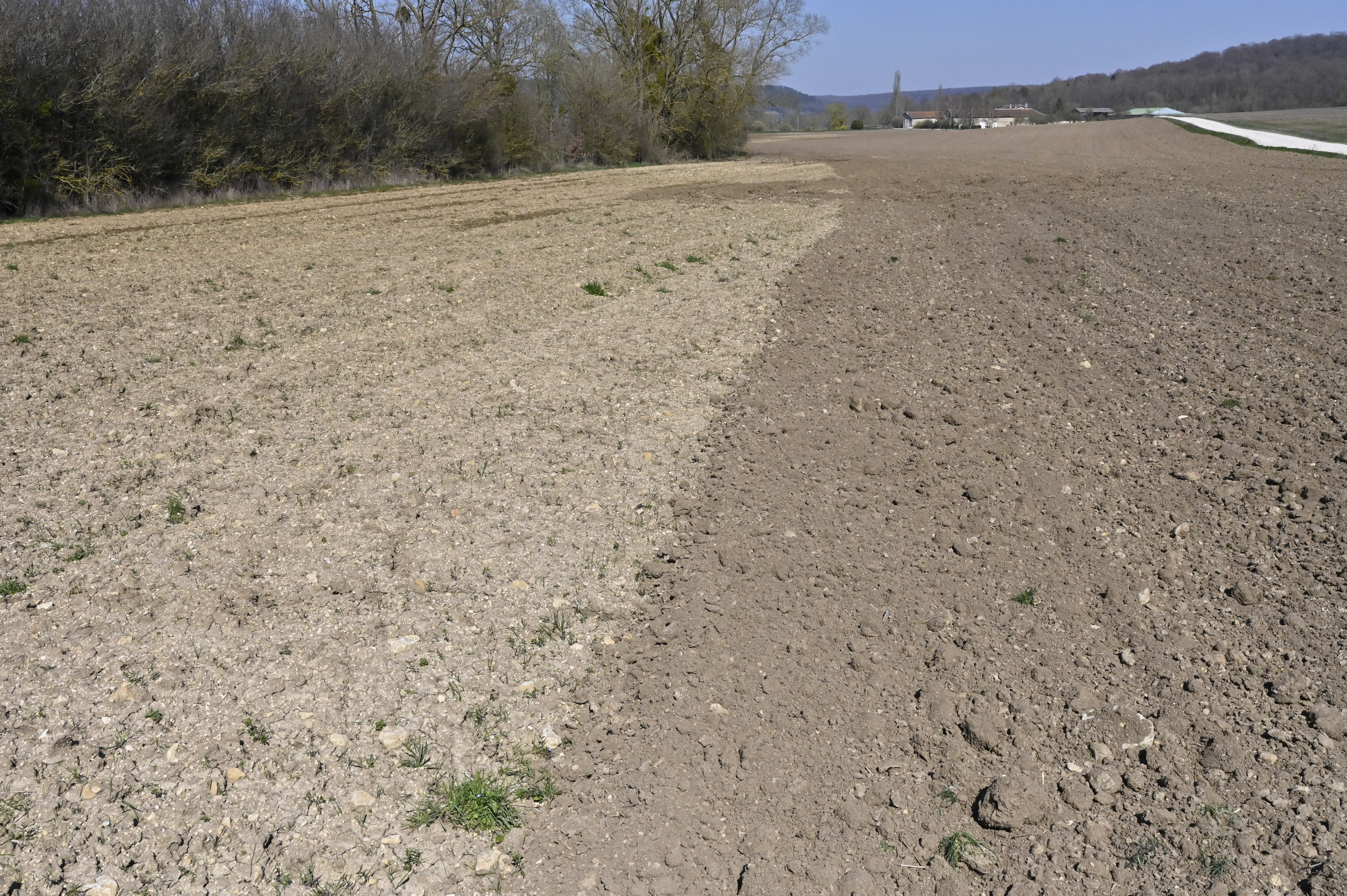
- Prepare a favorable seedbed (goal: at least as much fine soil as clods on the surface). To achieve this, the conditions during plot preparation are critical (the soil must be dry to the working depth)
- Properly close the furrow, which means avoiding sowing in soil that is too wet on the surface. After late removal of cover crops, the use of furrow-closing equipment on the seeder is recommended.
In fields with medium to high risk, protection starting at sowing is recommended
- Apply slug bait directly to the field at the time of seeding
- Option to apply a half-dose of slug repellent locally in the seed furrow at the time of seeding.
- Reapply as needed in the field depending on rainfall and the persistence of the pellets.
Particular attention must be paid to application quality: even distribution and minimizing granule breakage are essential to ensure effectiveness.
In the event of damage at emergence, corrective action must be taken quickly, before plant losses become irreversible.
À retenir
La gestion du risque limaces à l’implantation du tournesol repose sur une stratégie intégrée :
- Evaluer le risque avant semis (Observation et/ou piégeage)
- Soigner les conditions d’implantation
- Protéger dès le semis en parcelles à risque
- Surveiller jusqu’au stade 4 feuilles
Une intervention positionnée au plus près du semis reste le levier le plus efficace pour sécuriser le peuplement.
Vos contacts régionaux
- Nicolas Latraye (n.latraye@terresinovia.fr) - Hauts-de-France
- Mathieu Dulot (m.dulot@terresinovia.fr) - Champagne-Ardenne et Seine-et-Marne
- Aurore Baillet (a.baillet@terresinovia.fr) - Lorraine / Alsace
- Victoire Lefèvre (v.lefevre@terresinovia.fr) - Bourgogne-Franche-Comté