
Automatically generated translation
Rapeseed stem weevils are the main pests of spring rapeseed, and can cause stem bursts that penalize yield components, particularly in dry years. Control methods are still effective. But the positioning of the intervention is crucial to ensure effective protection.
Vigilance when flights are early and massive
Stem weevils are the first insects to colonize rapeseed plots at the end of winter. A thaw above 9°C triggers the first flights, which can intensify when temperatures rise above 12°C. Depending on the year's climatic conditions, flight can be early (mid-February) or late (during March). The installation of a yellow spoon on the vegetation is a good way of spotting the arrival of the insect. We consider that there is a risk of damage to the crop as soon as the insects are present and the rapeseed is in the bolting stage (C2 to E). Past experience shows that years with early and massive flights are the years in which we see the most damage (frequency and intensity) in plots across a territory.
Intervening at peak flight
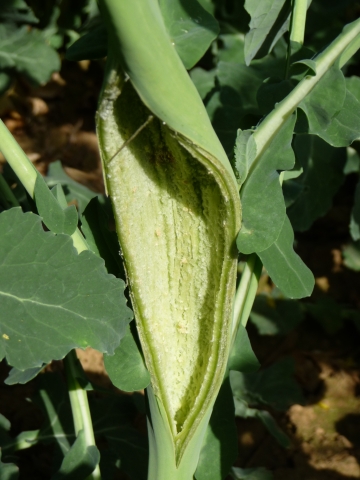
Farmers wishing to secure their production should intervene 8 - 10 days after the first "significant" captures, or ideally at the regional flight peak (consult the BSV for the date of the flight peak at regional level). The aim is to intervene when as many insects as possible are in the plot, and before egg-laying begins. Intervening as soon as the first insects are caught usually means spraying too early. It's better to wait a few days, even if it's true that the organization of work sites (sowing, nitrogen, etc.) and weather conditions can complicate implementation at this time of year. On the other hand, late infestations or re-infestations should not be overlooked, as they can occur right up to the end of bolting (E stage). Generally speaking, a single well-timed intervention is enough to control most of the risk. However, if a second flight peak occurs 2-3 weeks after application, re-intervention may be necessary.
Do not confuse rapeseed stem weevil with cabbage stem weevil, which is considered to have little or no harmful effect on rapeseed.
The rapeseed stem weevil (left) has black leg tips. The smaller cabbage stem weevil (right) has red leg tips and a whitish dorsal spot between the thorax and abdomen.

Les solutions insecticides sont toujours efficaces
L’efficacité de la lutte chimique dépend avant tout du positionnement de la protection et de sa persistance d’action. A ce jour, Terres Inovia n’a pas constaté de perte d’efficacité au champ. Et le monitoring réalisé par l’Institut ne montre pas de phénomène de résistance émergent inquiétant.
Les références DECIS PROTECH 0.33 l/ha et KARATE ZEON 0.075 l/ha sont efficaces pour réduire les dégâts du charançon de la tige du colza (réduction du nombre de tiges déformées et/ou éclatées). TREBON 30 EC est comparable aux références. En cas d’infestation tardive, il présente l’intérêt d’être également efficace sur méligèthes. SHERPA 100 EW et CYTHRINE MAX sont un peu en retrait. MAVRIK SMART est inférieur aux références (synthèse des essais Terres Inovia).
OAD Prédiction du vol de charançon de la tige du colza
Pour prédire la dynamique des vols de ce ravageur, Terres Inovia met à disposition l’Outil d’Aide à la Décision « Prédiction des vols de ravageurs ». L’outil informe sur la probabilité de capture en cuvette jusqu’à J+7, sous forme graphique et sous forme de carte. Il s’agit d’un outil de mise en alerte complémentaire aux réseaux d’observation sur le terrain.