News

Filtres

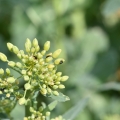
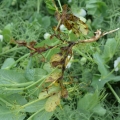
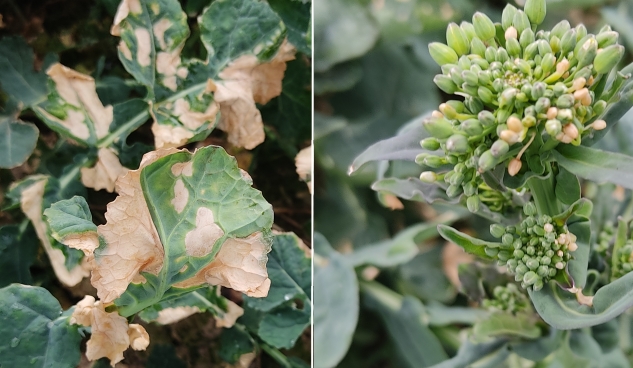
With flower buds appearing very early this year, some farmers are wondering about the impact of late nitrogen application in the form of a nitrogen solution.  

The burns observed are mainly due to a contact effect: fertilizer droplets deposited on the plant parts become concentrated as the water evaporates. The increase in salt concentration can then cause dehydration and tissue necrosis. Recent leaves and especially flower buds, whose tissues are young and poorly protected by a cuticle, are particularly sensitive. In addition, the microcavities present in the buds can retain the droplets and prolong contact with the solution.

The risk increases when the buds are clearly visible and exposed on the inflorescences (progression from stage D1 to E), and as soon as the first flowers appear (stage F1). Sensitivity increases with the proportion of buds exposed to the droplets. Weather conditions also play an important role: hot, sunny, dry, or windy weather promotes rapid evaporation and increases the concentration of the solution.

In most situations, the impact on yield remains limited, unless the crop is already very fragile. Rapeseed has a strong compensatory capacity, thanks to the gradual development of its yield components (seeds/m² and TGW).

In practice, if no other form of fertilizer is available, it is preferable to apply nitrogen, even in liquid form, at a stage close to E-F1, rather than not applying any at all. Nitrogen solution should preferably be applied during rainfall, which will limit burning.

Jean Lieven - j.lieven@terresinovia.fr
Elodie Tourton - e.tourton@terresinovia.fr
Julien Charbonnaud - j.charbonnaud@terresinovia.fr
Thomas Mear - t.mear@terresinovia.fr 

10 March 2026 . 8 days ago

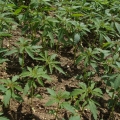
The establishment of hemp is a crucial step for successful cultivation. As a short-cycle species, it cannot tolerate any interruption in growth after sowing. The aim is therefore to achieve rapid and uniform emergence through appropriate soil structure and controlled nitrogen fertilization management.

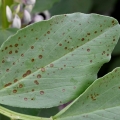
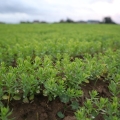
Following a very wet winter and the return of warm temperatures, conditions are favorable for the presence and development of the main diseases affecting winter peas and field beans, namely disease complex and botrytis, respectively. Diseases are widespread in fields at varying levels, from mild to advanced, depending on the agronomic measures put in place. It is therefore strongly recommended to protect your field early on in order to keep the disease under control until flowering.

To learn more about these diseases, their symptoms, and strategies for managing them, find all the information you need in the latest articles below: 

Recognition and management of botrytis in winter field
beans Recognition and management of the complex of aerial diseases in winter peas